
Facts & prices checked: 2026-06-25
A 14-day Tanzania itinerary is the classic length for a reason: it is long enough to do the northern circuit properly and still arrive in Zanzibar feeling like you have time there. At 7 days, you are always aware of the clock. At 14 days, you are not.
The standard structure — 10 days safari, 4 days Zanzibar — gives you Tarangire for two proper game drive days, Ngorongoro with time for both a crater rim sunset and an early descent, the central Serengeti around Seronera Valley, and the northern Serengeti at Kogatende or Lamai for the Mara River zone. Then a light-aircraft transfer to Zanzibar, Stone Town for two nights, and a north coast beach finish.
This guide gives the day-by-day structure, the costs worked through by tier, the migration calendar for choosing when to go, and a southern Tanzania variant for second-time visitors.
The classic 14-day route: northern circuit + Zanzibar
This is the structure most Tanzania operators recommend as the ideal first trip. I have run a version of this myself — the pacing is right.
Days 1–2: Kilimanjaro Airport + Arusha
Fly into Kilimanjaro International Airport (JRO). Most intercontinental connections arrive in the evening, which means Day 1 is an arrival day: 46–50 km transfer to Arusha, briefing with your operator, and sleep. Depart for Tarangire on the morning of Day 2.
Use the time to check gear. Repacking into a soft-sided bag under 15 kg matters once you reach the bush flight legs later in the trip. Arusha has reliable gear shops for anything forgotten. The first nights will be cold — the Ngorongoro rim sits above 2,300 m and temperatures drop to 5–10°C before sunrise. Pack a proper fleece now, not after you arrive at the crater.
Days 3–4: Tarangire National Park
Drive from Arusha: approximately 140 km, 2 hours
Two full days in Tarangire is where the 14-day itinerary earns its first clear advantage over the 7-day version, which typically gives Tarangire only a single afternoon and morning. Two days allows you to separate the park’s two different landscapes into distinct drives.
Day 3: the northern circuit — Tarangire River, the main road elephant concentrations, and the baobab-studded landscape. During the dry season (June–October), breeding herds converge on the Tarangire River because it is one of the few reliable water sources in the region. Concentrations of 200+ elephants are documented in late August through September. These are not shy animals: they cross the road in front of the vehicle, wade into the river while you watch from 30 metres away, and move through camp at night.
Day 4: the southern Silale circuit. The Silale Swamp at the park’s southern end is significantly different terrain — hippo pools, waterbuck, leopard country, and a grassier landscape that feels nothing like the baobab savanna to the north. Most single-day Tarangire visits never reach it. On a 2-day visit, you can drive the full park length and see both habitats. Tarangire’s bird checklist exceeds 550 species and the southern areas add some of the better birding in the park.
I prefer Tarangire as a safari opener because the wildlife density builds confidence quickly. By the time you leave on Day 4, the early start rhythm is established and you are used to the pace.
Days 5–7: Ngorongoro Conservation Area
Drive from Tarangire: approximately 1 hour to Karatu; rim area ~30 minutes beyond
Day 5 afternoon: arrive at the Ngorongoro rim. The crater rim sits at roughly 2,300 m above sea level. The views down into the 260 km² caldera are immediate and disorienting — it is one of the largest intact calderas in the world, 19 km wide, and you can see most of the crater floor from the rim. Sunset from the rim is the defining Day 5 activity.
Day 6: full crater descent. The Seneto descent road drops 600 m to the crater floor in about 30 minutes. Gates open before 06:00; queue before 06:30 to beat the mid-morning vehicle rush. You have a maximum of 6 hours on the floor. The crater holds around 25,000 large mammals year-round, including all of the Big Five. Ngorongoro is the most reliable location in East Africa for wild black rhino — roughly 20–30 resident. They are often distant on the open floor, but you will likely see them.
The crater descent costs USD 295 per vehicle plus USD 70.80 per adult per day for conservation area entry. Budget this as a known fixed cost, not a variable.
Day 7 morning: optional side trip to Olduvai Gorge (now formally Oldupai), 48 km from the crater. The gorge contains a continuous record of human evolution spanning 2.1 million to 15,000 years ago, with fossil remains of more than 60 hominins from its deposits. It is a genuine site, not a tourist reconstruction. Plan 2 hours. Afternoon: drive to Seronera Valley in the central Serengeti (approximately 4–5 hours from Ngorongoro via Naabi Hill Gate).
Days 8–10: Central Serengeti — Seronera Valley
Seronera Valley is the year-round Serengeti. The Seronera River attracts wildlife even outside migration months, and the valley’s mix of open plains and riverine forest is where the park’s leopard population concentrates. Seronera has a documented leopard sighting rate that is among the highest in the Serengeti, partly because resident leopards here have habituated to vehicles over many years.
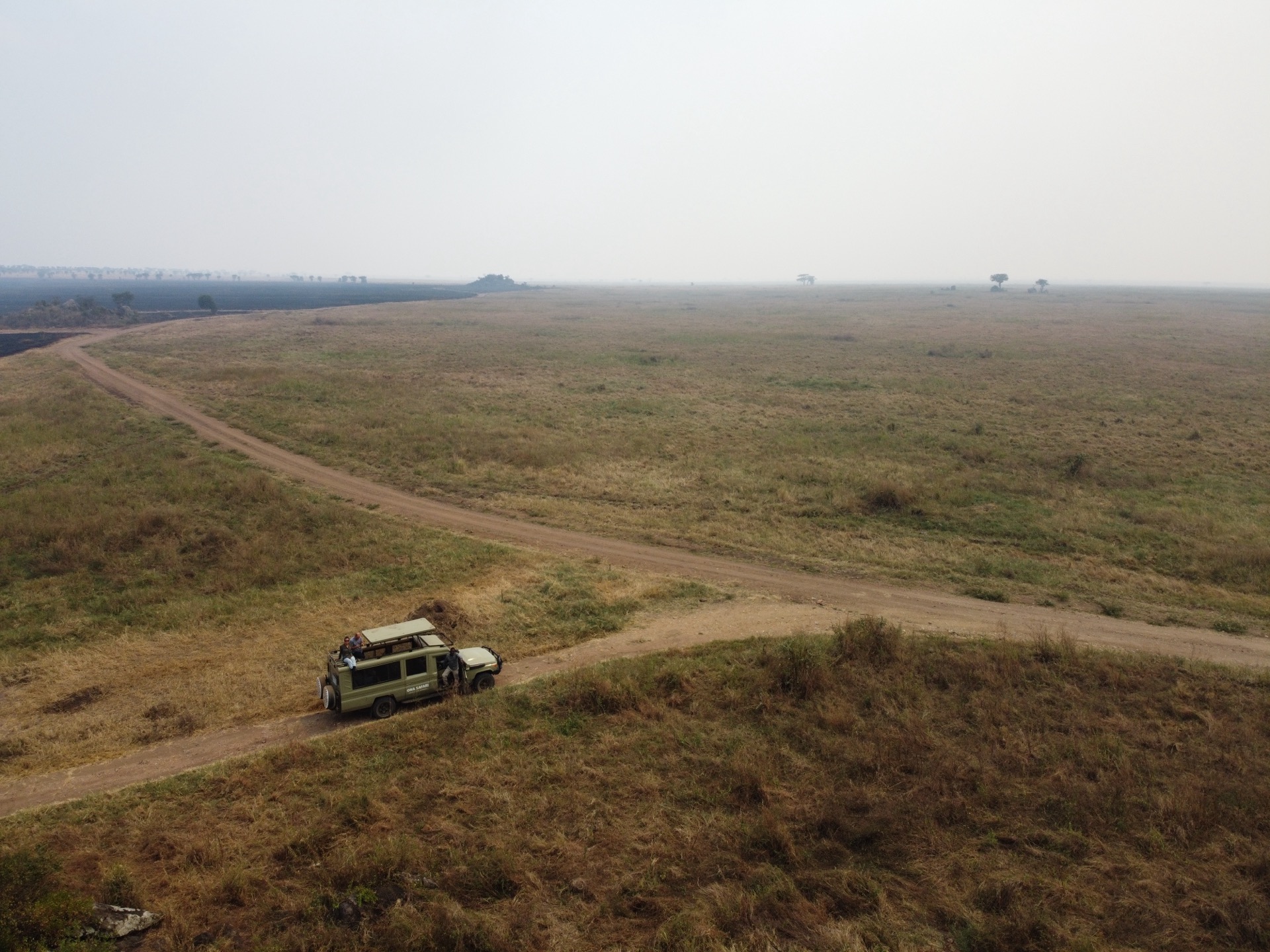
Day 8 and Day 9: full game drives in the valley. The kopje rock formations scattered across Seronera are lion resting points — work them systematically in the morning before the lions move into shade. The Serengeti holds more than 1.2 million wildebeest and 300,000 zebra in its greater ecosystem; even in the central zone outside peak migration season, you will drive through herds.
Day 10: bush flight north. A light aircraft hop from Seronera airstrip to the northern Serengeti takes about 45 minutes. The 14-day itinerary is what makes this leg possible — a 7-day trip cannot afford 2 nights in the north without sacrificing something significant elsewhere.
Days 11–12: Northern Serengeti — Kogatende and the Mara River
The northern Serengeti, centred on Kogatende and the Lamai Wedge bordering Kenya, is where the Mara River crossings happen. Wildebeest crossings concentrate in the northern zone from July through October. By July, herds converge in the Lamai region along the Mara River, straddling the Kenya-Tanzania border. The crossings are unpredictable day-to-day — you watch the far bank and wait. Plan 3–4 nights ideally, but even 2 nights gives you a credible chance of a crossing if you time it for July–September.
In January–February, the logic inverts: the herds are in the southern Ndutu plains for calving, not the north. For a January or February 14-day trip, keep the central Serengeti for Days 10–12 and drive south toward Ndutu rather than flying north. Calving peaks in February on the short-grass Ndutu plains; predator action is intense during this window.
The northern Serengeti camps tend toward the higher end of the price range — budget USD 1,000 per night for two people for a mid-range tented camp. There are fewer budget options here than at Seronera; factor this into your tier planning.
Day 13: Transfer day — Serengeti to Zanzibar
A light aircraft hop from the northern Serengeti to Dar es Salaam or directly to Zanzibar connects the safari leg to the coast. Internal transfers from the Serengeti to Zanzibar take approximately 90 minutes by air, avoiding the 9-hour road backtrack to Arusha that a ground transfer would require. Arrive Stone Town in the afternoon.
Days 14–16: Stone Town and Zanzibar
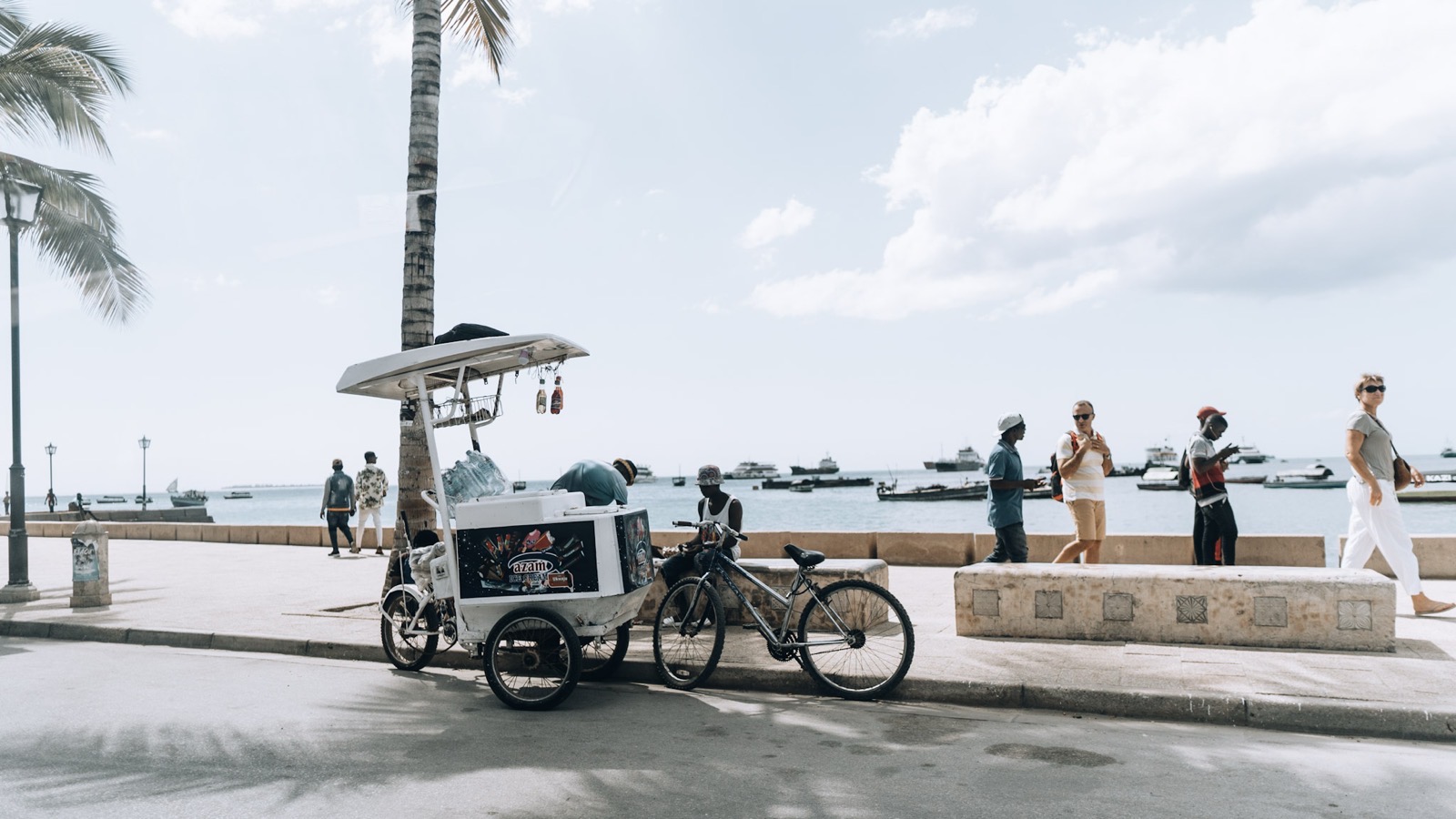
Day 14 evening: Stone Town. Forodhani Gardens night market opens from around 18:00 — grilled seafood, Zanzibar mix soup (Urojo), and sugarcane juice on the seafront. Walk to the Old Fort, which is a 10-minute distance from Forodhani.
Freddie Mercury was born Farrokh Bulsara in Stone Town on 5 September 1946. The house is in the Shangani district and has operated since 2019 as a small, staffed paid museum (USD 10 adult, open daily roughly 10:00–18:00) covering his early life. Worth finding on a morning walk before the heat builds.
Day 15: day trip to Mnemba Atoll or Chumbe Island. Mnemba snorkelling costs around USD 70 per person as a day excursion. Chumbe Island Coral Park — 7 eco-bungalows, first privately managed marine protected area in Tanzania — operates pre-booked day visits including boat transfer and guided snorkelling over a reef with more than 200 coral species and 370+ fish species.
Prison Island (Changuu) is 5.6 km northwest of Stone Town, 20–30 minutes by boat. The giant tortoises are genuinely impressive but the island itself is small; budget a half-day visit rather than a full one.
Day 16: drive north to Nungwi or Kendwa beach. Stone Town to Nungwi is 57 km, approximately 1 hour to 1 hour 20 minutes by road. This is the beach finish — the point of the trip. After 12 days of 05:30 wake-ups and game drives, a beach day where nothing is required of you is not a luxury add-on; it is recovery that makes the whole trip cohesive.
Depart on Day 17 (or Day 14 if you ran the 10-safari / 4-Zanzibar split).
Budget breakdown by tier
Park fees are a fixed cost regardless of tier. For 10 safari days covering Tarangire, Ngorongoro, and the Serengeti, budget approximately:
- Tarangire entry: USD 59 per adult per day × 2 days = USD 118 per person
- Ngorongoro conservation: USD 70.80 per adult per day × 2 days = USD 141.60 per person, plus USD 295 per vehicle crater descent (shared across your group)
- Serengeti entry: USD 82.60 per adult per day (peak season) × 6 days = USD 495.60 per person
Total park fees per person (excluding vehicle crater fee): approximately USD 755 per person for 10 safari days. This is before accommodation or vehicle costs.
Budget tier (camping): USD 200–300 per person per day for the safari portion. Total 10-day safari cost: USD 2,000–3,000 per person. Add USD 400–700 per person for 4 days Zanzibar budget accommodation (guesthouses and mid-range hotels). Total: approximately USD 2,400–3,700 per person.
Mid-range tier (tented lodges): USD 350–600 per person per day for the safari. Total 10-day: USD 3,500–6,000 per person. Add USD 800–1,500 per person for 4 days Zanzibar boutique hotel. Total: approximately USD 4,300–7,500 per person.
Luxury tier (fly-in, exclusive camps): USD 850–1,500+ per person per day for the safari. Total 10-day: USD 8,500–15,000+ per person. Zanzibar luxury resort adds USD 1,500–5,000+ per person. Total: USD 10,000–20,000+ per person.
Honeymoon and ultra-luxury packages (Singita-level camps at USD 2,000+ per person per night) sit above these ranges. One published 14-day Tanzania and Zanzibar honeymoon package starts from USD 15,400 per person, which reflects the upper end of private guided fly-in safari with luxury island accommodation.
When to go: migration calendar for 14-day planning
The 14-day itinerary gives you enough flexibility to target a specific migration phase, which the 7-day version cannot always do.
July–October: Best overall for the 14-day format. Dry season, peak game density at waterholes, and Mara River crossings accessible in the northern Serengeti. The crossings are unpredictable — herds may cross or may not on any given day. Plan the 2 northern nights for Days 11–12 of a July–September trip and you have the strongest odds available.
January–February: Second best window. Calving season on the southern Ndutu plains peaks in February. Predator density around the calving herds is intense. Adjust the Serengeti legs south rather than north: skip the northern flight and focus the central and southern zones instead.
June: Good entry point for the dry season — lower prices than July–August peak, herds beginning to concentrate at permanent water. A June 14-day trip works well as a cost-conscious alternative.
November–December and March–May: Wet season or green season. Shorter rains (November–December) are manageable and the Serengeti is green and quiet. The long rains (April–May) are difficult: some tracks close, several camps shut, and park fees drop 20–30% to reflect it. Not a period I would recommend for a first 14-day Tanzania trip.
Southern Tanzania variant: Ruaha and Nyerere
For visitors who have already done the northern circuit or who want a different wildlife experience, a southern circuit 14-day build is a credible alternative:
- Days 1–2: Fly Dar es Salaam → Ruaha (75–90 minutes by charter). Ruaha National Park, Tanzania’s largest, requires a dedicated trip because there are no road connections to the northern circuit.
- Days 3–6: Ruaha. Walking safaris with a nomadic roving camp are one of the better bush experiences in East Africa — Nomad Tanzania’s Ruaha walking camp covers the river edges using a light camp that moves with the wildlife. Vehicle game drives here are measurably quieter than the northern parks (few vehicles per km²).
- Day 7: Bush flight Ruaha → Nyerere (formerly Selous). Standard southern circuit itineraries use the scheduled 60–90 minute light-aircraft hop between Siwandu airstrip in Nyerere and Msembe in Ruaha.
- Days 8–10: Nyerere National Park. Rufiji River boat safaris are the defining activity — hippo and crocodile viewing from the water is one of Tanzania’s genuinely distinctive wildlife experiences. Wild dogs have a stronger presence in Nyerere than in any northern park.
- Day 11: Fly Nyerere → Zanzibar.
- Days 12–14: Zanzibar, same as the northern circuit version.
The southern circuit costs roughly 40–50% more per day than a comparable northern circuit safari, partly because there are fewer camps competing on price. Wild dog sightings, near-zero vehicle crowds, and walking safaris justify that premium for experienced safari-goers. For a first Tanzania trip, the northern circuit is still the right choice.
My honest take on the 14-day pace
The difference between a 7-day and a 14-day Tanzania trip is not just the extra days — it is that the 14-day version does not feel like it is being done to you. At 7 days, you are on a tight schedule where every decision is a trade-off: do Tarangire or save the time for the Serengeti, skip the Ndutu plains or cut the Ngorongoro to one night. At 14 days, you stop calculating.
Two nights in the northern Serengeti is where I noticed this most clearly. On a 7-day trip, the northern Serengeti does not exist — it is too far and too expensive a detour to justify. At 14 days, you fly north after Seronera and simply stay there. You are not watching the clock to the next park; you are watching the Mara River bank for dust.
The Zanzibar ending matters too. After 10 days of 05:30 starts, a beach day where nothing is required — no wildlife to identify, no distance to cover — is not just pleasant; it is the right end to an intense trip. The 14-day format builds this in rather than bolting it on.
Practical logistics: flights and transfers
- Into Tanzania: Kilimanjaro International Airport (JRO) for the northern circuit, or Dar es Salaam (DAR) for the southern circuit variant.
- Serengeti to Zanzibar: Light aircraft from Seronera or Kogatende airstrip to Dar es Salaam or directly to Zanzibar, approximately 90 minutes total.
- Dar es Salaam to Zanzibar: Fast ferry (Azam Marine, 90–120 minutes, USD 35–243 depending on class) or flight (approximately 20 minutes, USD 45–80 one-way).
- Stone Town to Nungwi beach: 57 km by road, 1 hour to 1 hour 20 minutes by shared taxi or private transfer.
Internal flight timing matters if your 14-day itinerary has northern Serengeti nights — book transfers in advance, especially for July–October when camps and flights fill quickly.
For the 7-day version of this northern circuit see the 7-day northern circuit itinerary. For the Serengeti in full — zone-by-zone breakdown, migration timing, camp types, and photography logistics — see the Serengeti complete guide. For the Ngorongoro Crater including crater descent logistics, the crater service fee, and the Big Five odds — see the Ngorongoro guide. For a full Zanzibar extension guide — Stone Town walks, Mnemba snorkelling, north coast beaches, and which island suits your pace — see the Zanzibar 1-week itinerary. For the 10-day middle-ground option combining the northern circuit with a shorter Zanzibar stop, see the 10-day Tanzania and Zanzibar itinerary. For park fees worked through in full — Tarangire at USD 59/day, Ngorongoro at USD 70.80/day plus the USD 295 crater vehicle fee, Serengeti at USD 70.80–82.60/day by season — see the safari budget planning guide.
Frequently asked questions
How much does a 14-day Tanzania safari cost?
Budget camping safaris cost USD 200–300 per person per day, putting a 10-day safari at USD 2,000–3,000 plus a Zanzibar extension of USD 400–700 per person for 4 days budget accommodation. Mid-range lodge safaris run USD 350–600 per person per day. Luxury fly-in safaris start at USD 850+ per person per day. Park fees alone add roughly USD 700–800 per person for 14 days including the USD 295 Ngorongoro crater descent vehicle fee.
Is 14 days enough for Tanzania and Zanzibar?
Yes — 14 days is the ideal length for a first Tanzania trip that covers both bush and beach properly. You can do 10 days on the northern circuit (Tarangire, Ngorongoro, central and northern Serengeti) and 4 days in Zanzibar without feeling rushed at either end. A 7-day safari adds only 3–4 Zanzibar days; 14 days allows a full week if you prefer a shorter safari.
What is the best time for a 14-day Tanzania itinerary?
July to October is the best overall window: dry season, peak game viewing, and Mara River crossings in the northern Serengeti from July through October. January to February is the second best window for calving on the southern Ndutu plains (peak in February). Avoid April–May (long rains) for road conditions, though this is the cheapest period by 20–30%.
Is the 14-day Tanzania itinerary for first-timers?
Yes — 14 days is the ideal first Tanzania trip. It gives you enough time in each park to see wildlife at different times of day and in different conditions, rather than arriving and leaving 24 hours later. The 7-day itinerary works, but you leave wondering what you missed. At 14 days you leave having seen it.
Can you add Kilimanjaro to a 14-day Tanzania trip?
Not realistically. A 7-day Kilimanjaro climb (Lemosho or Machame route) would need its own trip or a 21-day combined trip. A 3-day acclimatisation hike on the lower slopes is possible as a Day 1–2 add-on from Arusha, but most first-time Tanzania visitors prioritise either the safari or the mountain rather than trying to combine both.
What is the difference between the 7-day and 14-day Tanzania itinerary?
The 7-day itinerary skips the northern Serengeti (Kogatende/Lamai) where Mara River crossings happen July–October, covers Tarangire in one day rather than two, and allows only 3–4 Zanzibar days. The 14-day itinerary adds 2 nights in the northern Serengeti, gives Tarangire 2 full game drive days for the Silale swamp and elephant concentrations, and allows 4–5 proper Zanzibar days including a day trip to Mnemba Atoll.