
Facts & prices checked: 2026-06-25
The northern circuit is Tanzania’s most-traveled safari route. Arusha to Tarangire to Lake Manyara to Serengeti to Ngorongoro Crater and back to Arusha — four parks, four completely different landscapes, one continuous loop. Seven days is the practical minimum to do this properly. Here is what each day looks like, what drives the decisions, and how the plan changes by season.
Day 1 — Arrive Kilimanjaro International Airport (JRO), overnight Arusha
Kilimanjaro International Airport (JRO) is the gateway for the northern circuit. Most intercontinental flights arrive in the evening, which means Day 1 is a transfer day: airport pickup, 46–50 km drive to Arusha, hotel check-in, and gear check.
Same-day safari start is theoretically possible if your flight lands before 13:00, but it costs you half a Tarangire game drive. I would not recommend it. Arrive fresh, brief with your guide that evening, repack a soft-sided duffel under 15 kg for the game vehicle (bush flights have strict weight limits — typically 15 kg per person including carry-on), and sleep before the 05:30 departure the next morning.
Use the evening to sort gear you thought you packed: most forgotten items are a wide-brimmed hat, a proper fleece for the cold early mornings, and a spare camera battery. Arusha has reliable gear shops. Crossing the Ngorongoro rim at 2,300 m altitude later in the week will be 5–10°C before sunrise; dress accordingly.
Day 2 — Arusha → Tarangire National Park
Drive: approximately 2 hours, 140 km
The drive south from Arusha to Tarangire Gate takes about 2 hours on the main tarmac road. You arrive in time for a full afternoon game drive if you leave Arusha by 09:00.
Tarangire is where the elephants are. During the dry season (June–October), the Tarangire River is one of the only reliable water sources in the region, and breeding herds of up to 300 animals converge here, driven in from the surrounding dry savanna. This is not a park where you hope to see elephants — you count them. Matriarchal herds with calves, old bulls with heavy tusks, teenagers pushing each other around at the water. The concentrations are among the largest anywhere in East Africa.
The baobab landscape is immediately distinctive from the Serengeti plains you will see later — enormous trees with thick, wrinkled trunks that look like something from a Dalí painting, and that are genuinely some of the oldest living organisms in Africa. Sunset behind a baobab is the canonical Tarangire image.
Afternoon: drive the riverine circuit — Tarangire River, Silale Swamp (hippos, waterbuck), and the ridgeline tracks above the floodplain. Overnight inside the park at a tented camp.
Day 3 — Full day in Tarangire
The golden rule of safari: your best sightings are usually the morning of the day you could have left.
I was in Tarangire on Day 3 of a June circuit when we found three cheetah brothers working a ridge above the river — they had just made a kill and were feeding. None of the previous evening’s game drives had produced cheetah. The guide said he had not seen cheetah there in two weeks. That is Tarangire: the wildlife is dense but the landscape is large.
Morning game drive begins at 06:00. The golden-hour light in Tarangire — low angle, warm, animals still cool from the night — is better than most parks because the vegetation is open enough for long sight lines. Afternoon options: the marshes north of the main road for Tarangire’s impressive birdlife (published park checklists document 550+ species), or return to the river circuit when animals come down for a late drink before dark.
If you are visiting during the wet season (November–April), Tarangire is less crowded, the vegetation is vivid green, and migratory bird species arrive from Europe and North Africa. Elephant numbers thin out because water is available across a wider area, but the birding is exceptional.
Day 4 — Tarangire → Lake Manyara → en route to Serengeti
Tarangire to Lake Manyara gate: approximately 1 hour. Lake Manyara to Serengeti via Ngorongoro: approximately 4–5 hours additional.
Day 4 is the longest logistics day on the northern circuit. You leave Tarangire in the morning, spend a half-day game drive in Lake Manyara, and then continue to your Serengeti camp.
Lake Manyara is compact — the park runs along the base of the Rift Valley escarpment, between the cliff and the lake. Wildlife is reliably visible on the floodplain and in the groundwater forest: elephants in the yellow fever tree forest, hippos in the lake shallows, buffalo herds in the grassland, and baboon troops across everything. The tree-climbing lions of Manyara are a genuine phenomenon — lions resting on fig branches 3–4 metres off the ground, apparently to escape insects and heat — though you need some luck to find them.
Flamingos are seasonal. Lake Manyara hosts large flocks from November through April when water levels attract the lesser flamingos. In the dry season, numbers are lower or absent.
After the game drive, exit through the south gate and drive north and west to Ngorongoro gate, then across the Conservation Area to the Serengeti. This is a 4–5 hour drive with a long section on the crater rim road. Arrive at your Serengeti camp by late afternoon.
Alternative: A 45-minute bush flight from Manyara airstrip to Seronera Airstrip replaces 6 hours of driving. If budget allows, I recommend it — you arrive in the Serengeti fresh rather than road-tired, and the flight itself over the Rift Valley is worth it. Luggage limit on light aircraft: typically 15 kg per person including carry-on, soft-sided bag only.
Day 5 — Full day Serengeti (Seronera region)
Central Serengeti (Seronera) is approximately 335 km from Arusha by road — about 5–6 hours.
Seronera is the heart of the Serengeti. The Seronera Valley’s riverine forest — the strip of larger trees along seasonal water courses — holds high predator density year-round. Leopards use the trees for cache storage and resting; lions den in the kopjes (granite outcrops that rise from the plain like islands); cheetahs work the open savanna. The valley is why central Serengeti works in any month.
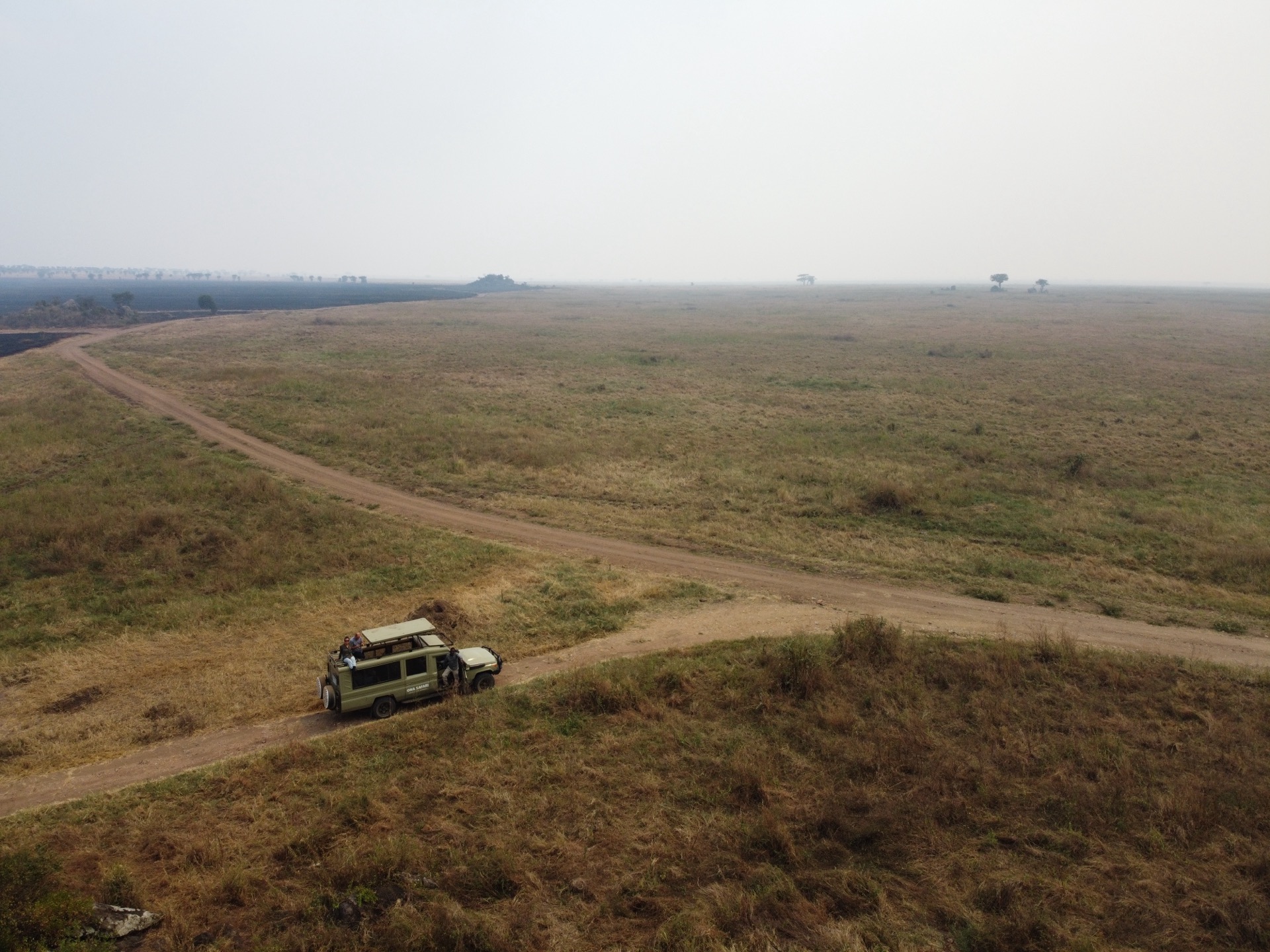
The game drive rhythm is simple: leave camp by 06:00, drive for 3–4 hours, return to camp for a midday rest during the heat, then back out at 16:00 for the evening drive. Full-day game drives are an option with a packed lunch and a stop at the Retima Hippo Pool or one of the river crossings if the migration is present.
Season dictates zone more than any other factor:
- July–October (dry season): Northern Serengeti (Kogatende/Mara River area) is where the wildebeest river crossings happen — this is the famous scene, crocodiles and all. A specific northern Serengeti camp is worth the cost to avoid 3-hour daily drives from Seronera to reach the crossings.
- January–February: Southern Serengeti and Ndutu plains. The calving season peaks in February — approximately 400,000 calves born over a 6-8 week season, with cheetahs, lions, wild dogs, and hyenas all converging. The herds of more than 2 million wildebeest and zebra are still in the south.
- June and November–December: Transition months with solid Seronera wildlife and fewer vehicles than peak.
- March–May (long rains): Some roads are impassable; several camps close; not recommended for a first visit.
Day 6 — Serengeti → Ngorongoro Crater rim
Serengeti to Ngorongoro: approximately 1.5–2 hours driving from the Naabi Hill gate area.
Day 6 splits: a morning game drive in the Serengeti (your last), then the drive east through the Ngorongoro Conservation Area to the crater rim. The rim sits at 2,300 m. Your camp sits at altitude. Pack the fleece.
The road from the Serengeti across the Ngorongoro Conservation Area passes through Maasai pastoral land — cattle herds on the crater rim, Maasai women selling beadwork at roadside, and the first signs of what feels like a different planet from the open plains. The rim appears gradually: you are driving through forest, and then the caldera opens below you, a 20-km wide bowl, and the whole thing looks improbably large.
Afternoon on the rim: walk around the viewing point, photograph the sun moving across the caldera. At sunset the temperature drops fast. A proper dinner at the lodge and an early night — the crater descent starts before 07:00.
Note on altitude: The crater rim at 2,300 m is cold at night and at dawn. Most visitors from sea level feel nothing beyond mild tiredness. If you are sensitive to altitude — or have a history of altitude sickness — note this when booking; some operators adjust the itinerary sequence.
Day 7 — Full crater descent, return to Arusha
Crater descent: 30 minutes down the Seneto road; maximum 6 hours on the crater floor. Return to Arusha: 180 km, about 5–6 hours.
This is the day most people remember. The Ngorongoro Crater is 20 km wide and 610 m deep. Approximately 30,000 animals live in the crater year-round: lion prides (10–30 resident lions, one of the densest populations in Africa relative to area), old bull elephants with notably large tusks, hippo pods at Ngoitokitok pool, wildebeest herds, zebra, Grant’s and Thomson’s gazelle, and 20–30 black rhinos — one of Tanzania’s last viable populations. If you are going to see a black rhino in Tanzania, this is your best chance.
A few logistics you need to know:
- Descent roads: Two named routes — Seneto Descent Road (most common) and Lerai Descent Road. Your guide selects based on gate queue and conditions.
- 4WD only: Sedans and two-wheel-drive vehicles are prohibited on the crater floor. All game-drive vehicles on the northern circuit should already comply.
- Time limit: Maximum 6 hours on the crater floor. Most descents run 06:30 to 12:30 or 07:00 to 13:00.
- Vehicle crater fee: The Ngorongoro Conservation Area charges a separate crater descent fee of USD 295 per vehicle per trip (in addition to the USD 70.80 per person per day conservation entry fee). This is separate from TANAPA park fees — the NCAA (Ngorongoro Conservation Area Authority) is a different entity.
- No walking: Walking on the crater floor is not permitted except at the designated picnic sites. Lions, buffalo, and rhinos are present throughout.
By early afternoon you are driving back to Arusha — 180 km, roughly 5–6 hours with a lunch stop at a Karatu restaurant. Fly home from Kilimanjaro the next morning, or fly to Zanzibar that afternoon for the beach extension.
Adding Zanzibar: the bush-and-beach extension
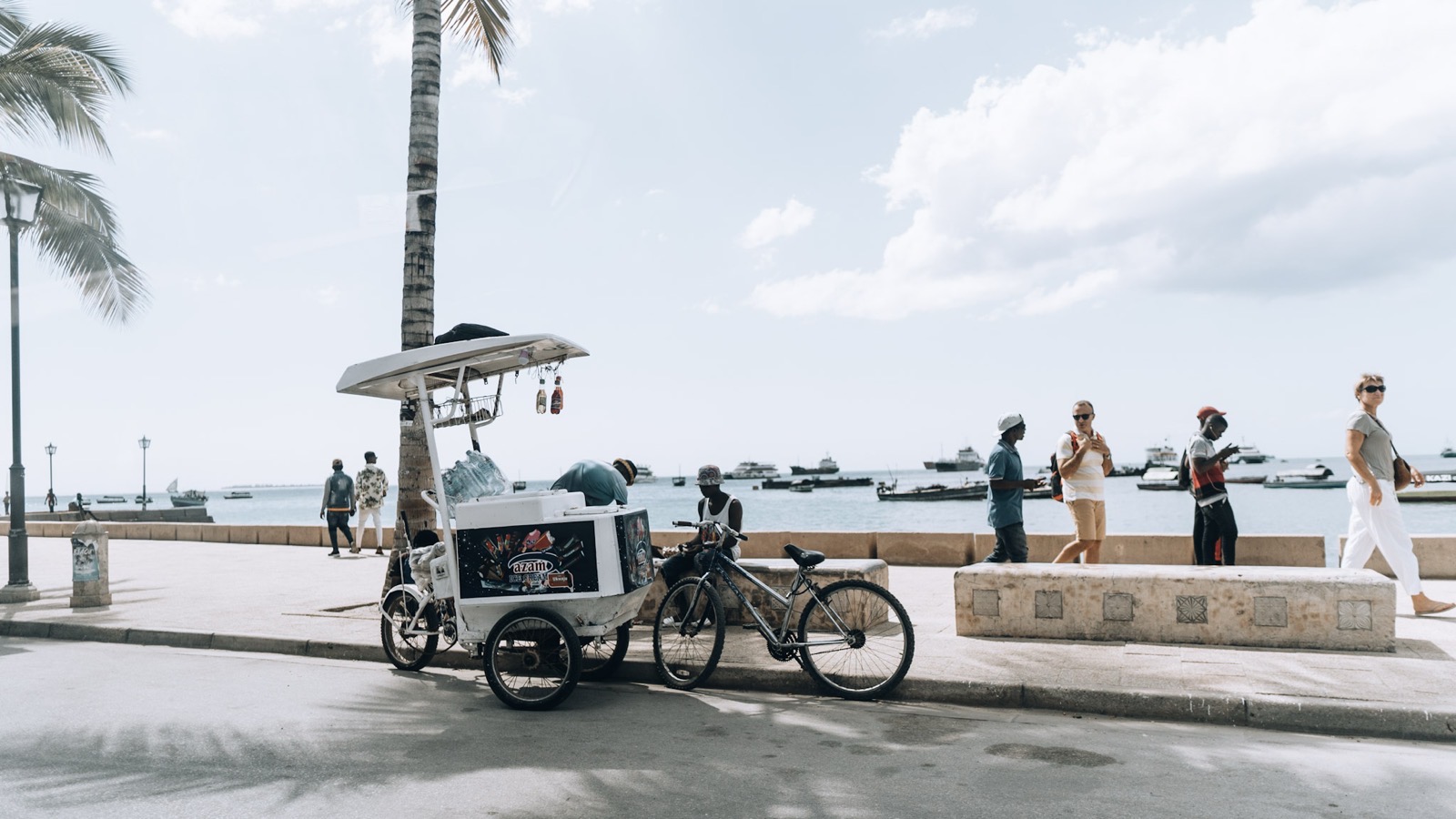
The Kilimanjaro–Zanzibar air connection is one of the most efficient travel logistics in East Africa. Precision Air, Air Tanzania, and Coastal Aviation fly the route in approximately 1 hour 5 minutes, with roughly 14 weekly departures. A 3 to 4 day Zanzibar extension after the safari adds USD 400–700 per person and turns 7 days of early mornings and game drives into a complete tropical holiday. Most guests who do the combination come back calmer than I have ever seen them.
Budget across three tiers
Park fees are the fixed cost regardless of accommodation category. For the full 7-day circuit, park fees total roughly USD 500–600 per person (Serengeti USD 70.80–82.60/day, Ngorongoro conservation fee USD 70.80/day plus the USD 295/vehicle crater fee, Tarangire USD 59/day, Manyara USD 53.10–59/day). Everything above that is accommodation and transport.
| Tier | Style | Approximate cost per person per day |
|---|---|---|
| Budget | Shared vehicle, public campsite or basic fixed camp | USD 250–400 |
| Mid-range | Private tented camp, dedicated guide and vehicle | USD 400–700 |
| Luxury fly-in | Private fly-in camps, bush flights between parks | USD 850–1,500+ |
A representative 7-day budget camping safari on the northern circuit costs USD 1,800–4,200 per person total depending on season and group size. Mid-range and luxury costs scale from there.
What season changes about this itinerary
The park sequence is the same in every month. What changes is which Serengeti zone to prioritise:
| Month | Best Serengeti zone | Key wildlife event |
|---|---|---|
| Jan–Feb | Southern/Ndutu | Calving season, peak February |
| Mar–May | Avoid (long rains) | Roads muddy, some camps closed |
| Jun | Seronera | Herds moving north, dry |
| Jul–Oct | Northern (Mara River) | River crossings, peak Jul–Aug |
| Nov | Seronera | Short rains begin, green, quiet |
| Dec | Southern | Herds return south |
The best all-round months for the northern circuit are February, March (usually still dry), October, November, and December. June–October (dry season) has the best road conditions and the most wildlife concentration, but also the most visitors and higher lodge rates.
March to May (long rains) is not recommended for a first-time safari. Roads can be impassable, several camps close, and the Ngorongoro rim is frequently fogged in.
Tim’s honest view on 7 days
Seven days gives you a genuine, deep introduction to one circuit. It does not give you Tanzania. The northern parks are not representative of the whole country — there is no walking here, no boat safari, no chimpanzee trekking, and you do not reach the wild dogs and sand rivers of the south. Ruaha and Nyerere (Selous) are different experiences entirely. I have been doing this circuit for years and I still notice new things each time.
The honest advice: do the 7-day northern circuit with your full attention, come back for the southern parks and western reserves when you can. Tanzania rewards return visits more than almost anywhere else I have been.
Where to go from here
For the full cost breakdown by accommodation type and park fee structure, see the 7-day Tanzania safari costs guide. For season-by-season timing advice on each specific park — Serengeti zone selection, Tarangire dry-season concentrations, and Ngorongoro caldera conditions — see the Serengeti: when to go and Ngorongoro: when to go guides. To understand the different zones of the Serengeti and which to request based on your month of travel, see the zone-by-zone breakdown. For the full northern circuit overview including alternative routing, see the Tanzania northern circuit guide. If you are comparing the Serengeti and Ngorongoro and need to choose which to prioritise on a shorter trip, see the Serengeti vs Ngorongoro comparison. For the full wildlife picture — Big Five locations, wild dog sightings, migration timing, and chimpanzee trekking — see the Tanzania wildlife guide. To add a Zanzibar beach extension, start with the Zanzibar guide for which coast suits your travel style.
Frequently asked questions
What is the best 7-day Tanzania safari itinerary?
The most practical 7-day Tanzania safari itinerary is the northern circuit: fly into Kilimanjaro International Airport (JRO), drive 140 km (about 2 hours) to Tarangire for 2 nights, then Lake Manyara for 1 night, then 2 nights in the Serengeti, and finish with Ngorongoro Crater on Day 7 before returning to Arusha. This covers four different habitats and gives you a realistic amount of time in each park.
Can you see the wildebeest migration in 7 days?
Yes — which zone you see depends on the season. From July to October, the herds are in the northern Serengeti near the Mara River crossings. In January and February, calving happens on the short-grass Ndutu plains at the southern edge of the Serengeti, with peak action in February. Either way, 7 days on the northern circuit puts you in the right place. The migration involves more than 2 million wildebeest and zebra moving approximately 800 km in a loop through the Serengeti ecosystem.
How much does a 7-day Tanzania safari cost?
A 7-day northern circuit safari costs USD 1,800–4,200 per person total for budget camping, USD 350–600 per person per day for a mid-range tented camp, and USD 850 or more per person per day for a luxury fly-in. Park fees alone total roughly USD 500–600 per person for the week: Serengeti at USD 70.80–82.60/day, Ngorongoro at USD 70.80/day plus a USD 295 crater vehicle descent fee, and Tarangire at USD 59/day.
Is 7 days enough for Tanzania?
Seven days is enough for a strong first experience of one circuit — the northern parks or the southern circuit — but not enough to see the whole country. Tanzania is enormous. The northern circuit alone (four parks) takes 7 days at a reasonable pace. A western extension for chimpanzee trekking at Mahale adds another 3 days minimum. Most repeat visitors return specifically for the western and southern parks that a first 7-day trip cannot reach.
What is the order of parks on the Tanzania northern circuit?
The standard order is Arusha → Tarangire → Lake Manyara → Serengeti → Ngorongoro Crater → Arusha. Some operators reverse the Serengeti and Ngorongoro sequence depending on accommodation availability, but the Tarangire-first approach is most common because it gives you a gentle introduction with good elephant and bird viewing before the more intense Serengeti game drives. Lake Manyara works as a half-day transit stop or a full day.
Should I add Zanzibar to a 7-day Tanzania safari?
Yes — a 3 to 4 day Zanzibar extension is one of the most popular additions. Precision Air, Air Tanzania, and Coastal Aviation fly directly between Kilimanjaro Airport (JRO) and Zanzibar (ZNZ) in about 1 hour 5 minutes, with approximately 14 weekly connections. A 7-day safari followed by 3–4 days in Zanzibar equals 10–11 days total and gives you both the bush and beach experience. Budget an extra USD 400–700 per person for the Zanzibar extension.