Facts & prices checked: 2026-07-18
Lemosho is the route I point most first-time climbers toward when they have one extra day and don’t mind paying slightly more for it. It approaches Kilimanjaro from the quiet western side, near Londorossi Gate, and doesn’t meet the crowds until Barranco Camp on day four — by which point the busier Machame groups have already thinned out. The trade-off is straightforward: a bit more cost, a bit more time, for a noticeably better shot at the summit.
I’ve sent guests through Matlai on to Kilimanjaro for several seasons now, and Lemosho is the route that generates the fewest “I wish I’d known” messages afterward. Most of what follows is the detail the route-comparison overview only has room to summarize — the full camp-by-camp elevation profile, the two different “8-day” itineraries operators actually sell, and the honest cost breakdown for 2026. The question I get most often isn’t “which route is best” — it’s “why does the same route show up priced three different ways.” That gap is usually the itinerary variant, not the operator padding margin, and it’s worth understanding before you sign anything.
Lemosho at a glance
| Metric | Detail |
|---|---|
| Duration | 7–8 days standard (6–9 day variants exist); book 8 if possible |
| Distance | ~70–76 km gate to gate (sources vary by itinerary version) |
| Total elevation gain | ~4,800–5,000 m |
| Starting altitude | ~2,100 m (Londorossi Gate / forest trailhead) |
| Summit | Uhuru Peak, 5,895 m |
| Success rate | ~85–90% (8-day); some operators report up to mid-90s |
| Cost tier | Park fees USD 968–1,109/person (2026); all-in USD 2,850–4,500+ |
| Crowding | Quiet first 2–3 days; joins Machame traffic at Barranco |
Why Lemosho is worth the extra day
The case for Lemosho over Machame comes down to one thing: more time at moderate altitude before the mountain gets serious. Both routes eventually funnel onto the same trail — Lemosho merges with Machame at the Shira Plateau, and from Barranco Camp onward the two are indistinguishable. What Lemosho adds is two to three days of walking through lower terrain first, which is exactly the kind of gradual exposure that helps your body start producing more red blood cells before the altitude actually bites.
Multiple trekking sources describe Lemosho as having one of the finest acclimatization profiles of any standard route, and Reddit’s r/kilimanjaro regulars name it repeatedly as the strong all-around first-timer pick — scenic, well-paced, and less crowded than the alternative everyone defaults to. That’s not a knock on Machame. It’s a genuinely good route too. Lemosho is simply the version with more runway.
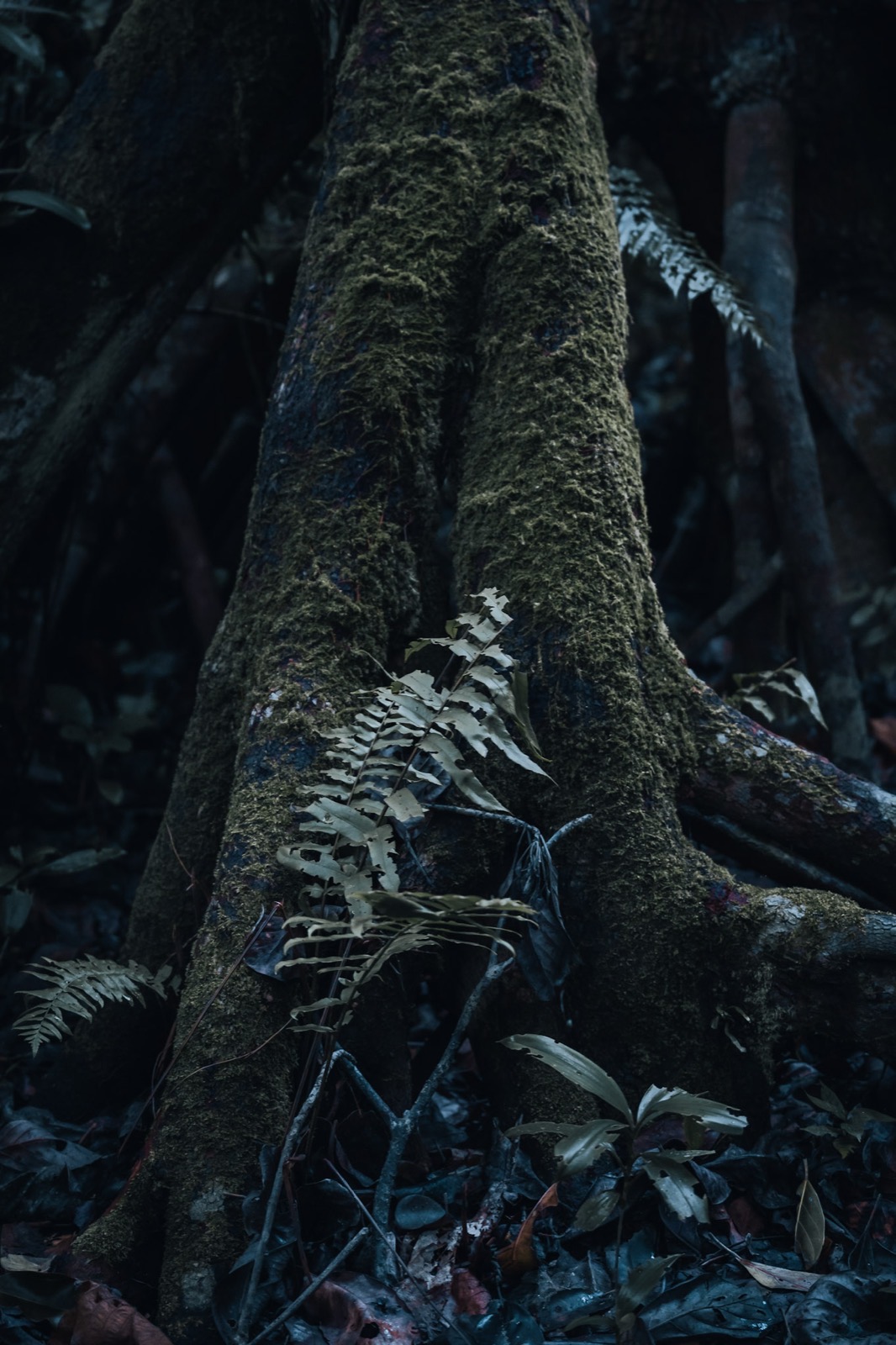
The forest walk-in from Londorossi Gate is also a different experience than Machame’s equivalent stretch — quieter, and with a real chance of wildlife. Black-and-white colobus monkeys are spotted regularly along both the Lemosho and Machame corridors, and elephants occasionally turn up in the lower forest zones near the Lemosho trailhead specifically, something Machame’s busier gate rarely offers.
One honest aside: if you’ve read about the Western Breach — the direct crater-rim route accessible from Lemosho, Shira, Machame, or Umbwe — skip it unless an operator specifically explains current conditions to you. It has a documented rockfall history that worsened as the glaciers retreated, a fatal 2006 rockfall that killed three climbers, and it was closed again in 2025 with no reopening date confirmed as of early 2026. Every itinerary in this guide goes via Barafu Camp on the standard southern approach, not Western Breach. That’s deliberate, not a compromise.
Who Lemosho suits best
Lemosho is the route I’d steer a fit first-timer toward if budget allows the extra day and extra few hundred dollars. It’s not the right call for everyone, and it’s worth being honest about who it doesn’t suit.
- First-timers with 8 days to spare: this is the sweet spot. You get Machame’s proven “climb high, sleep low” structure plus two additional lower-altitude days most Machame itineraries skip.
- Returning climbers after a failed Marangu attempt: Lemosho’s longer runway and different scenery genuinely change the experience, not just the odds. Several guests I’ve spoken with who turned back on Marangu came back and summited on Lemosho the following year.
- Climbers who dislike crowds more than they dislike cost: if watching dozens of headlamps snake up the same switchback ahead of you sounds unpleasant, the quiet first three days are worth paying for.
- Not the right fit: anyone with a hard 5–6 day limit (Marangu is the only realistic option at that length), and anyone who’s already comfortable at altitude and simply wants the fastest, cheapest reasonable route (Machame’s 7-day version does that job for less).
The full 8-day itinerary: camp by camp
Here’s the detail the route-comparison hub simplifies. Most operators sell one of two “8-day Lemosho” itineraries, and they’re not identical — worth knowing before you book.
The full walk-in version (the one I’d choose) starts at Londorossi Gate and walks through the forest on day one, rather than driving straight to the Shira Plateau:
| Day | Segment | Elevation | Distance / time |
|---|---|---|---|
| 1 | Londorossi Gate → Mti Mkubwa (Forest Camp) | ~2,100 m → 2,895 m | ~6 km, 3–4 hrs |
| 2 | Mti Mkubwa → Shira 1 Camp | 2,895 m → 3,510 m | Full day, moorland |
| 3 | Shira 1 → Shira 2 Camp (via Shira Cathedral, ~3,900 m) | 3,510 m → 3,840 m | Shorter day, acclimatization |
| 4 | Shira 2 → Lava Tower (acclimatize) → Barranco Camp | 3,840 m → 4,630 m → sleep 3,950 m | 6–8 hrs |
| 5 | Barranco (Barranco Wall) → Karanga Camp | 3,950 m → 4,035 m | Wall scramble + valley crossing |
| 6 | Karanga → Barafu Camp | 4,035 m → 4,673 m | Short day, rest before summit |
| 7 | Midnight summit push → Stella Point → Uhuru Peak → descend to Mweka Camp | 4,673 m → 5,756 m → 5,895 m → ~3,100 m | 13–14 hrs total |
| 8 | Mweka Camp → Mweka Gate (exit) | ~3,100 m → 1,640 m | ~3–4 hrs |
The shorter “drive-up” variant some operators sell as 6 or 7 days skips Mti Mkubwa entirely — a vehicle drops you directly onto the Shira Plateau at around 3,414 m, and day one starts there instead of at the gate. It’s a legitimate itinerary and it’s cheaper, but it trims exactly the acclimatization benefit that makes Lemosho worth choosing over Machame in the first place. If cost is forcing you toward the shorter version, ask whether a 7-day Machame at similar money gives you the same odds — often it does.
A few operators run a 9-day version that adds an overnight at Moir Hut between Shira 2 and Lava Tower, and Ian Taylor Trekking specifically markets an 8-day itinerary using Kosovo Camp as the high camp instead of Barafu, arguing it produces a shorter, calmer summit night. Both are worth asking about if maximum acclimatization matters more to you than shaving a day off the schedule.
Camps and facilities along the way
Mti Mkubwa (2,895 m) sits inside the Afromontane rainforest — Lemosho’s first of four ecological zones — and is the only forest-zone camp unique to this route versus Machame. It’s also where you’re most likely to hear or see colobus monkeys.
Shira 1 and Shira 2 Camps (3,510 m and 3,840 m) sit on the Shira Plateau, an ancient caldera floor roughly 500,000 years old. Shira Cathedral, a volcanic rock outcrop at roughly 3,900 m, sits directly on the trail between the two camps — a natural landmark, not a detour.
Barranco Camp (3,950 m) is where Lemosho and Machame traffic properly mixes for the first time. The Barranco Wall above camp is a roughly 257 m scramble that takes most groups 1–2 hours — non-technical, but narrow enough in places that you’ll move single file. It looks worse in photos than it feels underfoot; most of it is careful walking, not climbing.
Karanga Camp (4,035 m) has the last reliable water source before the higher camps — the stream in Karanga Valley. Above this point, all water is carried or melted.
Barafu Camp (4,673 m) is the standard summit base for Lemosho, Machame, and Umbwe alike. It’s exposed, cold, and crowded on a clear night before a summit push — expect neighbours from every southern route converging here at once.
Mweka Camp (~3,100 m) and Mweka Gate (1,640 m) handle the exit for Lemosho, Machame, and several other southern-route descents. Mweka Camp is a forest-zone stop used only on the way down — you never sleep there on the ascent — and by the time you reach it after a summit night, most climbers describe it as the first place they can actually taste the air again. Facilities at every camp are basic by design: shared long-drop toilets (some operators now carry portable toilet tents as a paid upgrade), simple mess tents, and no charging power anywhere on the mountain above roughly 3,000 m. Bring a spare battery, not an extension cord.
Success rate and acclimatization: the real numbers
Lemosho’s reputation for a strong success rate is earned, but it depends entirely on which version you book. The 8-day itinerary consistently reports figures in the 85–90% range across independent trekking sources, and some operator-specific data — including one study focused on first-time climbers — puts it as high as 91.7%. The 7-day version, which compresses the same acclimatization gain into less time, runs closer to 85%. Compress it further into a 6-day trip and you’re giving up the entire point of choosing Lemosho over Machame.
The mechanism is the one every serious guide will repeat: your body needs time above 3,000 m to start producing more red blood cells, and the “climb high, sleep low” pattern — reaching Lava Tower at 4,630 m then dropping to sleep at Barranco (3,950 m) — banks acclimatization gain before the thin air at Barafu and the summit push. More days at moderate altitude before the push, more banked adaptation, better odds. It’s not complicated, but it is easy to shortcut yourself out of by booking the cheapest itinerary you find.
Diamox (acetazolamide) is commonly used as a prophylactic alongside — not instead of — a well-paced route, typically started 24–48 hours before ascent after a conversation with a doctor. It’s not a substitute for the extra day. The altitude sickness guide covers dosing, symptoms, and when a headache stops being normal and starts being a turnaround signal.
What to pack specifically for Lemosho
Most of the general Kilimanjaro kit list applies unchanged — the full packing list covers the 3-layer system, summit-night gear, and porter weight limits in detail, and none of that changes because you chose the western approach. A few things matter more on Lemosho specifically, mostly because of the extra day and the extra forest exposure:
- A proper waterproof shell for day one and two. The Mti Mkubwa forest walk-in sees more rain exposure than Machame’s equivalent stretch, simply because you spend more time in the rainforest zone before climbing above it.
- Gaiters, non-negotiably. The western approach’s loose volcanic ash on the Barranco-onward descent is identical to Machame’s — but Lemosho’s extra day means more total hours in ash-prone terrain.
- A daypack sized for longer days. With Mti Mkubwa and Shira 1/2 as distinct stages, several Lemosho days run longer in hours than the equivalent Machame days, even though the elevation gain per day is gentler.
- Trekking poles. Useful on any route, genuinely earn their weight on the Barranco Wall scramble and the long volcanic-scree descent from Barafu.
- An extra pair of hiking socks. With one or two additional days on the trail versus a 6-day Machame booking, sweat and damp socks accumulate faster than people plan for. Four pairs is the minimum; five is comfortable.
Lemosho park fees and total cost in 2026
KINAPA (Kilimanjaro National Park Authority) government fees for 2026 run to USD 968 per person for the 7-day Lemosho itinerary and USD 1,109 for the 8-day version — these are fixed government charges, separate from anything an operator adds for crew, food, and equipment.
| Cost layer | 2026 figure |
|---|---|
| KINAPA fees, 7-day Lemosho | USD 968/person |
| KINAPA fees, 8-day Lemosho | USD 1,109/person |
| Budget open-group departure, 7-day | From USD 2,850/person |
| Budget open-group departure, 8-day | From USD 2,980/person |
| Mid-range operator, all-in with tips | USD 3,200–4,500/person |
| Premium named operator (e.g. Ian Taylor Trekking, 8-day) | From USD 4,270/person |
| Crew tips (guide, assistant guides, cook, porters) | USD 250–350+/person |
The gap between the cheapest open-group price and a responsible mid-range operator is real, and it’s not just margin — it reflects crew ratios, gear quality, and whether porters are paid and equipped properly. Price alone is a reasonable first filter: anything meaningfully under the open-group floor is cutting something, usually crew pay or gear quality. Ask directly how many porters are assigned per climber (4 is typical for a 7–8 day Lemosho booking once you account for group gear, food, and water) — an operator who dodges the question is usually the one cutting crew size to hit a lower headline price.
How Lemosho compares to the other routes
Lemosho sits in the upper-middle of Kilimanjaro’s route hierarchy: better acclimatization than Machame’s 6-day version, roughly on par with 7–8 day Machame, and a notch below the Northern Circuit’s best-in-class numbers. If your priority is maximum success rate and you have 9–10 days to spend, the Northern Circuit — which shares Lemosho’s western start before looping further around the mountain — edges it out. If your window is 5–6 days, Marangu is the only realistic option, and its lower success rate is the honest price of the shorter schedule. Rongai is the pick specifically for the November short-rains window, since its northern approach stays drier than Lemosho’s western one.
Marangu is also the only hut-based route — a real comfort difference in bad weather, but not one that offsets its lower odds for a first attempt. None of these trade-offs are absolute; they’re a starting point for a conversation with your operator, not a verdict. For the complete side-by-side — all five routes, cost tables, and a decision framework by climber type — the route-comparison overview linked above covers all five options in one place.
Once you’ve settled on Lemosho, timing is the next decision: the Kilimanjaro when-to-go guide breaks down the June–October dry season against the quieter January–February window, and explains why route length still matters more than the calendar month. For physical preparation and the training timeline, see the Kilimanjaro training guide. And for the broader planning picture — costs, crew structure, and how Kilimanjaro fits with a Tanzania and Zanzibar trip — start at the Kilimanjaro planning hub.
Frequently asked questions
How many days is the Lemosho route?
Standard bookings run 7 or 8 days, and a handful of operators sell 6-day or 9-day variants. Book 8 days if you can. The extra day over the 7-day version adds a rest or acclimatization stop before the summit push, and multiple operator sources put the 8-day success rate meaningfully above the 7-day one — one trekking company reports 96% for 7 days against 98% for 8, another reports 92% versus over 95%. Whichever exact figures you're quoted, the direction is the same: the extra day is worth more than its cost.
What is the Lemosho route success rate?
Most sources put the 8-day Lemosho summit success rate at 85–90%, and several operator-specific studies report figures as high as 90–95%. One Lemosho-specific dataset for first-time climbers put it at 91.7%. Treat any single operator's number as marketing until you've asked how they calculate it — but the pattern across every source is consistent: Lemosho's 8-day version outperforms 6-day Machame and sits close to the Northern Circuit.
How long is the Lemosho route in kilometers?
Sources disagree by more than they should — anywhere from 65 km to 76 km gate to gate, depending on whether the operator measures the full Londorossi walk-in or the shorter drive-up-to-Shira-Plateau variant, and whether descent distance is counted separately. A reasonable working figure is 70–71 km for the standard 8-day itinerary. Total elevation gain runs roughly 4,800–5,000 m over the climb.
Does the Lemosho route join the Machame route?
Yes. Lemosho approaches from the west and merges with the Machame path at Shira Plateau, then the two routes share the same trail through Barranco Camp, Karanga Camp, Barafu Camp, and the summit push. From Barranco onward, a Lemosho climber and a Machame climber are on identical ground — the difference is entirely in the first 2–3 days.
What camps does the Lemosho route pass through?
The standard 8-day sequence: Londorossi Gate (~2,100m) to Mti Mkubwa/Forest Camp (2,895m) on Day 1, then Shira 1 Camp (3,510m), Shira 2 Camp (3,840m), Lava Tower (4,630m) with the overnight at Barranco Camp (3,950m), Karanga Camp (4,035m), Barafu Camp (4,673m), the summit push to Uhuru Peak (5,895m) descending to Mweka Camp (~3,100m), and finally Mweka Gate (1,640m) on exit.
Is Lemosho harder than Machame?
No — the walking difficulty is nearly identical since both routes share the same trail from Barranco onward. Lemosho's western approach through Mti Mkubwa and the Shira Plateau is gentler in gradient than Machame's first two days, not harder. The reason people describe Lemosho as the 'better' choice isn't difficulty — it's the extra acclimatization day and the quieter early camps.
How much does the Lemosho route cost?
2026 KINAPA government park fees alone run USD 968 per person for 7 days and USD 1,109 for 8 days. On top of that, budget open-group departures start around USD 2,850–2,980; a responsible mid-range operator runs USD 3,200–4,500 all-in with crew tips; named premium operators like Ian Taylor Trekking price their 8-day Lemosho itinerary from USD 4,270. Crew tips (guide, assistant guides, cook, porters) add USD 250–350+ per climber and are not optional.
Can beginners climb Kilimanjaro via Lemosho?
Yes. Lemosho requires no technical climbing experience or equipment — no ropes, no crampons, no prior mountaineering. What it requires is a reasonable fitness base and, more importantly, respecting the acclimatization schedule: not rushing, drinking enough water, and telling your guide the truth about symptoms. First-timers who choose the 8-day version specifically for the extra acclimatization day tend to do well.