
Facts & prices checked: 2026-06-25
Ten days in Tanzania splits cleanly into 7 safari days and 3 Zanzibar days — enough to complete the full northern circuit and still arrive at the beach feeling like you have had two proper trips, not one rushed one. The 7-day version feels slightly short in the Serengeti; the 14-day version starts to shade into repeat-visitor territory with its southern-Tanzania add-ons. Ten days is the most popular first-trip length for good reason.
Rough Guides says 10 days is enough to combine Tanzania safari and Zanzibar beach without rushing, and the real trip cost data backs up that assessment: one traveller reported USD 4,300 total per person for a 10-day Tanzania and Zanzibar trip — USD 2,450 for the safari, USD 550 for Zanzibar, USD 1,050 for flights, and USD 250 for visa and tips.
Why 10 days is the right first Tanzania trip length
Seven days just barely covers the northern circuit. You arrive jet-lagged, spend one full day in transit on the Arusha-to-Serengeti road, and end up with 2 nights in the Serengeti — not enough to adjust for migration positioning or catch a bad-weather day without writing off a game drive. I have watched travellers on 7-day trips spend Day 6 in the Serengeti visibly calculating whether they have done enough.
Ten days gives you three nights in the Serengeti. That third night is the one where you stop managing the schedule and actually settle in. You have a morning where you are not under pressure to reach the next gate.
Fourteen days is the right choice for a second Tanzania trip, or for anyone who specifically wants to add the southern parks (Ruaha, Nyerere) or spend time at Ndutu for the calving season. On a first trip, 14 days often leads to a bloated middle section where guests have covered the main circuit and are adding days without a clear reason.
The 10-day structure:
- Days 1–2: Arrive Kilimanjaro International Airport → Tarangire (2 nights)
- Days 3–4: Ngorongoro Conservation Area (2 nights: rim sunset, crater descent)
- Days 5–7: Serengeti National Park (3 nights)
- Day 8: Transit to Zanzibar
- Days 8–10: Zanzibar (Stone Town + north coast beach)
The 10-day itinerary, day by day
Day 1: Arrive Kilimanjaro International Airport
Kilimanjaro International Airport (KIA) sits about 50.6 km from Arusha city — roughly a 1-hour transfer (up to 1.5 hours in traffic or after dark). Most arrivals come from Europe overnight, landing mid-morning. Your operator will meet you at arrivals.
If you land before midday and your energy holds, some operators drive direct to Tarangire for an afternoon game drive. I prefer this: the first game drive of any trip has a quality the later ones do not quite replicate, and the light in Tarangire by 3pm in the dry season is good. If you land after 14:00, the sensible move is Arusha for one night — the drive to Tarangire in the dark gains nothing.
Tarangire is 118 km southwest of Arusha. The drive takes about 2 hours on the main road.
Days 2–3: Tarangire National Park
Entry fee: USD 59 per adult per day (TANAPA 2024/25 non-resident rate).
Tarangire is the most underrated park on the northern circuit. The Serengeti gets the headlines, but Tarangire delivers something the Serengeti cannot: during the dry season (July–October), the Tarangire River becomes the only permanent water source for a vast area, and elephants concentrate here in numbers that are genuinely difficult to describe. The peak elephant population rises to about 3,000 individuals, and in late August and September, herds of over 200 animals are common around the river.
The park is also the reason your whole safari smells slightly of ancient bark: baobab trees are everywhere, some of them over 1,000 years old, with trunks wide enough to hollow a small room inside.
Day 2: arrive by early afternoon, late game drive, overnight at camp. Day 3: dawn drive (best light in Tarangire is the first two hours) → depart by midday for Ngorongoro.
Days 4–5: Ngorongoro Conservation Area
Conservation fee: USD 70.80 per adult per day. Crater descent fee: USD 295 per vehicle (regardless of passenger count).
Drive from Tarangire to Ngorongoro takes roughly 3–4 hours (about 177 km via Karatu). Arrive afternoon, walk to the rim, watch the crater below fill with late-afternoon shadow. This is one of the genuinely good moments on the Tanzania circuit — looking 600 metres down at 25,000+ resident mammals, the flamingo-pink soda lake at the centre, the green floor walled in on all sides.
Day 5 is the crater descent. Queue at the gate before 06:30 — the crater floor is at maximum capacity by mid-morning. The descent takes about 30 minutes on the Seneto road. On the floor: resident lions in permanent prides (the highest lion density of any Africa park), old bull elephants coming down from the rim highlands, hippo pools, flamingos on the lake, and the reason many first-time visitors come here specifically: black rhinos.
The Ngorongoro Conservation Area hosts approximately 161 eastern black rhinos — about 61% of Tanzania’s total eastern black rhino population, making it the single best place in Tanzania to see black rhinos in the wild. Sightings are not guaranteed, but your odds in the crater are higher than anywhere else on the northern circuit.
The single crater descent is the right call on a 10-day trip. Some itineraries sell a second descent or a “full day on the crater floor.” The floor does not change enough between morning and afternoon to justify the second crater fee. Spend that time and money in the Serengeti.
Days 6–8: Serengeti National Park
Entry fee: USD 82.60 per adult per day (TANAPA 2024/25 non-resident rate).
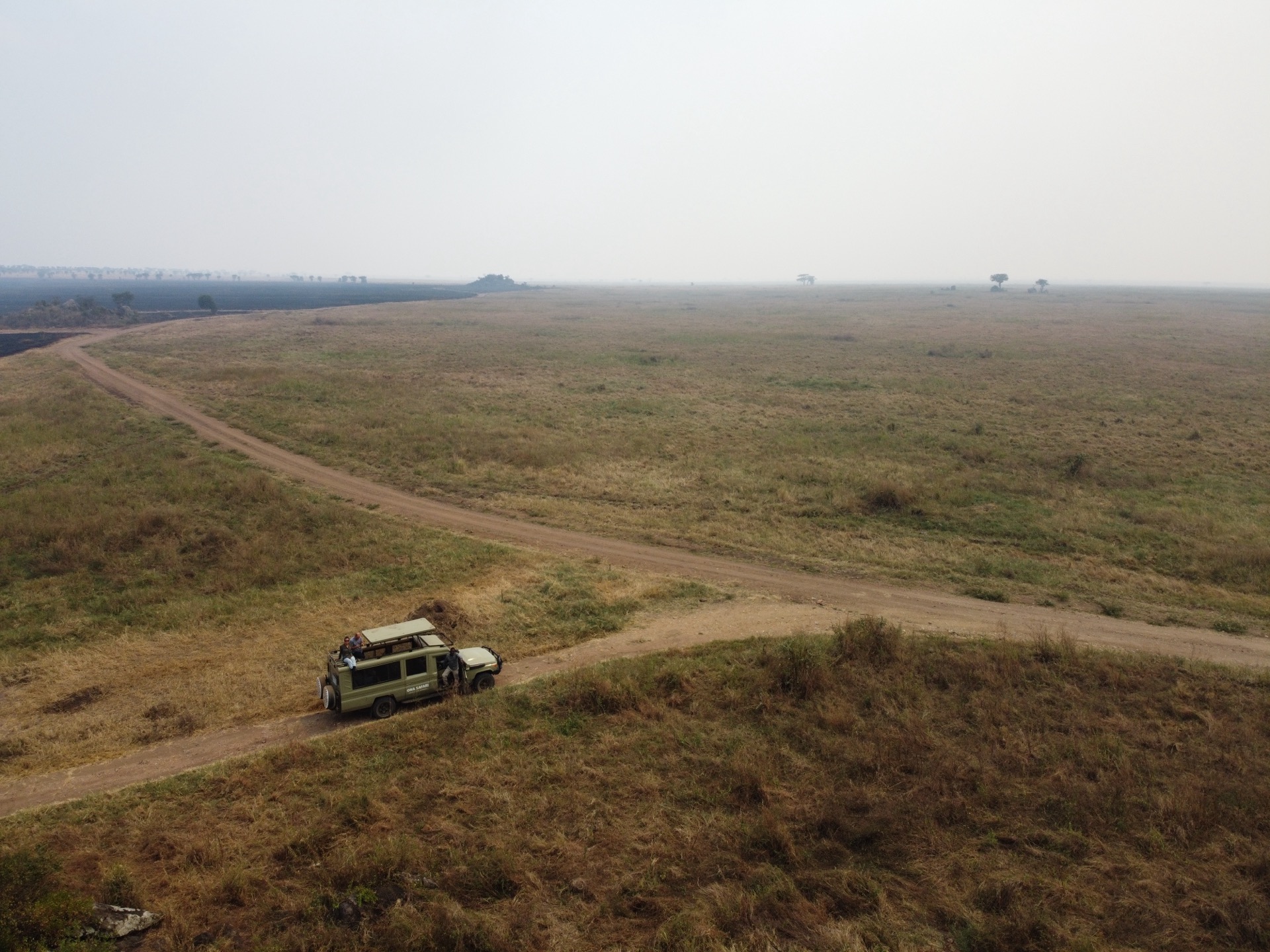
Getting there: The road from Ngorongoro via Naabi Hill Gate takes 4–5 hours to Seronera, the central hub. Many 10-day trips drive this road in on Day 6 — treat it as a travel day with game spotting en route (Naabi Gate area consistently produces cheetah and lion on the short-grass plains). An alternative is a light-aircraft flight from the rim to a Serengeti airstrip, which saves most of a day each way but adds USD 150–300 per person one-way.
Why 3 days here: Day 6 is your road day or flight day plus an afternoon drive from camp. Days 7 and 8 are full game-drive days. Three days allows: central Serengeti (Seronera area, resident big cats year-round), and one morning positioned for migration timing.
Migration positioning by season:
- July–October: Northern Serengeti (Kogatende/Lamai). Mara River crossings happen July through October — unpredictable day-to-day, so plan 3–4 nights in the north if a crossing is your primary goal. This 10-day structure gives you 3 nights total, which is the minimum.
- January–February: Southern Serengeti (Ndutu). Calving season runs from late January to early March, peaking in February — hundreds of thousands of wildebeest calves born over a compressed 6-8 week season, every predator in the ecosystem converging on the same area.
- March–June and November–December: Central Serengeti (Seronera). Year-round resident predators — lions, leopards on fig trees, cheetahs on termite mounds. This is the quiet-season option and usually the best value.
Day 8 afternoon / Day 9: Transit to Zanzibar
A light-aircraft flight from a Serengeti airstrip to Julius Nyerere International (Dar es Salaam) takes roughly 1.5–2.5 hours. From Dar, a connecting flight to Zanzibar takes 20 minutes. Dar to Zanzibar one-way costs USD 45–80.
Allow a full day for the transit. Trying to combine a morning game drive with a Zanzibar arrival in time for an evening walk is possible but tight — any delay on the bush-flight side ripples into the Zanzibar connection.
Arrive Stone Town by early evening. The airport transfer to a Stone Town hotel is the standard first move. The Forodhani Night Market runs from around 18:00 — a row of outdoor stalls on the seafront with fresh seafood, Zanzibar pizza (an egg-and-meat street-food flatbread nothing like Italian pizza), and sugarcane juice. After 7 days in the bush, the smell of spices and salt water is a genuine sensory shift.
Days 9–10: Zanzibar
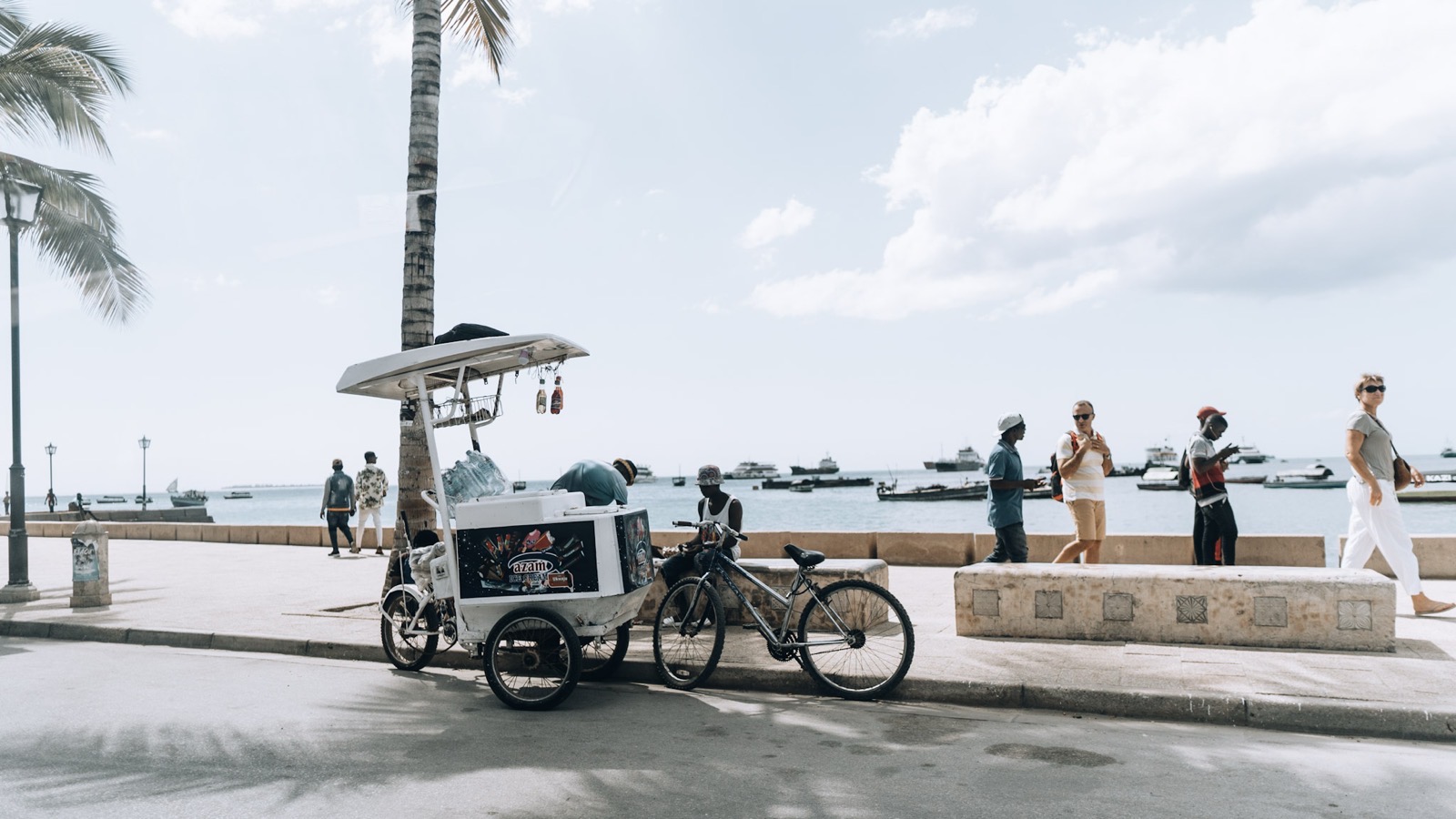
Day 9: Stone Town. A self-guided morning walk through the UNESCO-listed old city takes 2–3 hours and covers the main anchors: the House of Wonders (closed to visitors since a fatal 2020 partial collapse, still under UNESCO-coordinated restoration — exterior only), Christ Church Cathedral built on the site of the former slave market, the Old Arab Fort, and Freddie Mercury’s birthplace (now a small paid museum, USD 10 adult). Hire a local guide for the afternoon for the backstreet version — the spice market and the narrow lanes behind the seafront where the tourist layer strips away quickly.
Day 10: North coast. Nungwi is 57 km from Stone Town (about 1 hour 15 minutes on the main road). The beach at Nungwi is one of the few places on Zanzibar where you can swim at low tide — most of the east coast becomes a mud flat. Kendwa, 4 km south of Nungwi, is slightly quieter and has the best full-moon beach parties on the island if timing aligns.
From Nungwi or Kendwa, day trips to the Mnemba Atoll snorkelling site run USD 30–40 per person from Matemwe (about 30 minutes east). Mnemba’s reef is Zanzibar’s best accessible reef for coral diversity and fish density.
Departure on Day 10 or Day 11 depending on your international connection.
Zanzibar: 3 days vs. extending to 5+
Three days Zanzibar on this itinerary works because you are using it as a decompression, not a destination in itself. Stone Town in half a day is genuinely achievable — the city is compact and walkable. The north coast for 2 days gives you enough beach time to feel like you have actually swum in the Indian Ocean.
Five or more days Zanzibar makes sense if:
- You have done the Tanzania safari before and want to explore Zanzibar’s east coast (Paje, Jambiani — flat lagoon, kite surfing, slower pace)
- You want a Jozani Forest visit for the Zanzibar red colobus monkey (the island’s endemic primate, found nowhere else on earth)
- You want a dive day at Mnemba rather than a snorkel day
- You want to visit Prison Island’s giant tortoises
On a first Tanzania trip, 3 days Zanzibar is the right call. Save the deeper Zanzibar exploration for a return trip.
Budget breakdown for 10 days
Park fees (per person, non-resident 2024/25):
| Park | Days | Fee |
|---|---|---|
| Tarangire | 2 | USD 118 (2 × USD 59) |
| Ngorongoro NCA levy | 2 | USD 141.60 (2 × USD 70.80) |
| Ngorongoro crater descent | 1 vehicle | USD 295 shared across vehicle (e.g., 4 people = USD 73.75 pp) |
| Serengeti | 3 | USD 247.80 (3 × USD 82.60) |
| Total park fees (approx) | ~USD 575–600 per person |
Add visa (USD 50 single-entry for most nationalities; USD 100 for US passport holders), and total government fees reach USD 625–650 per person before accommodation.
Trip tiers (total per person, 10 days):
- Budget (group camping tour, shared vehicle): USD 3,000–3,500. Includes park fees, group tented camps, shared game vehicles, basic Zanzibar guesthouse.
- Mid-range (private vehicle, permanent tented camps): USD 5,000–8,000. Private guide and vehicle, mid-range camp accommodation (en-suite, hot water, full board), 3-star Zanzibar.
- Luxury (fly-in camps, private guide): USD 10,000–15,000+. Light-aircraft between parks, boutique bush camps, private vehicle, high-end Zanzibar.
Real reported trip costs: one traveller paid USD 3,750 per person for a 10-day private safari in January 2025 (two guests, private vehicle). Another reported USD 4,300 total per person for 10 days including both safari and Zanzibar. The budget floor for a serious safari (not a budget group tour) is around USD 3,000–4,000 per person.
How to book
Tanzania’s national parks require certified guides and safari vehicles — self-drive is technically possible with a TANAPA permit but impractical for first-time visitors who do not know the road network or camp locations. Book through a Tanzania operator for the safari portion.
Get 3–4 quotes. Operators vary significantly in vehicle age (shared 4×4 Land Cruisers versus private modified safari cruisers), accommodation tier, and what is included (full board versus half board, which flights are covered). Ask specifically: how many guests share the vehicle? What is the accommodation type at each park? Are park fees included or billed separately?
Booking timing: Peak dry season (July–October) sees the best camps fill 6+ months ahead. Book your Serengeti camp first — it is the pinch point. Tarangire and Ngorongoro accommodation is slightly easier to book closer to departure. January–February (calving season) is the second busiest window and books out 4–6 months ahead.
Zanzibar: Book separately from the safari, or ask your operator if they handle the Zanzibar leg. Beach accommodation on the north coast (Nungwi/Kendwa) books out less rigidly than safari camps, but the better boutique options fill 2–3 months ahead in peak season.
Tim’s honest note
The third day in the Serengeti — Day 8 of this itinerary — is the one that people describe when they get home. Not the spectacular Day 7 (though that one is usually good), but Day 8, when you have stopped trying to see everything and you are just watching a lioness sleep in the grass at 07:00 with the whole Serengeti quiet around her. The 7-day circuit does not give you that day. It ends on Day 7, in transit.
Three days in Zanzibar also lands right. By Day 10, after 7 days of early alarms and game drives and dust and adrenaline, the combination of a beach chair, a mango juice, and absolutely nothing happening is exactly what you want. Any shorter feels like you rushed through; any longer starts to make the safari feel further away than it should.
Ten days is the most popular Tanzania trip length for exactly this reason: it is the minimum length at which you come back feeling like you had two complete trips.
The Tanzania 7-day itinerary guide covers the faster version — same parks, tighter schedule, 2 nights in the Serengeti rather than 3. The Tanzania 14-day itinerary guide adds the southern parks, a deeper Zanzibar extension, and the northern Serengeti’s river crossings for visitors returning to Tanzania or with more time. For specific costs across all accommodation tiers — per park, per night, including camp fees and TANAPA levies — see the full cost breakdown by park. The Serengeti guide covers zone selection by month and what each part of the ecosystem holds. For Ngorongoro’s crater logistics in depth — gate timing, rhino sighting odds, what to do if visibility is poor — see the Ngorongoro guide. For Zanzibar’s north coast — Nungwi versus Kendwa, what the beach is actually like, and where to eat — see the Nungwi guide.
Frequently asked questions
How should I split 10 days between Tanzania safari and Zanzibar?
The most effective split is 7 safari days and 3 Zanzibar days. That gives you 2 nights in Tarangire, 2 nights at Ngorongoro, and 3 nights in the Serengeti — enough for meaningful big-cat time and migration flexibility — then 1 day Stone Town and 2 days north-coast beach. If you have visited Zanzibar before, flip the split to 8 safari / 2 Zanzibar and go deeper into the Serengeti's northern zone.
How much does a 10-day Tanzania trip cost?
Budget: USD 3,000–3,500 per person (group camping, overland vehicle). Mid-range: USD 5,000–8,000 per person (private vehicle, permanent tented camps). Luxury: USD 10,000–15,000+ per person (fly-in camps, private guide). One real traveler reported USD 4,300 total per person for 10 days (USD 2,450 safari, USD 550 Zanzibar, USD 1,050 flights, USD 250 visa/tips). Park fees alone — Tarangire 2 days, Ngorongoro 2 days plus crater descent, Serengeti 3 days — total roughly USD 1,200–1,400 per person.
Which parks should I visit on a 10-day Tanzania itinerary?
The northern circuit: Tarangire National Park (USD 59/day, dry-season elephants), Ngorongoro Conservation Area including a crater descent (USD 70.80/day plus USD 295/vehicle crater fee), and Serengeti National Park (USD 82.60/day). This is the standard 10-day Northern Circuit. Adding Lake Manyara between Tarangire and Ngorongoro is possible but replaces a Serengeti day — not worth it on a first visit.
Is 10 days enough for Tanzania and Zanzibar?
Yes. Rough Guides explicitly says 10 days is enough to combine Tanzania safari and Zanzibar beach without rushing. You will not see the southern parks (Ruaha, Nyerere) or the northern Serengeti river crossings in depth on a first trip — save those for a second visit. Ten days hits all three key northern parks and gives Zanzibar a proper three-day slot. Fourteen days is better for the full circuit with southern Tanzania add-ons, but 10 days is the right first-trip length.
How do I get from the Serengeti to Zanzibar?
The most common route is a light-aircraft flight from a Serengeti airstrip (Seronera, Kogatende, or Grumeti) to Kilimanjaro International Airport or Julius Nyerere International Airport (Dar), then a 20-minute hop to Zanzibar. Dar to Zanzibar flights cost USD 45–80 one-way. Alternatively, fly from any Serengeti airstrip directly to Dar, or road-transfer to Arusha and take a commercial flight. The full transit takes 3–5 hours depending on your Serengeti camp's location.
When is the best time for a 10-day Tanzania trip?
June to October is the best window overall: dry season means the grass is short (easy sightings), animals concentrate at water sources, and July–October adds the Mara River crossings in the northern Serengeti. January–February is the second-best option: calving season brings the wildebeest calves to the Ndutu plains south of the Serengeti, with the highest predator activity of the year. Avoid March–May (long rains) if you need reliable road access.