
Facts & prices checked: 2026-07-18
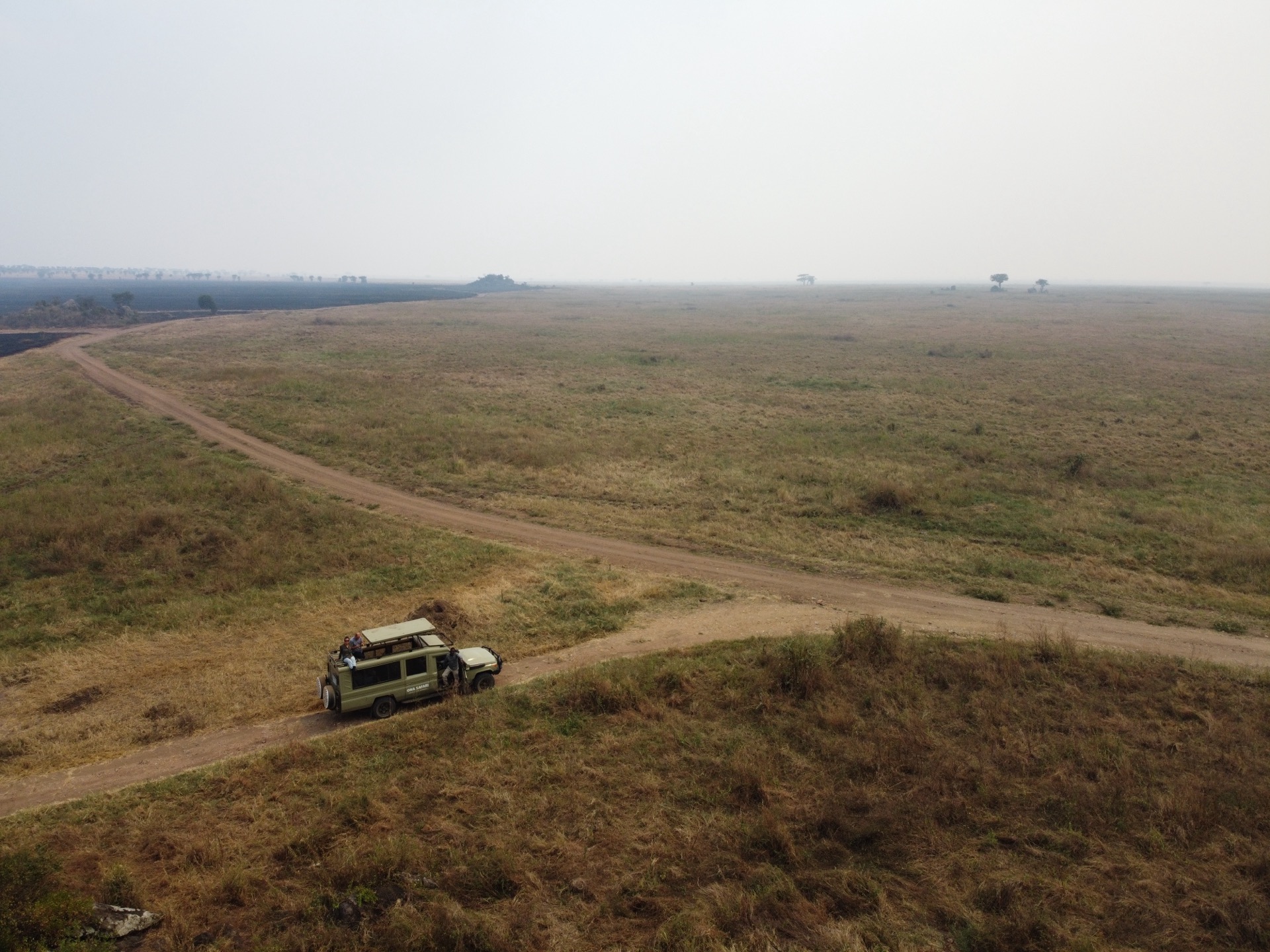
Cheetah sightings in the Serengeti aren’t evenly distributed. The Serengeti is a park the size of Northern Ireland — 14,763 km² — and cheetah density, terrain, vehicle pressure, and hunting potential differ fundamentally between the south, the east, and the centre.
I’ve spent days in Seronera, where cheetah sightings are routine but surrounded by 20 vehicles. I’ve spent days on the Ndutu plains, where calving season means a cheetah mother with three cubs in clear view 40 metres from the jeep. The difference isn’t random — it’s a question of zone choice.
The Serengeti’s three cheetah zones
The Serengeti ecosystem holds an estimated 1,200–1,500 cheetahs, according to available figures — one of only two remaining world populations above 1,000 individuals. But these cheetahs aren’t evenly spread across the park. They concentrate in three clearly separable zones, each with its own character, its own timing, and its own sighting promise.
Zone 1: Ndutu and the southern short-grass plains — seasonal peak, the world’s best window Jan–Feb Zone 2: Namiri Plains, eastern Serengeti — year-round cheetah territory, low vehicle density Zone 3: Seronera, central Serengeti — reliable year-round, highest vehicle pressure
Zone 1: Ndutu and the short-grass plains (January–April)
For two to three months a year, the southern Serengeti is the best cheetah-viewing area on Earth. Not “one of the best” — the best. That comes down to one specific combination: short-grass terrain, wildebeest calving season, and cheetah family groups, all present at the same time on the same plains.
The short-grass logic: Cheetahs don’t hunt in tall grass. They’re sprint hunters who need to scan prey at open distance — their tactical tool is sight, not cover. The short-grass plains around the Ndutu lakes offer exactly that: flat, open terrain where a cheetah standing on a termite mound sees clearly for hundreds of metres. This is the habitat cheetahs actively choose.
The calving-season logic: From mid-January to the end of February, about 8,000 wildebeest calves are born daily on the southern plains. Newborn calves are prey a cheetah can catch — significantly slower than adult Thomson’s gazelles, concentrated in a tight area, and present in a density that lets a cheetah mother with cubs hunt regularly.
What you can see in Ndutu in January–February:
- Cheetah mothers with cubs making kills of calves together — the cubs actively learning through imitation
- Complete hunting sequences from the approach phase (10–20 minutes of stalking) through to the sprint and killing bite
- Coalition males (2–4 brothers) on coordinated hunts of larger calves
- The recovery phase after the sprint — cheetah beside the kill, breathing rate elevated, hyenas circling at 100 metres
The sprint itself covers a maximum distance of around 274 metres — after which the cheetah is overheated and needs 15–30 minutes to recover. In this window, the kill is at its most vulnerable — to hyenas, lions, sometimes even vultures.
Timing: Mid-January to the end of February is the core window. December and March are transition months — cheetahs are present, but prey density is lower. The best time of day: 06:00–09:30. Cheetahs hunt in the morning light, before the heat makes the sprint biologically impossible.
Vehicle pressure: In peak season (late January, February), the Ndutu plains are better known and busier than the eastern Serengeti — but the plains are so vast that the pressure spreads out. Not the crowding you get at Seronera.
For the full calving-season picture — how many calves, which predators to expect, how to book — see the Serengeti calving season guide.
Zone 2: Namiri Plains and the eastern Serengeti (year-round)
For cheetah-focused travellers, Namiri Plains may be the best year-round destination in the Serengeti. The area in the eastern Serengeti is known as excellent cheetah territory — with one decisive quality Seronera lacks: sightings are rarely shared with other vehicles.
The concession-area logic: Namiri Plains sits in a concession zone of the eastern Serengeti. Not open road traffic like Seronera — only vehicles from the corresponding camp operate in this area. For cheetahs, that’s a biologically significant difference: no vehicle crowding that disrupts hunts, no human noise that spooks prey, no tactical advantage lost to vehicles surrounding the animal. The Serengeti Cheetah Project has documented that vehicles actively disturb cheetah hunts — Namiri Plains minimises this factor.
Cheetahs in the eastern Serengeti: The eastern Serengeti has a different vegetation structure than the southern plains — partly shorter grass, partly more kopjes (granite rock outcrops) and open bushland. This combination suits cheetahs, who use kopjes as lookout points and also need open-ground sprints across grass plains. Resident cheetah coalitions and mother-cub family groups are documented in this area year-round.
What the kopjes do: Granite kopjes are for cheetahs what termite mounds are for the flat plains — elevated scanning points. A cheetah sitting on a kopje can survey the surrounding grass plains for kilometres. At the same time, kopje rock crevices offer cheetah cubs shelter from eagles, hyenas, and other predators. Cub loss in the Serengeti is dramatic: around 90% of cheetah cubs die before their first month — predators, including lions and eagles, are the main cause.
Namiri Plains as a destination: The Asilia Africa camp (from around USD 740/person/night) is the primary base for Namiri cheetah game drives. It’s a high-end destination — but the difference from the Seronera experience — in exclusivity and cheetah calm — is substantial. A guide from Namiri knows resident cheetahs individually and knows which animals are raising active cubs.
Zone 3: Seronera and the central Serengeti (year-round)
Seronera is the most accessible and best-known cheetah area in the Serengeti — and at the same time the one with the highest vehicle pressure. The central plains around the Seronera River have year-round resident cheetah populations, and the combination of permanent water, high prey density, and open sightlines makes it a reliable cheetah habitat.
What Seronera gets right: The kopje areas around Seronera — especially the Moru Kopjes — are well-known cheetah lookout points. A cheetah sitting on a Moru kopje in the morning, scanning the grass plain for Thomson’s gazelles, is a classic Seronera image. Lion and leopard density in the Seronera river area is the highest in the Serengeti — which means both prey concentration and kleptoparasitism pressure for cheetahs.
The vehicle-pressure trade-off: At a well-known predator sighting in Seronera, up to 20–30 vehicles can gather in peak season. For cheetahs, that’s a biological problem, not just an experience problem: too many vehicles too close disrupt hunting sequences, since prey is spooked by engine noise and the stalking approach (the 20-minute phase before the sprint) is disturbed. The Serengeti Cheetah Project introduced a “Kill Your Speed” campaign precisely because of this problem — vehicles have killed cheetahs and demonstrably disrupted hunts.
When Seronera works for cheetahs: Shoulder season (November, March–April) and weekday mornings in low season have considerably fewer vehicles. In low season, Seronera is a different experience — the same cheetahs, less competition. The basic problem remains: Seronera is the congestion zone of Serengeti safaris.
Zone comparison: which one for which trip?
| Criterion | Ndutu (Jan–Feb) | Namiri Plains | Seronera (year-round) |
|---|---|---|---|
| Cheetah probability | Very high | High | Medium to high |
| Hunt sequences observable | Very high | High | Medium |
| Vehicle pressure | Moderate | Very low | High |
| Best timing | Jan–Feb morning | Year-round morning | Year-round morning |
| Price segment | Medium–high | High (from USD 740) | Medium |
| Coalition males | Regular | Regular | Occasional |
| Combination with other wildlife | Excellent | Good | Excellent |
For travellers with a clear cheetah priority and a January date: Ndutu is non-negotiable. For travellers with a flexible budget and a goal of calm, exclusive cheetah encounters: Namiri Plains, year-round. For travellers on a broader Tanzania safari without a specific month: Seronera as part of a Northern Circuit tour, with the expectation of seeing cheetahs — but with the knowledge that the difference between watching a hunt and seeing a distant animal in the grass often comes down to the guide positioning the vehicle correctly at the right moment.
Practical timing: the hours that decide
Zone choice alone isn’t enough. The time of day decides whether you see a cheetah sleeping in the shade or actively hunting.
06:00–09:30 (primary hunting window): The cheetah is already on a termite mound or kopje, scanning the plain. At this time, temperatures are cool enough for a full sprint — at midday heat, the cheetah avoids the effort, because overheating is the real risk. A 110 km/h sprint over 274 metres generates extreme body heat; at 30°C ambient temperature, cooling down is slower.
10:00–15:00 (rest phase): Cheetahs rest in the shade — under bushes, in kopje rock crevices, occasionally flat on the ground in tall grass. Sightings are less reliable because the animals are actively seeking cover. In Ndutu in January, with a surplus of calves, hunting activity can occur even at midday — but that’s the exception.
16:00–18:30 (secondary hunting window): Temperatures drop, cheetahs become more active. Evening light is good for photography (warm tones), but the primary hunting window is in the morning.
What Tim saw one morning on the Ndutu plains: In February, shortly after 07:00, a cheetah mother with two half-grown cubs on an open short-grass plain. She sat on a termite mound — not 50 centimetres higher than its surroundings, but that was enough. The view stretched maybe 300 metres across the grassland. Then a slow approach on a young wildebeest in the half-shade of a small rise. The cubs came along, 30 metres back. Then the sprint — and the cub that ran after its mother and imitated the throat grip while she still held the animal down. That wasn’t luck. That was the Ndutu result.
Hunting behaviour: what you observe and why it’s rare
Seeing a cheetah hunt live is considered exceptionally rare — and for good reason. Cheetahs hunt with high precision, but the preparation takes a long time. Here’s what actually happens:
The approach phase (10–30 minutes): Before the cheetah runs, it stalks. From a lookout point on a termite mound or a slight rise, it identifies individual prey animals — often young animals, injured gazelles, or isolated individuals. Then it moves slowly, crouched, through the grass, closing to within 50–70 metres. A single vehicle on the wrong side can wreck this phase in a few seconds.
The sprint (3–5 seconds): With a top speed of 110 km/h, the cheetah is the fastest land animal on Earth — but the maximum sprint distance is only about 274 metres. Longer chases aren’t thermally possible. The sprint ends either in a throat bite or in failure.
Hunting success rate: Cheetahs are among the more efficient hunters among the big cats, but failures are common — especially when vehicles or other disturbances interfere during the approach phase. Captured meat is also constantly at risk: kleptoparasitism by hyenas, lions, and sometimes vultures means a cheetah often has to abandon its kill before it has eaten enough.
Coalitions: Male cheetahs sometimes live together in groups of 2–4 brothers and hunt in coordination. These coalitions can bring down larger prey than a lone female — even adult wildebeest or zebra foals are within reach. In Ndutu in January–February, the appearance of coalition males on the open calving plains is especially well documented.
Cheetah or leopard? The key difference in the field
In the Serengeti you see both — and the differences are often unclear in the field until you know what to look for.
Activity patterns: Cheetahs are diurnal. Sightings on open grass plains happen almost exclusively in morning or evening light. Leopards are mainly nocturnal and are often seen resting in trees in the Seronera area — the Seronera river area has leopard sighting rates of around 75% for safaris specifically looking for them. During the day on the open grassland: always a cheetah.
Identifying features at a glance:
- Cheetah: Slender build, long legs, small head, black “tear stripes” from the corner of the eye to the mouth, simple black spots on yellow fur
- Leopard: Heavier, lower-slung build, bigger head, no facial stripes, rosette pattern (spots with a lighter centre on a beige background)
- Difference at 100 metres: A cheetah on a termite mound is immediately recognisable by its upright, slender silhouette. A leopard lies flat on branches and is hard to see.
Habitat in the Serengeti: Cheetahs prefer open short-grass steppe — the Ndutu plains, the eastern Serengeti, the Seronera flats. Leopards prefer river areas with cover and trees, especially the Seronera river corridors and the vegetated kopje slopes. The ecosystems overlap at Seronera — which is why you see both there, but at different times of day.
Conservation status: cheetahs in Tanzania and globally
The Serengeti cheetah ecosystem is one of the most important remaining populations worldwide. Here’s how the numbers stack up:
Global picture: Fewer than 3,000 cheetahs live in Africa’s protected areas. ZSL (the Zoological Society of London) has run the Serengeti Cheetah Project since 1991 — the longest-running systematic single-population study of its kind in Africa. Only two world populations still count over 1,000 individuals; the Serengeti-Mara-Tsavo corridor is one of them.
Tanzania’s share: A scientific assessment estimated Tanzania’s cheetah population at 569–1,007 individuals (Elsevier). The Serengeti ecosystem accounts for most of that. Tanzania’s remaining populations outside the Serengeti — including the Ruaha-Rungwa ecosystem, with around 50,000 km² of documented cheetah range — are less well researched.
Threats: Cub mortality is the most acute threat: around 90% die before their first month — from lions, hyenas, eagles, and other predators. Adult cheetahs are additionally threatened by habitat loss and, in Seronera zones, by vehicle collisions. The Serengeti Cheetah Project’s “Kill Your Speed” campaign was a direct response to documented cases of cheetahs being killed by vehicles.
I find it notable that the Serengeti communicates these problems with more transparency than most parks. The campaign runs openly — the project publishes its monitoring data and identifies individuals by their unique coat patterns. You sit on the game drive knowing that the animal in front of you is part of a long-term dataset that’s been tracked since 1974.
Itineraries that include the best zone
Ndutu-focused route (best cheetah window): Arusha → Tarangire (2 nights) → Ngorongoro (1 night on the rim) → Ndutu (3–4 nights, January–February) → return. This route prioritises the cheetah-calving-season combination; the Serengeti-Ndutu zone covers the southern plains and doesn’t require a visit to the Seronera core area.
Namiri Plains-focused route: Arusha → Seronera area (2 nights, overview) → transfer to Namiri Plains (2–3 nights) → return or continue north. Namiri sits in the eastern Serengeti — road transfers are possible, but domestic flights are the more practical option for a camp in this location.
Northern Circuit (cheetahs as part of the bigger picture): Arusha → Tarangire → Lake Manyara → Ngorongoro → Serengeti Seronera. On this standard route, cheetah sightings are realistic — but the zone (Seronera) and the vehicle pressure mean cheetahs are part of the bigger picture, not the focus.
Related guides
→ Cheetahs in Tanzania: complete guide · Serengeti zones: which area, which month · Lions in Tanzania · Leopards in Tanzania · Serengeti safari: what you actually experience · Ngorongoro’s crater floor
Frequently asked questions
Which Serengeti zone is best for cheetah sightings?
For the best cheetah experience overall: Ndutu in January–February (wildebeest calving season on the short-grass plains). For a dedicated cheetah focus year-round without vehicle crowding: Namiri Plains in the eastern Serengeti. For reliable cheetah sightings combined with lions and leopards: Seronera in the central Serengeti, year-round, but with more vehicles.
What's the difference between Ndutu and Namiri Plains for cheetah sightings?
Ndutu is a seasonal peak (Jan–Feb) with the world's best cheetah-viewing window — calving season brings abundant prey and cheetah families into the open short-grass country. Namiri Plains is a concession area in the eastern Serengeti that's known year-round as cheetah territory, is rarely shared, and sits under considerably lower vehicle pressure. Ndutu for the experience; Namiri for exclusive, calm cheetah encounters.
Is Namiri Plains good for cheetahs?
Yes — Namiri Plains (an Asilia Africa camp) is considered one of the best cheetah territories in the entire Serengeti ecosystem. The eastern location, open short-grass plains, and low vehicle density in the concession area mean cheetahs here are less often interrupted mid-hunt by vehicle disturbance. Sightings are rarely shared with other vehicles.
What's the best time of day for cheetah sightings in the Serengeti?
06:00–09:30 is the primary hunting window — cheetahs are active early, using the morning light to scan for prey (typically from termite mounds or rock outcrops), and temperatures are still low enough for a high-speed sprint. 16:00–18:00 is a second, weaker activity window. At midday, cheetahs rest in the shade and are rarely seen.
How many cheetahs are there in the Serengeti?
The Serengeti ecosystem holds an estimated 1,200–1,500 cheetahs — one of only two remaining populations worldwide that still counts over 1,000 individuals. Within the park itself, estimates vary by season between 500–1,000 individuals. The Serengeti Cheetah Project has monitored individuals by their unique coat patterns since 1974.
Do vehicles disturb cheetahs while hunting?
Yes — this is a documented problem in the Serengeti. The Serengeti Cheetah Project introduced a 'Kill Your Speed' campaign after vehicles were shown to have killed cheetahs and disrupted hunts. At well-known cheetah sightings in Seronera, 20–30 vehicles can gather in peak season. Namiri Plains and Ndutu outside peak season are considerably quieter. An experienced guide positions the vehicle so the hunt isn't disturbed.
What's the difference between cheetah and leopard sightings?
Cheetahs hunt by day on open short-grass plains — sightings on termite mounds or in open grassland, typically between 06:00 and 10:00. Leopards are nocturnal, stay in dense vegetation, and are often seen resting in trees. The identifying features: cheetahs have black 'tear stripes' running from the eye to the corner of the mouth; leopards show rosette patterns on a beige background. In the Seronera area, leopards are common with a sighting rate of around 75% — but mostly in tree shade, rarely out on the open plain.
What is the conservation status of the cheetah in Tanzania?
Cheetahs in Tanzania are vulnerable and thinly distributed — the Serengeti-Mara-Tsavo corridor is one of only two world populations that still counts over 1,000 individuals. Across Africa as a whole, fewer than 3,000 cheetahs live in protected areas. ZSL has run the Serengeti Cheetah Project since 1991 as the longest-running systematic single-population study of cheetahs in Africa. The biggest threat to cubs: around 90% die before their first month, from predators.