
Facts & prices checked: 2026-06-25
The standard conservation narrative about Tanzania focuses on national parks and anti-poaching operations — enforcement, rangers, military patrols. That part of the story is real. But the more durable conservation model operating across Tanzania is community-based: give villages legal ownership of wildlife on their land, create a revenue stream from that wildlife, and the economic incentive to protect rather than poach follows.
Tanzania has 19 operating Wildlife Management Areas. They cover 7% of the country’s land area. More than 350,000 Tanzanians benefit from them directly or indirectly. The system is not perfect — some WMAs generate thin revenue and struggle to make conservation economically compelling at the household level. But where WMAs work, the ecological results are measurable: higher wildlife densities, reconnected elephant corridors, reduced carnivore killings, and buffer habitat that extends ecosystem function beyond park boundaries.
This is a closer look at how the system works in practice.
What a Wildlife Management Area actually is
A Wildlife Management Area is a portion of village land — formally set aside by a community or group of communities — for wildlife conservation and management. The definition matters: WMAs sit on village land, not government land. Communities own the wildlife on that land legally, rather than the state holding it in trust as happens with national parks.
In exchange for committing the land to conservation (which means not converting it to agriculture, not building settlements, managing resource extraction), the community receives the right to lease concession rights to photographic safari operators and to collect wildlife tourism revenue. Entrance fees in WMAs are set at USD 10 per adult.
Tanzania piloted the WMA framework from 2006. By 2024, 19 WMAs were operating, with a further 19 in planning stages. On average, approximately nine communities participate in each WMA, which means Tanzania’s operating WMAs collectively involve more than 170 village communities in formal conservation governance structures.
More than 350,000 Tanzanians are estimated to benefit directly or indirectly from the WMA programme. The research evidence on ecological outcomes is positive: peer-reviewed studies have found higher densities of giraffes and dik-diks in areas under WMA management compared with unprotected equivalents — measurable wildlife density gains from community ownership.
Burunge WMA: the Tarangire ecosystem model
Burunge Wildlife Management Area was established in 2004 on Maasai community land approximately 10 minutes from Tarangire National Park’s main gate. It is one of the most important WMAs in Tanzania, not because of its size but because of its position.
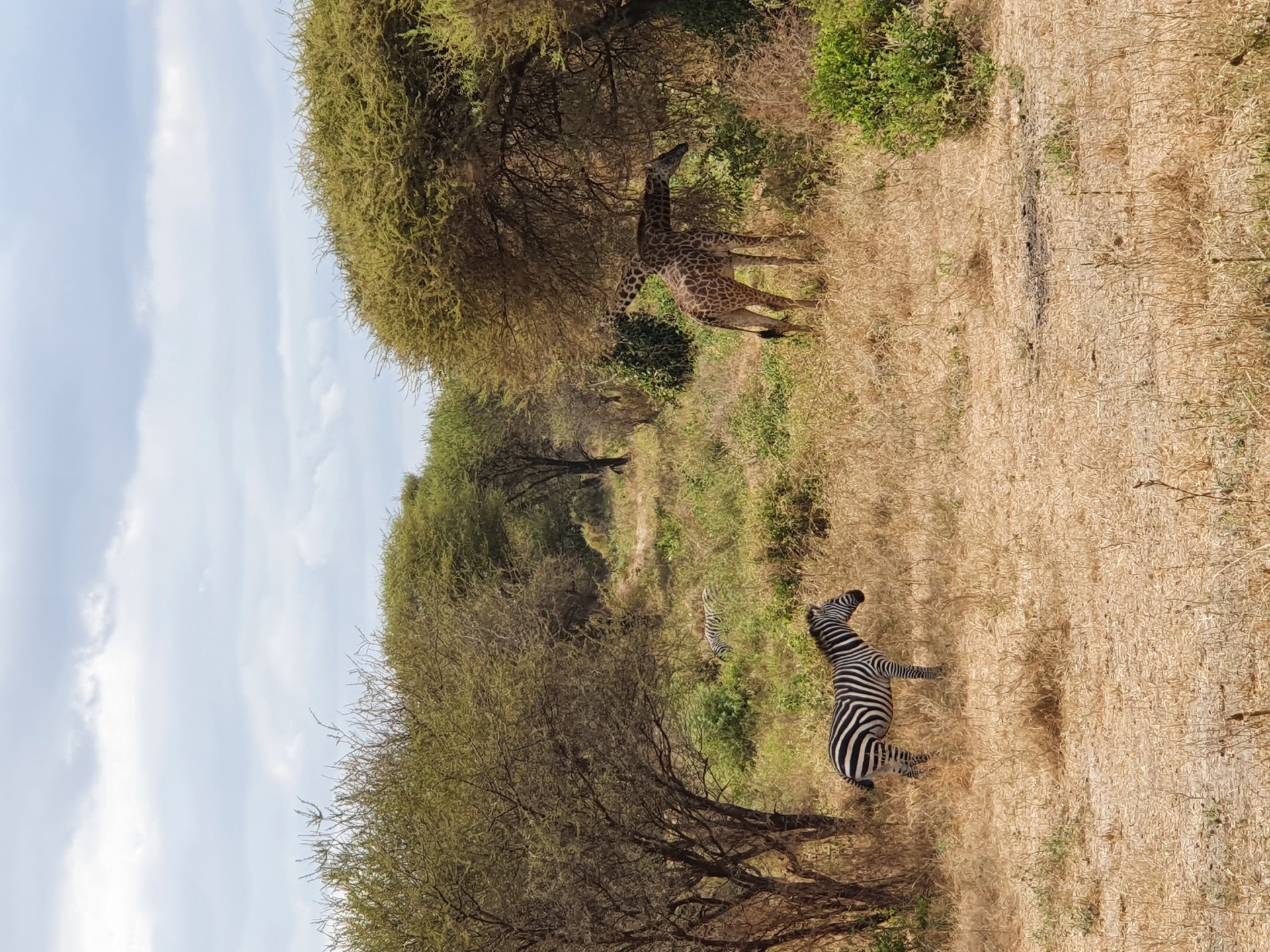
Tarangire is a dry-season concentration park: from June onward, as the plains dry out, elephants, buffalo, wildebeest, and zebra funnel toward the Tarangire River. But the animals that concentrate in Tarangire during the dry season need to move somewhere in the wet season — and historically, agricultural expansion was compressing that movement space.
Burunge WMA changed the equation. By establishing community-owned conservation land between Tarangire and Lake Manyara, the WMA has reconnected fragmented elephant pathways that were being squeezed by farming. Elephant herds can now move across a broader landscape than the park boundary alone permits. This corridor function is the WMA’s most significant ecological contribution: it adds movement capacity at ecosystem scale, which is critical for large mammals that can’t survive in disconnected habitat patches.
A camp on the Burunge concession is run by the local Maasai community, with revenue returned directly to participating villages. The camp gives visitors a night in community-owned wilderness within 10 minutes of one of Tanzania’s top parks, at a cost that directly funds village conservation governance.
I spent a morning at Burunge on my last Tarangire trip — a quality of stillness and space that the park itself, busier now than it was a decade ago, rarely delivers. The community monitor who came with us had grown up in the adjacent village. His working knowledge of animal movement across the WMA was precise in the way that comes from years of walking the same landscape, not from a guidebook.
Revenue sharing: the numbers and the reality
Tanzanian law requires 65% of WMA tourism revenue to be shared equally among participating villages and the WMA management body, with the remainder funding operations — anti-poaching patrols, infrastructure maintenance, administration. Villages use the shared revenue for socioeconomic development projects: schools, water, health infrastructure.
The mechanism is clear on paper. The reality is more variable.
Researchers studying community conservation revenue in Tanzania have consistently found that benefit levels in many WMAs are too small or inconsistently distributed to create the strong household-level economic incentive the model promises. A peer-reviewed study found that community members in one Tanzanian conservation area received just 6% of total annual tourism revenue — approximately USD 2.53 per household per year. That is not a compelling conservation incentive.
The variation matters. High-traffic WMAs adjacent to popular parks — Burunge near Tarangire, Enduimet WMA adjacent to the Kilimanjaro ecosystem — generate enough revenue to deliver meaningful community benefit. Remote WMAs, where photographic tourism is thin, struggle to make conservation economically rational at the household level.
The lesson from the evidence: the WMA model works where there is genuine tourist demand and well-managed concession revenue. It is not a universal solution. The more remote the WMA, the more dependent conservation becomes on enforcement and external funding rather than community economic incentive alone.
The Ruaha Carnivore Project: the incentive-shift approach
The Ruaha Carnivore Project works on a different axis from WMAs — not legal ownership of land, but direct elimination of the economic cost of living alongside predators.
The problem around Ruaha National Park is familiar across Tanzania: lions, leopards, cheetahs, and African wild dogs range beyond park boundaries at night. When they kill cattle, farmers lose income they can’t replace. The rational response, from a farmer’s perspective, is to poison or shoot the predators. The result: significant carnivore losses across a landscape that holds some of Africa’s most important populations.
Over more than a decade of operation, the Ruaha Carnivore Project — implemented with the University of Oxford’s WildCRU (Wildlife Conservation Research Unit) — has achieved an 80% reduction in carnivore killings in its core study area. The mechanism is straightforward: verify livestock losses and compensate them, so farmers no longer absorb a direct economic penalty for predator presence; train community wildlife monitors who have a financial stake in healthy predator populations; install predator-proof livestock enclosures (bomas) that prevent night attacks; build alternative income streams for the most conflict-affected households.
Tanzania’s Ruaha region now holds the third largest African wild dog population on the continent. Fewer than 7,000 African wild dogs remain globally, with Tanzania — particularly the Ruaha-Katavi and Selous-Niassa ecosystems — holding key populations. That count depends on exactly this kind of community engagement outside park boundaries, where 77% of free-ranging cheetahs and a significant share of wild dogs spend meaningful time.
Forest conservation and carbon
Tanzania’s forests face serious pressure. Annual deforestation is estimated at approximately 4,689 hectares per year in some analyses and at approaching 373,000 hectares per year in others — the disparity reflecting different methods and the difficulty of measuring informal clearing. The three main drivers are consistent across studies: unsustainable charcoal production, shifting cultivation, and illegal timber harvesting. Deforestation in Tanzania could cost the country’s economy up to USD 3.5 billion by 2033 if current trends continue.
Tanzania is responding partly through carbon markets. The country is set to receive significant investment in carbon offset credits — one report cited over USD 20 billion in expected investment — and the government has committed to reducing deforestation by 30–35% by 2030. The Makame Savannah carbon project in northern Tanzania, established in 2016, protects more than 350,000 hectares of dryland and is structured to deliver performance-based payments to communities for verified forest protection.
Tanzania’s Participatory Forest Management framework — which includes both Community-Based Forest Management (CBFM) and Joint Forest Management (JFM) — gives village communities formal roles in managing forest reserves. The Eastern Arc Mountains, already established as a biodiversity hotspot, are projected to deliver nature-based benefits worth USD 8.2 billion over 20 years, including USD 10.1 billion in international carbon value against USD 1.9 billion in Tanzanian conservation costs. The economic case for protecting Eastern Arc forest is straightforwardly positive.
The challenge for carbon finance in forest conservation is governance: verifying community benefit, avoiding elite capture of payments, and ensuring that the communities most affected by deforestation restrictions actually receive the returns. Researchers working on REDD+ in Tanzania have flagged this consistently, and Tanzania’s own forest management performance on paper has not always translated to equivalent outcomes on the ground.
The Jane Goodall Institute and community engagement at Gombe
Gombe National Park — 35 km² on the eastern shore of Lake Tanganyika — is where Jane Goodall began chimpanzee research in 1960, initiating what the Guinness World Records recognises as the longest-running continuous chimpanzee study in history. The Gombe Stream Research Centre has produced the most detailed dataset on wild chimpanzee behaviour in existence.
But Gombe’s conservation challenge is not inside the park — it is outside it. Chimpanzees at Gombe face two main survival threats: infectious disease transmission and deforestation of land outside the park boundaries, which fragments habitat and isolates the population.
The Jane Goodall Institute’s TACARE programme (Lake Tanganyika Catchment Reforestation and Education) operates across 72 villages around Gombe and Mahale, addressing the deforestation driver directly — supporting alternative livelihoods, tree nurseries, and women’s conservation groups to reduce pressure on forest at the boundary. The logic mirrors the WMA and Ruaha Carnivore Project approach: conservation must create alternatives to the extractive behaviour that threatens it, not just enforce against it.
What this means for your safari
Every park entrance fee you pay funds TANAPA operations directly. TANAPA’s 2024/25 non-resident adult conservation fees range from USD 35.40 per day (southern and western parks) to USD 82.60 per day (Serengeti and Nyerere). For a family of four spending seven nights across national parks, that is over USD 990 in conservation fees alone — funding ranger salaries, patrol vehicles, and veterinary programmes.
Choosing lodges or camps on WMA concessions (rather than only inside national parks) adds a second revenue stream: your accommodation payment includes the WMA entrance fee and typically funds the community trust directly. A number of camps now publish their community benefit metrics; asking an operator about this before booking is a legitimate question, not an inconvenience.
Avoid wildlife interactions that use captive or habituated animals for tourist entertainment — cub petting, walking with lions, or any experience where a wild animal is handled by tourists. These are not conservation. They fund captive wildlife operations that have no relationship to wild population outcomes.
The most direct conservation act available to a safari visitor is straightforward: pay the regulated fees, choose operators with TATO registration, and stay in community-controlled accommodation when the option exists. The Burunge WMAs of Tanzania are not niche ecotourism products. They are the buffer zones that make the ecosystem function at the scale large mammals need.
Related reading
- Tanzania conservation overview — the full picture: elephant crisis and recovery, black rhino programmes, anti-poaching operations, trophy hunting debate, and the park fee conservation link
- Tanzania Tarangire National Park — the park that Burunge WMA buffers; best dry-season elephant viewing on the northern circuit
- Tanzania rhinos guide — black rhino recovery from 162 individuals (2015) to 263 (2024) at Ngorongoro and Mkomazi
- Tanzania wild dogs guide — the species most dependent on community cooperation outside park boundaries, with Tanzania holding key global populations
Tim Hennig has visited Tanzania’s northern and southern safari circuits multiple times. The community conservation systems described here — WMAs, the Ruaha Carnivore Project, Jozani’s 50/50 revenue split, the Gombe TACARE programme — work best when visitors pay the registered fees and ask operators how community revenue flows. That is not idealism. It is how the incentive works.
Frequently asked questions
What is a Wildlife Management Area (WMA) in Tanzania?
A Wildlife Management Area is a portion of village land set aside by a community — or a group of communities — for wildlife conservation and management. Communities give up the right to convert the land to agriculture, and in return they receive legal ownership of the wildlife on it, plus the right to lease concession rights to photographic safari operators and receive revenue from wildlife tourism. Entrance fees in WMAs are set at USD 10 per adult. The WMA model was piloted in Tanzania from 2006 and there are currently 19 operating WMAs covering 7% of Tanzania's land area.
How much revenue do WMA communities actually receive?
Tanzanian law requires 65% of WMA revenue to be shared equally among participating villages and the WMA management body, with the remainder funding operations including anti-poaching, maintenance, and administrative costs. On paper, the mechanism is clear; in practice, benefit levels have been described by researchers as too small or inconsistent in some WMAs where tourism revenue is thin. High-revenue WMAs adjacent to popular parks — such as Burunge WMA near Tarangire — deliver more meaningful per-household income than remote WMAs with fewer visitors.
How many Wildlife Management Areas are there in Tanzania?
There are 19 operating Wildlife Management Areas in Tanzania, covering approximately 7% of the country's land area. A further 19 WMAs are in various stages of planning and establishment. On average, each WMA involves approximately nine communities, meaning Tanzania's operating WMAs collectively engage more than 170 village communities in formal conservation governance. More than 350,000 Tanzanians are estimated to benefit directly or indirectly from the WMA programme.
What is the Burunge Wildlife Management Area and why does it matter?
Burunge WMA was established in 2004 on Maasai community land approximately 10 minutes from Tarangire National Park, making it one of the most accessible and economically significant WMAs in Tanzania. Its conservation role goes beyond revenue: Burunge has reduced habitat encroachment and reconnected fragmented elephant pathways between Tarangire and Lake Manyara, allowing herds to move across a broader landscape than the park boundary alone would permit. This kind of corridor function is why WMAs are ecologically important, not just economically — they add buffer habitat and movement capacity at ecosystem scale.
How does the Ruaha Carnivore Project work?
The Ruaha Carnivore Project (RCP), implemented with the University of Oxford's WildCRU (Wildlife Conservation Research Unit), operates around Ruaha National Park in southern Tanzania. Its core problem: lions, leopards, cheetahs, and African wild dogs leave the park, kill cattle, and farmers retaliate by poisoning or shooting the predators. The RCP changes the incentive structure — compensating verified livestock losses, training community wildlife monitors, installing predator-proof bomas, and building economic alternatives to killing. Over more than a decade, the programme achieved an 80% reduction in carnivore killings in its core study area. Tanzania's Ruaha region holds the third largest African wild dog population on the continent.
Do safari park fees fund conservation in Tanzania?
Yes, directly. Non-resident adult park fees in Tanzania range from USD 35.40 per day (southern and western parks) to USD 82.60 per day (Serengeti and Nyerere) as of 2024/25, under TANAPA's tiered tariff. These fees fund TANAPA's ranger salaries, patrol vehicles, veterinary operations, and infrastructure. A separate revenue-sharing mechanism allows national parks to allocate a portion of revenues to communities adjacent to park boundaries — Lake Manyara National Park has a documented 5% revenue-sharing arrangement. WMA entrance fees (USD 10 per adult) go directly to community accounts, without the national-park funding chain.