
Facts & prices checked: 2026-06-25
The Tarangire River does not look like much in the wet season. It is one stream among dozens, overshadowed by grass, seasonal pools, and the full complement of water the landscape holds when the rains come. The animals spread out. Elephants disperse across the ecosystem — into the Lake Manyara corridor, out onto the Maasai steppe, into bush that holds water for months. The park is quiet, green, and largely empty of the spectacle it is known for.
Then the dry season arrives and everything reverses. The pools dry. The corridor dries. The steppe dries. And the Tarangire River — permanent, year-round, the one constant — becomes the only water source for an enormous area of the northern circuit ecosystem. What was dispersed over hundreds of kilometres compresses toward a single thread of water through the park.
This is the concentration that makes Tarangire the most compelling elephant destination in northern Tanzania.
Why the river pulls everything in
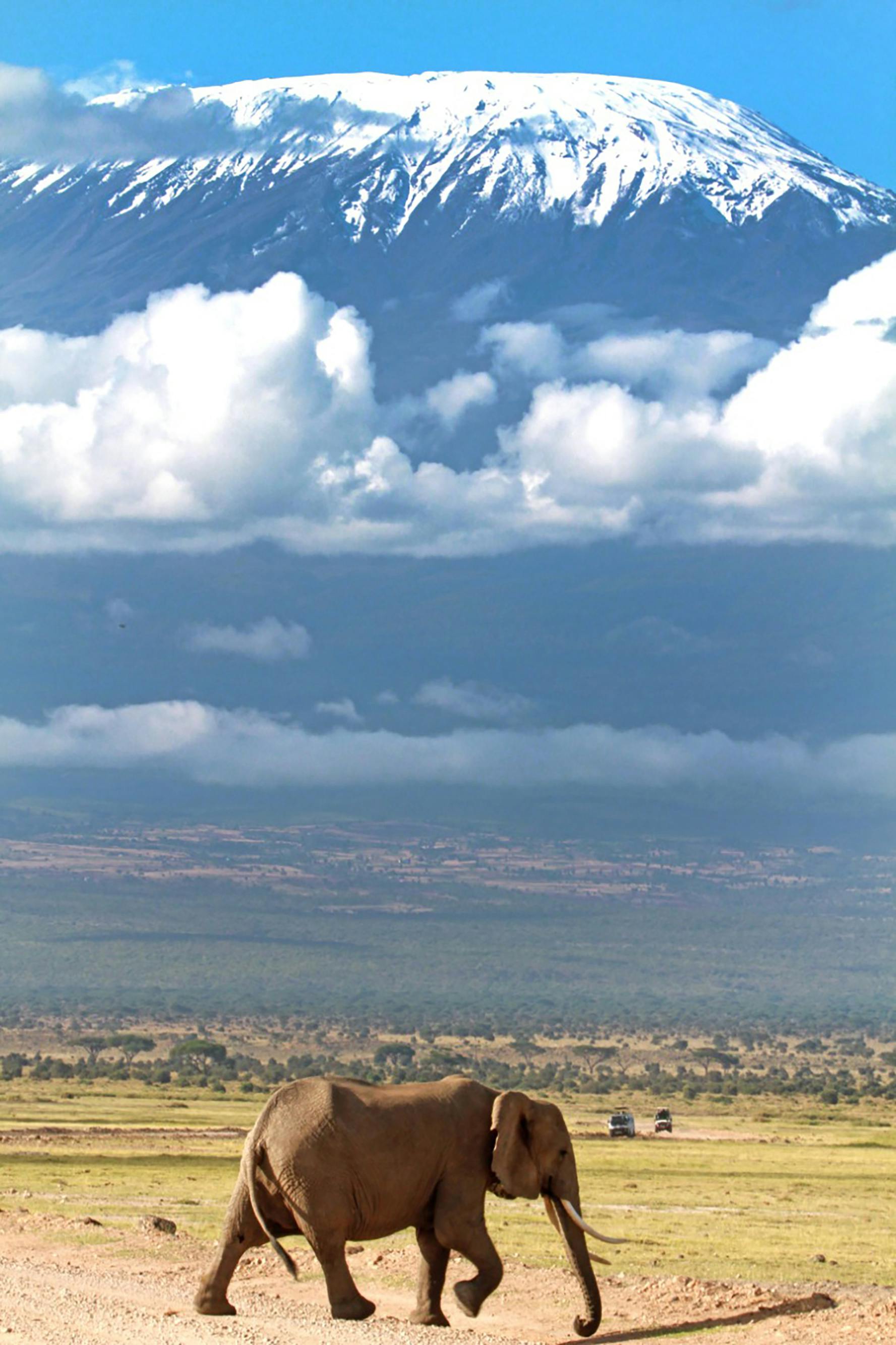
The Tarangire Ecosystem holds the largest elephant population in northern Tanzania. During the wet season, elephants disperse widely across the Tarangire-Manyara ecosystem, well beyond the park’s own boundaries. During peak dry season, the total inside the park rises sharply as animals migrate inward from the surrounding ecosystem, with the park’s population reaching up to 3,000 elephants at its peak.
The mechanism is straightforward. Elephants need water daily — particularly nursing females and calves, who cannot go more than 24–48 hours without it. When all other options disappear, the Tarangire River is not a choice; it is a destination. Breeding herds make daily journeys to the river, often arriving at predictable times, drinking, bathing, socialising, and then moving back into the bush to feed.
The concentrations these journeys produce are what operators and guides mean when they talk about Tarangire’s dry season. Individual herds of up to 300 elephants at the river’s edge are documented. On a morning drive in late August, you can stop at a single bend in the Tarangire River and watch several hundred elephants moving through in an hour. Calves being herded to the water’s edge by their mothers, bulls dwarfing the trees behind them, younger males testing their strength against each other — the whole of elephant social life visible from one stationary vehicle.
Wildlife numbering in the thousands moves from the Lake Manyara area and surrounding plains to the Tarangire River during the dry season. The corridor between Lake Manyara Biosphere Reserve and Tarangire National Park remains one of the most ecologically critical in northern Tanzania, confirmed by 2024 research as still vital for mammal species richness across the ecosystem. Elephants use this corridor seasonally — out toward Manyara’s groundwater forest in the wet season, back toward the Tarangire River as it dries.
The seasonal window, precisely
Dry-season elephant concentrations at Tarangire are documented July through October. The concentrations peak in late August through September, when surrounding water has fully dried and the maximum number of family groups have converged on the river. July and October are excellent but slightly below peak — July because some secondary water sources still exist, October because the early short rains start returning water to the wider ecosystem and herds begin dispersing.
By November, the pattern reverses. The first rains arrive, seasonal pools refill, and elephants move back out across the landscape. The Tarangire-Manyara corridor reopens as a viable route. The park becomes quieter and elephants more dispersed — still present, but no longer in the concentrated herds that define the dry season.
Game across all species is most plentiful around the central Tarangire River during this window — not just elephants, but zebra, wildebeest, giraffe, buffalo, and the predators that follow them. The dry season river drive is Tarangire at its most productive across every category.
I have done this drive in both seasons. The August version is in a different category from anything else on the northern circuit. You stop counting individual elephants after the first hundred. At one point on the bank road, we sat stationary for forty minutes while a breeding herd of perhaps 150 animals crossed from bush to water and back, calves stumbling down the bank, the matriarch standing watch on the far side. That kind of encounter requires the dry season. It requires the river. It requires that everything else has dried out.
Matriarchal family groups: the social structure behind the spectacle
Elephants in Tarangire live in complex matriarchal family groups. The oldest female — the matriarch — leads each family, and her accumulated experience is the group’s primary survival asset. She knows where the Tarangire River runs. She knows the route from the seasonal grazing areas back to the water. She has stored decades of information about which years the corridor dries early and which routes hold water longest. When poachers historically targeted the largest, oldest elephants for their tusks, they were not just killing individuals — they were destroying these knowledge libraries, and the family groups left behind made worse decisions and had higher calf mortality as a result.
Watching a family group make a decision is one of the more striking things you can observe in Tarangire. The matriarch pauses. The others stop and watch her. She tests the wind, reads the landscape, decides — and the whole family follows without apparent dissent. The calves are the only ones who do not pay attention. They are too busy.
Adult males live separately after leaving their birth herds at around age 12–15. In Tarangire they appear as large solitary bulls moving on their own schedules and as small bachelor groups of younger males working out their social hierarchies. The large old bulls you see in Tarangire — animals with tusks heavy enough to score the ground as they walk — are males that have survived decades of ivory poaching and legal hunting. The largest individuals in the park are living records of the protection effort.
The baobab connection
The visual character of Tarangire’s dry-season elephant viewing is inseparable from the park’s baobab trees. Ancient baobabs — some several hundred years old — stand throughout the Tarangire landscape, and elephants strip bark from them during the dry season for moisture and minerals. The trees carry the marks of this: scarred trunks, stripped sections, the record of repeated visits over decades. It is not damage in the ecological sense; it is part of the system. The baobabs survive it, and the marks tell you which trees the elephants return to.
The combination of large herds against a baobab-punctuated skyline is what makes Tarangire photographs different from anything you get in the Serengeti or Ngorongoro. The open plains of the Serengeti produce different images — enormous and golden, but without this particular drama of great animals and ancient trees. Tarangire in the dry season is a specific landscape, and the elephants are inseparable from it.
Tusklessness and what poaching pressure left behind
The ivory poaching that devastated Tanzania’s elephant population between 2009 and 2014 did something beyond the immediate kill count. It selected, at the evolutionary level, for elephants without tusks.
Research published in Science identified tusklessness in African elephants as linked to an X-chromosome gene, with the two candidate genes being AMELX and MEP1a. The mutation is male-lethal in the embryo, which is why tuskless elephants in heavily poached populations are almost always female. In Gorongosa National Park in Mozambique — which lost approximately 90 percent of its elephants to poaching during the civil war — tuskless females were five times more likely to survive than tusked ones. Ivory poaching, in other words, is not just reducing population numbers; it is running an evolutionary experiment with a very clear selection pressure: have tusks and get killed; don’t have tusks and survive.
Tanzania’s stricter anti-poaching enforcement since 2015 has significantly reduced this pressure. The national elephant population recovered from approximately 43,000 in 2014 to 66,714 in the 2024 census. Poaching indicators fell sharply. But the evolutionary record of the poaching era will persist in Tanzania’s elephant population for generations. When you watch a tuskless female in Tarangire — and you will see some — you are looking at a specific product of the history.
Tanzania set a national elephant hunting quota of 50 elephants per year (100 tusks) as of 2024, restricted to old male bulls with tusks weighing at least 20 kg or measuring 160 cm. This remains controversial within conservation circles, particularly given the recent recovery trajectory.
Practical viewing in dry season
The river drive is the core of elephant viewing in Tarangire July through October. Camps positioned near the northern section of the Tarangire River offer the most direct access to the concentrations — early morning and late afternoon drives along the river bank, stopping at the waterholes and crossing points where herds arrive on schedule.
The Silale Swamps in the southern section of the park hold significant wildlife including elephants that have moved away from the more vehicle-dense northern areas. The drive south from Sangaiwe takes about two hours to reach the swamps and is productive throughout the dry season, with fewer vehicles and a different visual character.
A few practical signals to read from the elephants themselves:
- Ears spread wide, head raised — alert or mild threat display. Give space.
- Temporal gland secretion (dark stain running from eye down cheek, often with urine dribbling) — the bull is in musth. Your guide will increase distance. Follow the instruction without needing an explanation.
- Relaxed feeding, tails swishing — the herd is at ease. This is the state you want for extended observation.
- Mock charge — ears spread, dust kicked, often with a short run and stop. The elephant is warning you. Your driver will reverse slowly. Do not move fast, do not panic.
- Genuine charge — ears pinned back, silent, purposeful. Rare, and your guide has seen the signals building before it reaches this point. Trust the experience.
The minimum safe approach distance in Tanzania’s national parks is 20 metres for large game. In practice, experienced guides manage distance by reading elephant body language rather than counting metres. If your guide moves the vehicle when you are watching an elephant closely, it is for a specific reason.
Getting to Tarangire: distances, fees, and how to plan your visit
Tarangire is among the most accessible parks on Tanzania’s northern circuit. It lies approximately 118 km southwest of Arusha — roughly a two-hour drive — making it reachable by road without a domestic flight. Most northern circuit itineraries begin here, and there is a logic to that: Tarangire is where the scale of Tanzania’s dry-season wildlife concentrations first becomes apparent, before the Serengeti raises the baseline again.
Key planning numbers:
- Distance from Arusha: approximately 118 km by road; approximately 2 hours driving
- Park entry fee: USD 59 per adult per day (non-residents)
- Concession fee: USD 59 per person per night (lodges inside the park boundary)
- Park area: 2,850 km²
- Minimum recommended stay: 2 nights for core dry-season elephant viewing; 3 nights to add a Silale Swamp drive to the south
The USD 59 daily entry fee is meaningfully lower than the Serengeti’s USD 82.60 per person per day under current TANAPA 2024/25 rates — a difference that affects how operators structure northern circuit itineraries. Tarangire’s cost position makes it a natural multi-night opening before a more expensive Serengeti block.
There is a real difference between staying inside the park concession and day-tripping from lodges outside the boundary. Inside-concession camps have exclusive road access in the early morning and late afternoon, when day-visitor vehicles are absent. The Tarangire River drive at 6am — one or two vehicles, no others, the herd arriving at the bank in flat light — is not available to guests who drive in from Arusha at 8am. I spent three nights at a camp inside the northern concession in August. Every drive that departed before other vehicles arrived was in a different category from anything the same roads delivered at midday. The concession fee buys that separation.
Tarangire’s 500+ bird species: the safari beyond elephants
Tarangire holds over 550 recorded bird species — and birders who visit primarily for elephants regularly find themselves distracted by what appears in the same field of view. The park is consistently listed among East Africa’s premier birding destinations, in part because its 2,850 km² contains sharp habitat transitions: riparian fever-tree zones along the river, open Acacia-Commiphora grassland, dense bush, and the structural complexity that ancient baobabs add to every mid-range view.
The dry-season concentration operates for birds the same way it works for mammals. Waterbirds and waders cluster along the Tarangire River and its remaining pools. Raptors work the open grassland where prey density peaks in the dry months. The riparian zone holds forest-edge species absent from the grassland fifty metres away, producing distinct species assemblages across short distances.
The wet season (November through March) adds European and Eurasian migrants to the base resident population, producing the highest annual species counts. The dry-season advantage for birding is the concentration effect: species dispersed across a wide area during the rains compress into a narrow, easy-to-scan river corridor.
The baobabs add a layer to the bird habitat that goes beyond scenery. Most of Tarangire’s baobabs are estimated at 500 to 900 years old, per the National Audubon Society, and develop the hollows and trunk cavities that host nesting species. A mature baobab reaching up to 20 metres carries multiple micro-habitats within a single tree. The relationship between these ancient trees and their bird inhabitants is part of how the Tarangire ecosystem functions, not decorative background.
I was watching a breeding herd cross the river on the third morning of a dry-season visit when the guide tapped my shoulder and pointed into a dead acacia behind the vehicle. Something large and still was in the upper branches, tracking the same herd we were watching. The guide named it quietly. There is always something else happening in Tarangire if you look away from the obvious thing for a moment.
Night drives and walking safaris: what’s available around Tarangire that other northern circuit parks don’t offer
Night game drives are not officially permitted inside any Tanzanian national park — TANAPA prohibits them uniformly, including in the Serengeti, Ngorongoro Crater, and inside Tarangire itself. What sets the Tarangire and Lake Manyara ecosystem apart is the private concession land bordering both parks, where camps do run night drives. For northern circuit visitors, this distinction matters practically — it adds a layer of nocturnal wildlife viewing that is simply unavailable near the most famous parks on the route.
Night drives in the Tarangire ecosystem operate from camps on private concession land bordering the park. The animals that become accessible after dark include bushbabies, genets, servals, porcupines, and the same leopards that Tarangire guides rate as one of the park’s consistent strengths. Visitor feedback on night drives is variable: some are exceptional, others less so. Camp-based concession night drives, where guides work the same territory daily, tend to produce more consistent results than general park road drives. One guest review from a northern concession camp described their night drive as the best they had ever done. Some are. Not every one is.
Walking safaris are available through concession camps in Tarangire. Tanzania regulations set the framework:
- Maximum group size: 4 guests per walking party
- Minimum age: 12 years (some camps set a higher minimum — confirm when booking)
- Guide requirement: Professionally armed guide or ranger; mandatory throughout
- Routes: Designated walking routes within the concession area
Walking safaris shift the scale of what you perceive. In a vehicle you scan for large bodies moving against the landscape. On foot you read tracks, assess dung age, register soil type, notice the relationship between vegetation and moisture. A walk along the Tarangire River bank — at ground level on the same routes the elephant herds use to reach water — produces a different kind of attention than any drive. The dry-season concentrations are visible from both a vehicle and from two feet on the ground. What you understand from each is different.
The combination of dry-season elephant river drives, night drives, and walking safaris is the argument for a three-night concession-camp stay over two night drives in, two drives out. Three nights gives you all three. That is a different quality of visit.
For the full month-by-month breakdown of Tarangire’s wildlife cycle — including when the birding peaks, when green-season discounts apply, and what the park looks like in November when the short rains return — see the Tarangire: when to go guide. For the broader Tanzania elephant picture — population history, park comparisons, Nyerere’s recovery from the 2009–2014 poaching crisis, and how all five major viewing parks compare — see the Tanzania elephants guide. For elephant population numbers and the anti-poaching enforcement story that drove the recovery from 43,000 to 66,714, see the the anti-poaching enforcement story. For the rest of what Tarangire offers beyond elephants — when to go, walking safaris, and camp options — see the main Tarangire guide.
Tim Hennig has been on safari in Tarangire in both the wet and dry seasons. The dry-season Tarangire River drive in August is, in his view, the most underestimated safari experience on the entire northern circuit.
Frequently asked questions
How many elephants does Tarangire have in dry season?
The Tarangire Ecosystem holds the largest elephant population in northern Tanzania. During peak dry season, the park population can rise to approximately 3,000 elephants as animals migrate in from surrounding areas. Individual herd concentrations at the river reach up to 300 animals at a single location. The peak window for these concentrations is late August through September, when surrounding water sources have fully dried out.
Why do elephants concentrate at the Tarangire River in July–October?
The Tarangire River is one of the only permanent water sources in the region during the dry season. Elephants and other ungulates that dispersed across the wider Tarangire-Manyara ecosystem during the wet season — when water was available from temporary pools and the Lake Manyara corridor — are pulled back as those sources dry out. With no alternative, herds make daily journeys to the river, creating the concentration that gives Tarangire its reputation.
What is the best month for elephants in Tarangire?
Late August and September are the peak months. By late August, the surrounding ecosystem has fully dried and the maximum number of elephant families have converged on the river. The concentrations are most dramatic and most consistent from late August through September. July and October are excellent but slightly below the peak. After October, the short rains begin returning water to the wider ecosystem and herds start dispersing.
What are matriarchal elephant family groups and why do they matter in Tarangire?
Elephant families in Tarangire are matriarchal: led by the oldest female, whose accumulated experience of where water and food can be found across decades of drought and rain cycles is the group's primary survival asset. The matriarch decides when to move, which route to take, and when a threat is real. Watching a large family group make a decision — the matriarch assessing the wind, the others watching her — is one of the most visible demonstrations of complex animal cognition on a Tanzania safari.
Are the large solitary bulls in Tarangire more dangerous than herd elephants?
Solitary bulls in Tarangire are adult males that have left their birth herds at around 12–15 years old. They are normal elephant behaviour, not injured or aggressive animals. The specific risk situation is musth — a hormonal state in mature bulls indicated by temporal gland secretion and urine dribbling — when testosterone is elevated and behaviour becomes unpredictable. Experienced guides in Tarangire read these signals and increase vehicle distance accordingly. Follow all guide instructions.
What is tusklessness and why does it matter for Tarangire elephants?
Tusklessness — elephants born without ivory tusks — is increasing in African elephant populations that experienced heavy poaching pressure. Research published in Science identified the trait as linked to an X-chromosome gene (AMELX and MEP1a), with the mutation lethal in male embryos, meaning tuskless elephants are almost always female. In Gorongosa, Mozambique — which lost 90% of its elephants to poaching in the civil war — tuskless females were 5 times more likely to survive than tusked ones. Ivory poaching is essentially selecting against tusks at the evolutionary level. Tanzania's stricter anti-poaching enforcement since 2015 has reduced this pressure, but the genetic record of the poaching era will persist in Tanzania's elephant population for generations.
How much does it cost to visit Tarangire National Park?
The non-resident adult entry fee for Tarangire is USD 59 per person per day. Camps and lodges inside the park concession area charge an additional concession fee of USD 59 per person per night on top of the park entry fee. For comparison, Serengeti and Nyerere charge USD 82.60 per person per day under current TANAPA 2024/25 rates. Tarangire's lower fee makes it a cost-effective starting point for northern circuit itineraries. Tanzania's TANAPA has proposed phased annual fee increases for some parks — confirm current rates when booking.
Can you do a night drive or walking safari in Tarangire?
Yes — but night drives are not permitted inside the Tarangire national park boundary itself; TANAPA prohibits night drives in every park it administers, the Serengeti and Ngorongoro Crater included. What's available in the Tarangire ecosystem: camps positioned on private concession land bordering the park run night drives. Walking safaris are also available through concession camps: Tanzania regulations require a professionally armed guide, a maximum group of four guests, and a minimum age of 12 years (some camps set 16 — confirm when booking). The combination of daytime elephant river drives, night drives, and walking safaris makes a concession-camp stay in Tarangire significantly more layered than a day-trip visit.