
Facts & prices checked: 2026-06-25
A Tanzania and Zanzibar honeymoon works because the contrast is the point. Five days in the dusty, vast Serengeti — lions at dawn, the crater at sunrise, an elephant silhouette against an orange sky — and then suddenly you are barefoot on white sand watching a dhow cross a turquoise Indian Ocean. Two experiences, one trip, one arc from land to sea. The transition itself is part of the romance.
Most couples who do this trip say the same thing afterwards: they could not have designed a better structure if they had tried. The key is not doing both well — Tanzania delivers the wildlife and Zanzibar delivers the beach almost automatically. The key is the decisions in the middle: private vehicle or shared, east coast or north coast, Mnemba or something else, which month, how many days.
Quick facts
| Ideal duration | 10–14 days total |
| Classic split | 4–6 days northern circuit safari + 5–7 days Zanzibar |
| Best season | June–October (dry season; Mara crossings July–Oct); February–March (Ndutu calving; fewer tourists) |
| Highest-impact upgrade | Private safari vehicle |
| Zanzibar luxury benchmark | &Beyond Mnemba Island — 12 bandas; from USD 2,150 per person per night + USD 100 conservation levy |
| Budget (mid-range, per person) | ~USD 4,300 for 10 days total |
| Budget (luxury, per person) | USD 15,000+ for 10–13 days |
The classic itinerary — what most couples do
10–14 days is the minimum to do both properly. A trip of fewer than 10 days starts to feel rushed between safari transfers, the flight to Zanzibar, and settling into a rhythm on the beach. Most couples do either 10 days compressed or 14 days with breathing room.
Days 1–5 or 6: Northern circuit safari. Fly into Kilimanjaro International Airport (KIA) and spend 1 night in Arusha for logistics. The classic northern circuit combines Serengeti (3 nights minimum) with Ngorongoro Crater (1–2 nights on the rim, one morning descent). Optional add-ons: Tarangire for elephant concentrations (excellent October–December when the Tarangire River is the only water source in a dry landscape), Lake Manyara for flamingos and tree-climbing lions.
The Ngorongoro Crater floor is capped at 6 hours per vehicle per descent, with entry and crater service fees of USD 70.80 per person plus USD 295 per vehicle. A private vehicle inside the crater means you can follow a scene — the crater’s black rhino at 200 m, a lion pride on the central grassland — without eight other passengers redirecting you. This matters more inside the crater than almost anywhere else on the circuit, because the crater floor is small enough (260 km²) that you will reach every significant sighting in a day regardless of pace. What you sacrifice on a shared vehicle is the ability to stay.
Days 6 or 7 to 12 or 13: Zanzibar. Fly from Arusha or Kilimanjaro airport to Zanzibar (direct connections exist; some routes transit Dar es Salaam). Stone Town for 1 night is worth doing — UNESCO old town, excellent rooftop restaurants with Indian Ocean views, dhow harbour at sunset. Then the beach: 5–6 nights.
Day 14 (or 13): Departure. Zanzibar International Airport is a short transfer from any coastal base.
Safari for two — what makes it actually romantic
Safari is inherently a shared experience, and most of the logistics are designed for groups. On a honeymoon, the upgrade decisions that matter most are the ones that make the experience exclusively yours.
Private vehicle. The most impactful single decision. A private safari vehicle — typically a customised Land Cruiser or similar with your guide and no other passengers — means you decide when to stop, how long to watch, and where to go within the park’s allowed zones. On a shared game drive vehicle (8–10 passengers from different tour groups), you are on a democratic schedule. Some guests want to drive on; others want to stay. Someone needs the toilet. The guide has to balance everyone. On a honeymoon, that dynamic removes the intimacy of the experience. A 4-hour lion kill watched in silence with just the two of you and your guide is a fundamentally different encounter to the same scene with nine other people taking turns to use the roof hatch. Mid-range safari budgets price in USD 300–350 per person per day; private vehicles typically add significant cost but are standard at luxury camps.
Outdoor shower under stars. Many top tented camps have open-air private outdoor showers with views onto the savannah, into the forest canopy, or under an open sky. This is typically included in the tent or suite rate, not an add-on. It is worth asking about specifically when booking — “does the suite have an outdoor shower?” is a question that will get a precise answer and tells you quickly what category of camp you are looking at.
Bush dinner. Many luxury camps can arrange a private candlelit dinner in the bush — under an acacia tree, on a termite mound, at a waterhole — with a fire, lanterns, and camp staff serving. This is usually arranged on the day rather than pre-booked, and requires clear weather. It is not an expensive add-on at camps where this is part of the experience; it is a matter of asking. Tip the camp manager before you arrive that this is something you would like, and they will find the right evening for it.
Sundowner stop. A private vehicle stops where you ask it to. On the Serengeti plains, watching the sun drop behind a kopje with a gin and tonic at 18:00, with no other vehicles in sight and the plains going gold around you, is one of those moments that is genuinely difficult to replicate anywhere else in the world. On a shared vehicle, the sundowner stop is wherever the group votes and whatever time the driver has in mind.
Morning mist game drive. The Serengeti at 06:00 — mist sitting low over the golden grass, a pride of lions still active from their night, impala standing perfectly still in the first light — is one of the most beautiful settings I have seen. The practical trade-off on a honeymoon is the 05:30 wake-up call versus sleeping in. My honest recommendation: do the early drive at least twice. The mid-morning drive (departing 09:00) is pleasant but the light is harder and most predators are resting. The magic is at dawn.
Zanzibar for honeymooners — choosing your base
Zanzibar has a clear geography and it matters for a honeymoon. The north coast (Nungwi, Kendwa) keeps deep water close to shore at almost all tides and has more infrastructure: beach bars, restaurants, full-board hotels, and easy swim access on demand. This suits couples who want a resort atmosphere and activities on tap. The east coast (Michamvi Pingwe, Matemwe, Jambiani) is quieter, more boutique, and more genuinely Zanzibari. It also has a significant tidal range — at low tide the reef sits exposed and you walk out 500 metres to reach swimmable water. That is not a flaw; plan around the tide tables and the lagoon at high water is extraordinary. But it is the most common surprise for east coast first-timers.
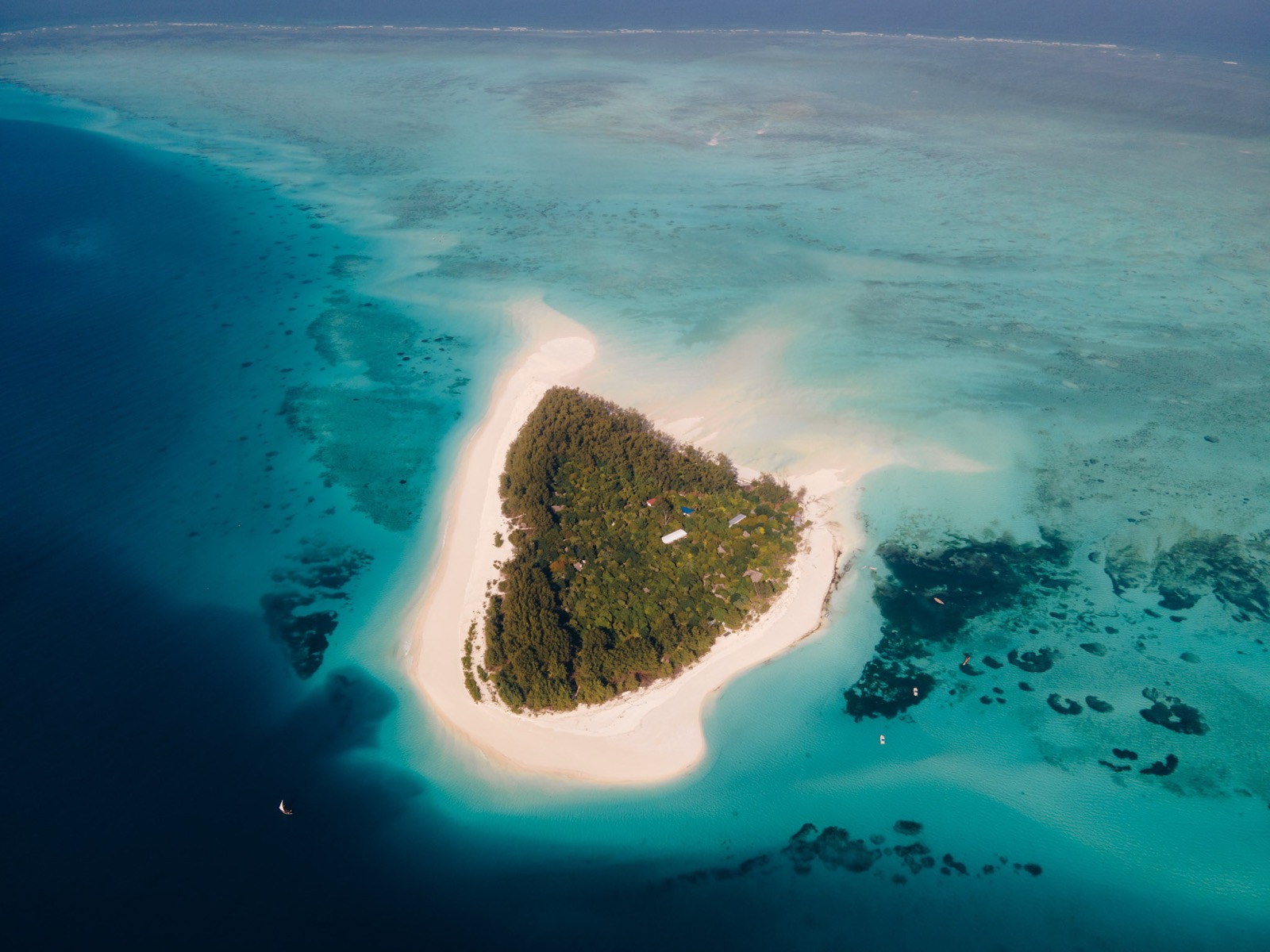
&Beyond Mnemba Island is the luxury benchmark. A private island 3 km off Zanzibar’s northeast coast, 12 bandas (bungalows), a maximum of 24 guests at any time, from USD 2,150 per person per night plus a USD 100 conservation levy per person per night. Access is a 10–15 minute boat transfer from the Muyuni jetty after a roughly 1 hour 20 minute land transfer from Zanzibar airport. Day visitors cannot access the island — only lodge guests. The snorkelling and diving at Mnemba Atoll is the best on Zanzibar: Reddit’s Zanzibar threads consistently describe it as the best snorkelling site on the island, a marine conservation area with significantly healthier coral than the more trafficked sites. Coral restoration work (CORDAP project, active October 2024 to September 2027, targeting 4 hectares) is underway following bleaching damage. Go early — boat traffic increases through the morning.
East coast boutique hotels (Michamvi Pingwe, Matemwe, Jambiani). Jambiani — south of Paje on the southeast coast — is specifically described by travel sources as quiet, relaxed, with boutique hotels, good restaurants, and a couples and honeymoon atmosphere. Michamvi on the southeast coast has similar character. Matemwe on the northeast coast is further from the airport (about 1 hour 20 minutes) but closer to Mnemba Atoll for boat day trips if you are not staying on the island. East coast boutique hotels at quality level typically run USD 200–400 per night for a couple, versus Mnemba’s per-person rates.
North coast (Nungwi, Kendwa) suits couples who want beach-bar access and swimmable water on demand without monitoring tide tables. The sunset dhow cruise operates from Kendwa and Nungwi (from USD 35 per person, 3+ hours), which is one of the most consistently romantic Zanzibar activities — a traditional dhow with drinks on the water as the sun drops.
What to avoid on a Zanzibar honeymoon: Paje specifically. Beautiful beach and good surf, but the kite-surfing hub atmosphere — young, active, water-sports-focused — is not inherently romantic. If kite-surfing together is on the list, Paje is excellent. If you want quiet and private, go to Jambiani (just south) or Michamvi instead.
When to go — season as a romantic variable
The season choice on a Tanzania honeymoon is a real decision because the safari experience changes significantly by month, and it affects which Zanzibar you get.
July–September is peak: the best Mara River crossings are in August and September (herds cross from the Serengeti into the Masai Mara; the crossings are dramatic but not guaranteed on a specific day — herds can wait at the river for days before committing). Zanzibar is dry and slightly cool, excellent beach weather. Also the most expensive season and the most crowded in the northern parks. If July and August coincide with the school holiday calendar in your country, the Serengeti is noticeably busy outside private conservancies.
February–March (Ndutu calving) is the most underrated time for honeymooners who want drama and privacy together. The southern Serengeti around Ndutu hosts the calving season with approximately 500,000 wildebeest calves born in a compressed window, and every predator in the ecosystem concentrates there. Cheetah mothers with cubs on the open plains, lion prides with multiple kills available, hyena dens with pups — all in a compact area with far fewer vehicles than August. The trade-off: Zanzibar is in its wetter season. It is not solid rain, but beach weather is less reliable. Couples who prioritise the safari experience and are flexible about beach conditions should seriously consider February or March.
December–January is a good shoulder-season option: safari is reliable, Zanzibar is dry and hot, prices are lower than peak, and the crowds are moderate. Good value for couples who want a genuinely complete experience without the August premium.
October–November (short rains) brings brief afternoon showers and a beautiful green landscape on the Serengeti plains. Game-viewing remains good; prices drop; Zanzibar beach is fine. An underrated window for couples on a budget who have flexibility.
Key upgrade decisions — what makes a real difference
Not every upgrade matters equally. These are the decisions that actually change the experience:
1. Private safari vehicle. Discussed above — the single most impactful upgrade for a honeymoon specifically. Safari is inherently a shared logistics exercise (group vehicles, fixed breakfast times, shared group schedules) and a private vehicle removes that constraint entirely.
2. Private conservancy access. National parks prohibit night drives and off-road driving. Private conservancies adjacent to the Serengeti allow both, plus walking safaris at dawn with a professional guide — a fundamentally different relationship with the bush. Leopard sightings on night drives are consistently more reliable in conservancies than in the parks. If a luxury camp gives you conservancy access, that is worth significant weight in the booking decision.
3. Mnemba Island versus an east coast boutique hotel. The price gap is real (USD 2,150+ per person per night versus USD 200–400 per couple per night) but so is the difference. Mnemba delivers a completely private island environment with no day visitors and the best snorkelling on Zanzibar. East coast boutiques deliver privacy within a Zanzibari village context — quieter than the north coast but not an island to yourselves. Both are genuinely romantic; the question is whether the island exclusivity is worth the cost gap for your trip.
4. Direct flights between Arusha and Zanzibar. The standard routing goes via Dar es Salaam, which adds 3–5 hours of transit time and airport waiting. Charter flights between Serengeti airstrips and Zanzibar are available and cut the transit dramatically. Worth pricing for a 10-day itinerary where transit time is a meaningful fraction of the total trip.
5. Bush dinner and private sundowner. These cost little or nothing extra at luxury camps and are entirely a matter of asking. Worth arranging before arrival so the camp has time to plan properly.
What not to do on a Tanzania honeymoon
Shared safari vehicles — covered above. On a honeymoon, this is the one place where the standard advice to save money is genuinely wrong. The whole safari experience hinges on your guide’s ability to respond to you, not to the group.
Overpacking the itinerary. Two parks plus two beach locations in 10 days means you spend most of the trip in transit. The Serengeti alone can absorb 3–4 days of game drives without repetition. Picking one main park (Serengeti with a Ngorongoro day) and one beach base (rather than north coast plus east coast) gives you time to actually arrive somewhere.
Peak Nungwi in high July–August. Nungwi and Kendwa are the north coast’s busiest beaches, and in July and August — the peak of both safari season and European summer holidays — they are crowded. If the north coast is your choice, consider a quieter boutique hotel there rather than the large full-board resorts, or shift to the east coast where the crowds are structurally smaller.
Night transfers. Zanzibar’s roads are unlit and transfers take 1h15 to 1h30 from the airport to the east coast. An evening flight arrival with a night transfer is a rough start to a honeymoon beach stay. Plan for a daytime arrival if possible, or budget a Stone Town overnight to break the journey.
Tim’s observation
I brought my partner to the Serengeti in February — the Ndutu calving season — and then directly to Zanzibar. The transition happens over one short domestic flight and a taxi ride. You step off the plane at Zanzibar International Airport still carrying the dust from the Serengeti plains, still processing whatever the guide said about why the cheetah gave up the hunt at the last moment. And then an hour later you are standing at the edge of the Indian Ocean, ankle-deep in warm water that is the exact colour of shallow turquoise glass, with a white sand beach that looks nothing like anywhere you have been in the previous five days.
That contrast — the dry grass and the vast sky of the Serengeti, then suddenly the Indian Ocean — is the thing no trip report quite captures. It is not that the two experiences are compatible. It is that they are so different that each makes the other more vivid. The savannah makes you miss water. The beach makes you remember the plains. Most couples I talk to describe arriving at the beach and feeling like the trip has two acts, neither of which they would trade.
The Zanzibar beach at high tide is what you have seen in the photos. Low tide on the east coast is something different: a vast flat of sand and reef, almost completely silent, with the ocean somewhere in the middle distance. Both are worth seeing. Neither requires a plan.
→ See also: Zanzibar honeymoon guide · safari budget breakdown · Serengeti: great migration timing · crater highlights for couples · Nungwi beach guide · Zanzibar Paje guide
Frequently asked questions
How long should a Tanzania honeymoon be?
10–14 days is the sweet spot: fewer than 10 days feels rushed between safari and beach; more than 14 becomes ambitious. A common structure is 4–6 safari days on the northern circuit (Serengeti and Ngorongoro) plus 5–7 beach days on Zanzibar, with 1 night in Stone Town for orientation.
When is the best time for a Tanzania honeymoon?
June–October is the dry season: best overall game-viewing, Mara River crossings in the northern Serengeti from July to October, and Zanzibar is cool and breezy. February–March is underrated — the Ndutu calving season delivers dramatic predator action with far fewer tourists than August, though Zanzibar is wetter. December–January is shoulder season with good safari, hot dry Zanzibar, and lower prices.
Is a private safari vehicle worth it for a honeymoon?
Yes — it is the single highest-impact upgrade. A private vehicle means you decide when to stop, how long to watch, and when to follow a hunt. On a shared safari vehicle with 8–10 passengers, you are on a democratic schedule: some want to move on, some want to stay. On a honeymoon, that dynamic breaks the experience. Private vehicles cost more but remove that friction entirely.
Where is the best place to stay in Zanzibar on a honeymoon?
&Beyond Mnemba Island — 12 bandas on a private island 3 km off the northeast coast, from USD 2,150 per person per night plus a USD 100 conservation levy — is the most exclusive option on Zanzibar. For couples who want genuine privacy at lower cost, east coast boutique hotels around Michamvi Pingwe and Matemwe are the best alternative: quiet, small, and genuinely remote-feeling. Jambiani (southeast) is quieter and more couples-focused than Paje.
What does a Tanzania honeymoon cost?
A 10-day mid-range honeymoon (shared safari vehicles, quality lodges, boutique Zanzibar hotel) runs approximately USD 4,300 per person total. A luxury honeymoon with private vehicles, top safari camps, and Mnemba Island can reach USD 15,000 per person or more for 10–13 days. Budget USD 300–350 per person per day as a baseline for safari.
What are the best romantic experiences on a Tanzania honeymoon?
A private Serengeti game drive at 06:00 before other vehicles reach the plains; the Ngorongoro Crater floor with a private vehicle (no shared schedule); a candlelit bush dinner arranged by the camp (many luxury camps do this); a sunset dhow cruise from Kendwa or Nungwi (from USD 35 per person); and snorkelling at Mnemba Atoll — Tanzania's best snorkelling site, described as a marine conservation area with a healthy reef.