
Facts & prices checked: 2026-06-25
Zanzibar’s diving splits into four distinct zones, each with a different character, depth range, and audience. Knowing which site suits your certification and what to expect removes the guesswork from booking — and keeps you out of a situation where you’re asked to manage strong current on your third open-water dive.
Here is every significant dive site in Zanzibar’s waters, with honest suitability notes, what you will see, and what each costs.
Mnemba Atoll — the headline, with nuance
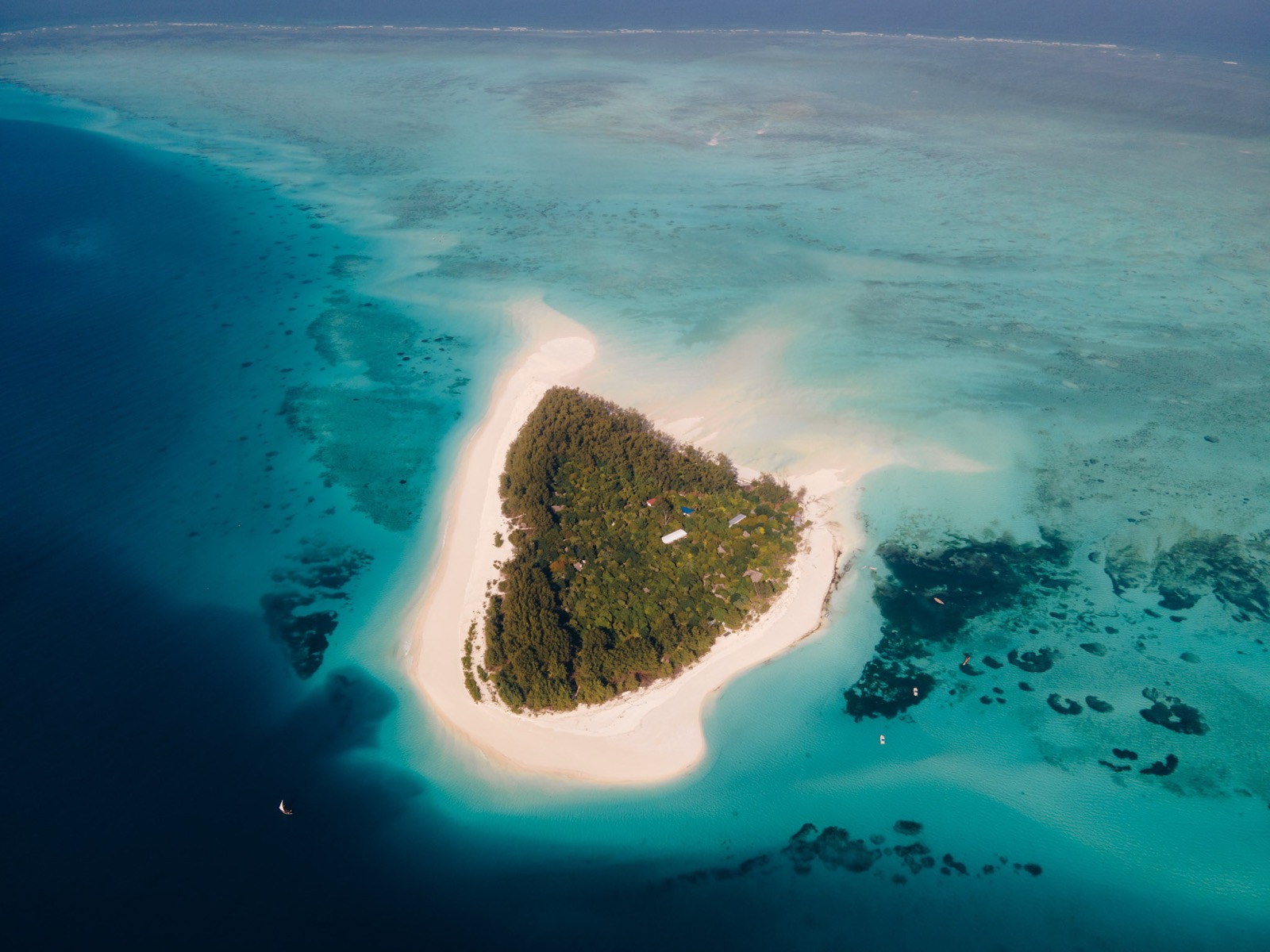
Mnemba Atoll sits off the northeast tip of Zanzibar, roughly 3 km from the beach at Matemwe. It is a marine conservation area — no fishing, no anchoring — and the result is fish biomass visibly higher than any unprotected reef in the region. Visibility regularly exceeds 20 metres. Water temperature stays between 25–29°C year-round, making a 3mm shorty wetsuit adequate on virtually every dive.
The atoll is not a single site. It is a ring of reef with four named dive spots, each with a different character:
Kinondoni — the main entry
Depth: 5–25m
Current: Low to moderate at the right tide state
Certification: Open Water and above
Best for: First dives at Mnemba, photography, turtle sightings
Kinondoni is a gently sloping coral reef wall — the most popular entry point for good reason. The slope from 5m down to 25m+ is covered in hard coral formations, sea fans at depth, and cleaning stations where reef fish cycle through in formation. Napoleon wrasse are reliably present and curious enough to approach the camera. Green sea turtles feed along the reef floor and surface for air close to divers. On a good day the visibility runs to 20–25 metres and the fish density feels genuinely high.
Current at Kinondoni is manageable at most tide states for Open Water-certified divers. At the right state of tide it picks up noticeably — still comfortable for intermediate divers, but first-timers should confirm conditions with the dive guide before entry.
Aquarium — beginner and student dives
Depth: 5–12m
Current: Very low
Certification: Open Water students welcome
Best for: PADI Open Water course dives, children, first sea dives
The Aquarium is named for its volume and density of reef fish — the shallowness and protection of this section of the atoll produces fish concentrations that look almost artificially dense. Parrotfish, surgeonfish, moorish idols, snapper, and pufferfish are permanent residents. The low current and shallow profile make it the first choice for dive students completing their open-water checkout dives and for non-certified divers on a Discover Scuba Diving experience.
The snorkel boats also visit the Aquarium site, so it can get crowded after 09:30 on peak-season mornings. The first boat out — typically 07:00 departure from Nungwi and Matemwe — arrives before the flotilla and gives you the site largely to yourself.
Big Wall — for certified divers
Depth: 8–25m+ (wall continues below recreational depth limits)
Current: Can be strong
Certification: Advanced Open Water recommended
Best for: Experienced divers, pelagics, drift diving
The Big Wall is the steeper, outer section of the reef — the face drops away below recreational limits in places and the current on the northern point is strong on an incoming tide. What the current produces: barracuda schools, kingfish, eagle rays passing in open water, and the occasional reef shark working the wall. White-tip reef sharks rest on the sandy patches at 15–18m between the coral structures.
This is not a site for divers on their third dive. The current management and the lack of a clear sand-bottom reference at depth require a comfort level that comes from logged dives. Operators will ask for Advanced certification or demonstrate awareness of your recent dive history before assigning a guide here.
Northern drift — the advanced current dive
Depth: 10–20m during the drift
Current: Strong — this is a drift dive
Certification: Advanced Open Water and current experience
Best for: Experienced divers who enjoy being carried by current
The northern tip of Mnemba is where the tidal current along the atoll runs strongest. At the right state of tide, divers enter up-current and are carried along the northern face — a drift dive requiring no effort once the current takes hold. Species along the drift: barracuda in formation, eagle rays, the occasional hammerhead at depth. The experience is passive but demands comfort with current — you need to be able to equalise, monitor depth, and signal your dive guide without fighting the flow.
Mnemba’s peak whale shark season is December to March, overlapping with manta ray sightings. These are pelagic encounters in open water rather than reef encounters — the northern drift is the most likely spot, but they are not guaranteed on any given dive.
Leven Bank — open water, advanced conditions
Depth: 14–50m+ (the wall continues into deep water)
Current: Strong at times
Distance from Zanzibar: ~15 km north, approximately 25 minutes by speedboat
Certification: Advanced Open Water; current experience required
Best for: Serious divers, pelagic encounters, big fish
Leven Bank is a submerged seamount in the Pemba Channel, about 8 nautical miles (15 km) north of Zanzibar. The shallowest point is 14–16 metres — there is no shallow section, and the reef slopes immediately into deep water. Divers are in open ocean, blue water, with no sand bottom as a reference and depth rapidly below recreational limits on the slope.
What this produces when conditions cooperate: schools of pelagic fish in the open water, barracuda, large groupers, dogtooth tuna, eagle rays, kingfish. Whale sharks are possible in the cooler-water months. The site rewards experienced divers who can hold depth, manage position in current, and read the conditions. It punishes those who can’t.
Operators run Leven Bank on weather-dependent schedules — it’s a long open-water crossing and conditions on the seamount don’t always match what the shore looks like in the morning. If an operator cancels a Leven Bank trip and offers a Mnemba alternative, that is a professional judgment, not a substitution to push back against.
Chumbe Island Coral Park — the shallow reef protected since 1994
Depth: Maximum 8m
Current: Very low
Certification: Open Water; suitable for beginners and snorkellers
Distance from Stone Town: 12 km southwest, approximately 40 minutes by private boat
Best for: Beginners, snorkellers, marine ecology, conservation-focused travel
Chumbe Island Coral Park is a private marine protected area with a reef sanctuary covering 33 hectares. The reef has been closed to fishing since 1994 — roughly 30 years of no-take protection — which has produced species density and coral health that outpaces most comparable sites in the Western Indian Ocean. The reef contains 200+ coral species and 370+ fish species. The maximum depth is 8 metres, which makes the entire reef accessible to snorkellers and beginner divers.
This is the correct answer for non-certified travellers who want genuine reef quality without completing a PADI course. The combination of low depth, outstanding fish density, and guided access means the snorkel experience is more rewarding than diving at some unprotected sites with stronger credentials on paper.
Day trips from Stone Town include the dive or snorkel guided session, a forest walk in the protected coastal forest (giant coconut crabs, Aders’ duiker, rare birds), and lunch at the island’s eco-lodge. Daily capacity is strictly limited — book in advance.
Note: Chumbe is not a base for general recreational diving. It is a conservation site with controlled access. The strict visitor limits are what preserve the reef quality that makes it worth visiting.
Stone Town wrecks — entry level and history
Depth: 4–12m
Current: Low
Certification: Open Water and above; accessible for Discover Scuba
Best for: Introductory dives, wreck enthusiasts, visibility less critical
Several wreck dive sites sit in the bay off Stone Town, resting in sand between 4 and 12 metres — shallow enough to be visible to snorkellers on a clear day. Coral reef health decreases with proximity to Stone Town harbour (an active commercial port), so these are not the dives for reef condition on par with Mnemba, or for high visibility. What they offer is accessible depth, low current, and an alternative programme for days when Mnemba is weather-affected.
One Ocean Diving is believed to be the only dive centre operating in Stone Town with regular access to these sites. Visibility and fish density are lower than Mnemba, but the wrecks provide structure that attracts a different set of species and the entry price is lower than a full Mnemba day trip.
East coast reef diving
Depth: 5–18m (varies by site)
Current: Low to moderate
Certification: Open Water and above
Base: Matemwe, Paje, Michamvi, Jambiani
Best for: Convenient diving from east coast accommodation, house reef programmes, macro photography
The east coast has its own reef system — the lagoon edge, the reef flat, and house reefs accessible without a boat from several hotel properties. Paje-area reef diving offers a different species profile to Mnemba: lionfish, leaf fish, scorpionfish, nudibranchs, pipefish, batfish, puffers, trumpetfish, groupers, surgeonfish, parrotfish, and moorish idols. The east coast macro life — nudibranchs, moray eels, mantis shrimps, shrimps — rewards photographers with close-up subjects in the 10–18m range.
The most direct east coast access to Mnemba Atoll is from Matemwe, where Dive Point Zanzibar (PADI 5 Star Resort) operates daily boat trips. The crossing from Matemwe takes roughly 20 minutes, significantly shorter than the 45-minute run from Nungwi or Kendwa. If Mnemba diving is a priority, basing yourself in Matemwe is the efficient choice. Dive Point Zanzibar offers daily trips to Mnemba and the northeast coast reefs, PADI courses, and equipment in good condition.
Dive site comparison at a glance
| Site | Depth | Current | Certification | Distance | What you see |
|---|---|---|---|---|---|
| Mnemba — Aquarium | 5–12m | Very low | Open Water / students | 20–45 min boat | Reef fish, parrotfish, puffers |
| Mnemba — Kinondoni | 5–25m | Low–moderate | Open Water | 20–45 min boat | Napoleon wrasse, turtles, reef fish |
| Mnemba — Big Wall | 8–25m+ | Moderate–strong | Advanced recommended | 20–45 min boat | Barracuda, eagle rays, reef sharks |
| Mnemba — Northern drift | 10–20m | Strong (drift dive) | Advanced + current exp. | 20–45 min boat | Eagle rays, sharks, whale sharks (seasonal) |
| Leven Bank | 14–50m+ | Strong at times | Advanced required | 25 min speedboat | Pelagics, barracuda, groupers, whale sharks |
| Chumbe Island | Max 8m | Very low | Open Water / snorkellers | 40 min from Stone Town | 200+ coral species, 370+ fish species |
| Stone Town wrecks | 4–12m | Low | Open Water / Discover Scuba | Harbour, minutes away | Wreck structure, harbour reef fish |
| East coast reef | 5–18m | Low–moderate | Open Water | Shore access or short boat | Macro life, lionfish, nudibranchs, reef fish |
Dive centres and prices
Where to base yourself
Matemwe — closest base to Mnemba Atoll. Dive Point Zanzibar (PADI 5 Star Resort) offers daily Mnemba trips and PADI courses. Shortest crossing time to Mnemba; beach-launch operation.
Nungwi and Kendwa — the most active dive hubs with multiple operators. Fun Divers Zanzibar operates from Nungwi with a Pemba Island base as well, running daily excursions. A two-dive package from Nungwi runs around USD 160, with gear rental approximately USD 30 per day.
Stone Town — One Ocean Diving, Zanzibar’s first PADI 5 Star dive centre (founded 1993), with 3 locations across the island (Stone Town, Matemwe, Kendwa). Access to Stone Town wrecks plus Mnemba trips. One Ocean also offers guided snorkelling at Stone Town and Mnemba Island.
Price reference (2025–2026 season)
Prices vary between operators; the following reflects the verified range:
- Single fun dive (certified divers): USD 70–90 (Fun Divers Zanzibar: USD 70; Scubafish / One Ocean: USD 85–90; Pongwe guide: USD 40–70 per dive)
- Double dive with gear: USD 110–160 (Holafly range: USD 120–150; Nungwi 2-dive package: USD 160; One Ocean east coast user-reported: USD 125)
- Discover Scuba Diving (introductory, no certification): USD 80–120; Holafly range: USD 90–120
- PADI Open Water Diver course: USD 480–550 (PADI Adventures: USD 480; Fun Divers Zanzibar: USD 500; Dive Point Zanzibar: USD 550; One Ocean: USD 550; course is typically 3–4 days)
- PADI Advanced Open Water: USD 380 (PADI Adventures listing; 3 days, 5 dives)
- Mnemba marine park fee: Added on top of dive price — confirm with operator before booking
The Mnemba marine park fee is charged per entry and is payable in addition to the dive price. A legitimate operator quotes it separately; an operator who does not mention it either is not going to Mnemba or will add it to the final bill. Ask before booking.
Gear rental is typically included in course prices and often in fun dive packages, but confirm what is bundled. “Two dives” and “two dives with full equipment, park fees, and snacks” can be a meaningful price difference.
What changes by season
Water temperature at Zanzibar stays between 25–29°C year-round — a 3mm shorty wetsuit handles most people on most days. The seasonal variation that matters for diving is visibility and sea state.
October to March: Best visibility (20–30m common at Mnemba). Calmest seas in the kaskazi northeast monsoon period (December–February). Whale shark and manta ray season offshore December–March. Best overall conditions for most dive sites.
June to September: Good diving continues. Kusi southeast wind makes the northern crossing to Mnemba and Leven Bank choppier on some mornings — first boats at 07:00 are ahead of the worst of it. Humpback whale season July–September (boat-based surface encounters, not dive encounters). Nungwi in November has exceptional visibility.
April and May: Long rains. Visibility drops nearshore, seas get choppy, some operators scale back or close. Mnemba can still be good once you get past the surface conditions; east coast and Chumbe sites are more sheltered. If April–May are your only dates, set expectations and have a backup plan.
How to choose a site if you’re newly certified
New Open Water divers have a 18-metre depth limit. That leaves the Aquarium and Kinondoni sites at Mnemba fully accessible, plus Chumbe Island, the east coast reef, and the Stone Town wrecks. The Big Wall and the northern drift are outside this bracket, and Leven Bank requires Advanced certification and current experience regardless of dive count.
For a first dive trip, the Aquarium and Kinondoni sites are the correct choice — you get the full Mnemba fish density, turtles are reliably present, and the depth profile means you can focus on buoyancy and the reef rather than managing depth limits. Upgrade to an Advanced course on-island if you want access to the Big Wall and the northern current sites; most operators run Advanced courses over 2–3 days and can fold it into a longer diving holiday without requiring a trip home first.
Related guides
For the complete overview of Zanzibar diving including how to choose an operator and what to bring, see the full Zanzibar diving overview. For the most serious Indian Ocean diving in Tanzania, see the Pemba Island diving guide — walls to 60m, hammerheads July–October, almost no other boats. For whale sharks specifically off Tanzania’s coast, the Mafia Island diving guide covers the full picture — Tanzania’s first marine park, whale sharks present in Mafia waters year-round, with the most reliable encounters October–March. For non-certified alternatives with genuine reef access, the snorkelling page covers Mnemba Atoll snorkel trips, Chumbe day trips, east coast tidal timing, and dolphin encounters at Kizimkazi.
Frequently asked questions
Which Zanzibar dive site is best for beginners?
Mnemba Atoll's Aquarium site (5–12m, low current, dense reef fish) is the standard first dive for Open Water students. Chumbe Island Coral Park (maximum 8m) is another excellent beginner option with 370+ fish species on a protected reef closed to fishing since 1994. Both have guided groups and no strong currents on entry-level dives.
What is Leven Bank and do I need Advanced certification to dive it?
Leven Bank is a seamount in the Pemba Channel, about 15 km north of Zanzibar, reached in roughly 25 minutes by speedboat. The shallowest point is 14–16 metres, dropping to 30–50+ metres. Current can be strong. Operators typically ask for Advanced Open Water certification or equivalent experience. The reward: barracuda, big groupers, eagle rays, and occasional whale sharks in the blue water.
What dive sites are near Nungwi and Kendwa?
Nungwi and Kendwa are the main bases for Mnemba Atoll day trips (20–45 minutes by dive boat). Sites close to shore include Tumbatu Island reef, described as some of the best coral in the north of Zanzibar. The north coast position also gives the easiest access to Leven Bank for advanced divers.
Can you dive from Paje or the east coast?
Yes, though the east coast dive scene is quieter. Paje has house reef diving with species including lionfish, leaf fish, scorpionfish, nudibranchs, batfish, puffers, and trumpetfish. Most serious dive days from the east coast point north toward Mnemba Atoll — operators from Matemwe offer the closest access, around 20 minutes by boat from the beach.
What is Chumbe Island Coral Park and how do I dive it?
Chumbe Island Coral Park is a private marine protected area 12 km southwest of Stone Town, closed to fishing since 1994. The reef sanctuary covers 33 hectares. The maximum depth is 8 metres, making it accessible to beginners and snorkellers. Day trips run from Stone Town and include the dive or snorkel plus a guided forest walk and lunch — capacity is strictly limited.
What marine life can I see at Mnemba Atoll?
Regular sightings at Mnemba include Napoleon wrasse, reef fish in volume (parrotfish, grouper, snapper, spadefish, surgeonfish, moorish idols), moray eels, octopus, green sea turtles, and reef sharks on the deeper drops. Eagle rays appear at the northern drift sites. Whale sharks and manta rays are possible December–March but not guaranteed. Over 3,000 nudibranch species are documented globally, and Mnemba hosts a notable selection of macro life.