
Facts & prices checked: 2026-09-03
Most people are sent to the north of Zanzibar — Nungwi and Kendwa — because the water there is swimmable all day. It is genuinely lovely, but it is also where everyone goes. The east coast is the island I live on, and it is quieter, more local, better value, and to my eye more beautiful. There is one thing you have to understand first: the tide.
East coast versus north coast: the honest comparison
| East coast | North coast (Nungwi/Kendwa) | |
|---|---|---|
| Tidal range | Large (2.5–3.5m) | Minimal — swimmable all day |
| Character | Quiet, boutique, authentic | Busier, more resort infrastructure |
| Kitesurfing | World-class in Paje | Not available |
| Price range | Budget to mid-boutique | Budget to large resort |
| Accommodation style | Small owner-run guesthouses and boutiques | Also has larger all-inclusive resorts |
| Local village feel | Strong, especially Jambiani | Less present |
| Distance from airport | 55 min (Paje) – 1h30 (Michamvi) | 1h – 1h30 |
| Nightlife | Low to none | More options in Nungwi |
The north is the right choice for anyone who wants to swim at any hour, wants a large resort with pool and nightly entertainment, or who wants nightlife. The east coast is the right choice for honeymooners, kitesurfers, people who want to see Zanzibar as a lived-in place rather than a resort complex, and anyone for whom atmosphere matters more than swimming convenience.
I have sent guests to both sides. The guests who stay on the east coast and understand the tides almost always say they preferred it. The guests who arrive expecting the north-coast experience and don’t get it tend to be briefly disappointed, then converted.
The tides: the full picture
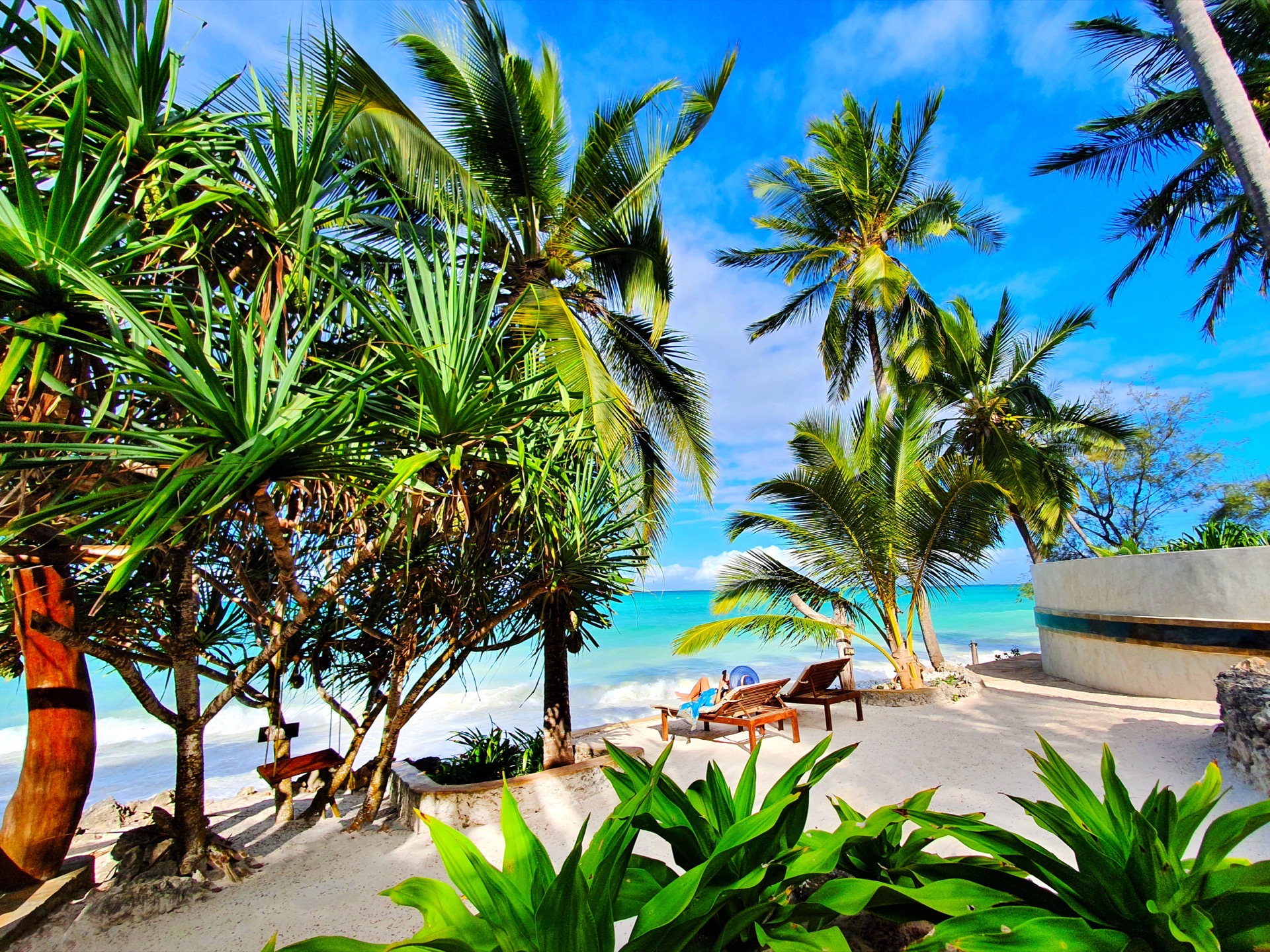
The east coast has a tidal range of 2.5 to 3.5 metres, one of the largest in the Indian Ocean. At high tide the sea comes to the beach and you swim normally. At low tide it retreats hundreds of metres — sometimes up to a kilometre on the more exposed beaches like Paje and Jambiani — and the lagoon becomes a sunlit flat of sand, seagrass, and coral rubble.
The east coast’s dramatic tidal range — roughly 2.5–3.5 metres between high and low tide — is the defining characteristic of beach life here. At low tide the seagrass flat extends hundreds of metres and swimming is not possible; at high tide the same beach has turquoise water for swimming and snorkelling. The Zanzibar swimming guide covers exactly when and where to swim on the east coast, what to watch for (sea urchins, occasional jellyfish blooms in Feb–Mar), and how to read the daily tide sheet your hotel provides.
Tides run on a 6-hour cycle, shifting approximately 50 minutes later each day through the lunar month. In practice this means:
- If low tide is at 07:00 this morning, it will be at 07:50 tomorrow, and 10:30 in a week
- Over a 7-night stay, your swimming window walks across the full daily clock
- The best east-coast hotels provide you with the tide table for your dates and plan activities around it
Low tide is not lost time:
- Reef walks — a guided walk on the exposed flats reveals starfish, sea cucumbers, anemones, small crabs and reef fish in pools. The seagrass meadows are a feeding ground for young turtles.
- Kitesurfing — Paje is one of the world’s great kite spots precisely because of the wind and the shallow, flat lagoon water at low tide. The flatness and standing depth make it a world-class learner and freestyle arena.
- Walking the flats — walking out across the mirrored sand at dawn, when the light turns the lagoon amber and the water is inches deep for as far as you can see, is one of those things that I genuinely never tire of after years of living here.
- Snorkelling the reef edge — where the flat meets the drop-off, the reef is in good condition on the east coast, and the snorkel access at the right state of tide is excellent.
For swimming at any hour without tide dependency, choose accommodation on a deeper bay (Michamvi Pingwe’s peninsular bay holds water far better than the open beaches) or a hotel with a pool. Most mid-range and above east-coast properties have one; it is worth confirming before you book.
The villages in detail
Paje is where the energy is. A kite-town that grew up around East Africa’s best kitesurfing, it has the most accommodation choice, the most restaurants, a small beach-bar scene, and an international crowd that skews young and active. It is the most social spot on the coast and the noisiest. The open beach is the best flat at low tide; at high tide it becomes a pleasantly busy swimming beach. If you do not kite, Paje still has the most to do day-to-day among the east-coast villages.
Jambiani is the most authentically Zanzibari east-coast village. Stretched along a long thin road parallel to the beach, the village has active seaweed farming on the tidal flats, traditional dhow-building, local market life, and a pace that feels genuinely East African rather than resort. Most properties here are family-run guesthouses and smaller mid-range hotels. It is the right choice for longer stays and travellers who want to understand the coast rather than just look at it.
Bwejuu sits between Paje and Jambiani and combines something of both without being distinctly either. Calm, small, and unhurried. A few guesthouses and small hotels, easy access to both neighbours by taxi. It suits couples who want quiet and low-key proximity to services.
Michamvi Pingwe is the northern end of the east coast, separated slightly from the other three villages. A small peninsula with a handful of boutique properties, it is the most secluded and design-led part of the coast. The bay that wraps around the peninsula’s southern side holds water better at low tide than any other east-coast location — the shape of the headland shelters it from the full tidal retreat. The western coves of the peninsula face the mainland and give the best sunsets on the coast. This is where I work and where I send guests who want boutique seclusion and the most consistently swimmable east-coast water.
When to come
June to October (dry season, Kusi trade wind) is the headline window: clear skies, reliable weather, the peak kite season in Paje. Sea temperatures drop slightly to 25–26°C during the Kusi months.
January to February is the secondary window: warmer water (29–30°C), lighter wind, lower prices. Ideal for honeymooners and divers who want the best visibility at Mnemba.
April and May are the long rains. Some properties close. Avoid if at all possible.
November is transitional — wind unreliable, weather mixed, prices low.
The Mchanga sandbank
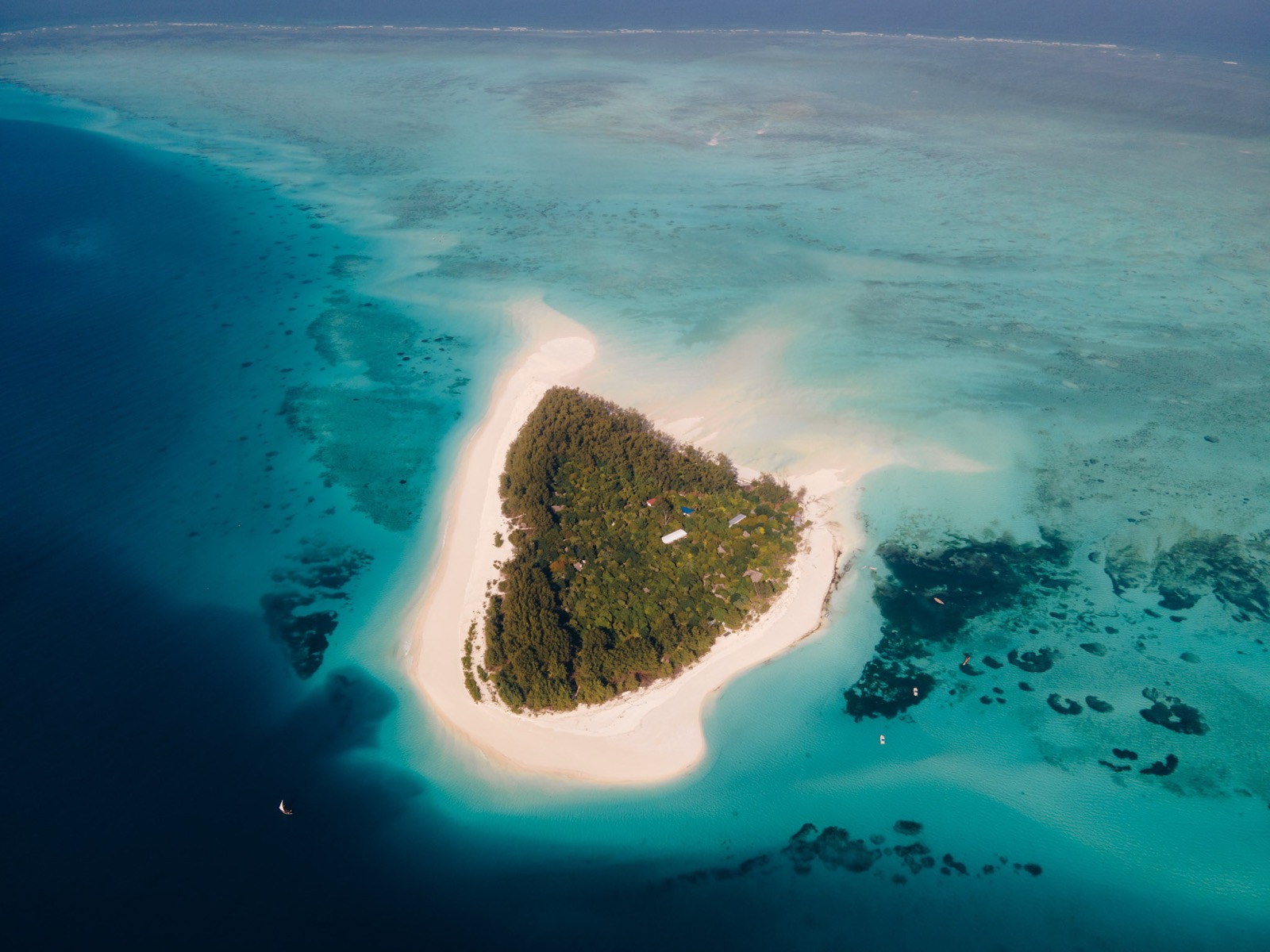
A short wade or swim off Michamvi Pingwe, a pure white sandbank called Mchanga appears at low tide and disappears at high. It is the east coast’s signature experience — a strip of sand with no island, no shade, no infrastructure, just turquoise water on both sides and the kind of quiet that is hard to find anywhere else. Most hotels can point you to the crossing route or lend kayaks; a local boat is also available on request for anyone who prefers not to swim. Go at low tide when the bank is fully exposed, bring snorkel gear for the water on the deeper side, and check the tide schedule before you set off.
Practical things the east coast catches you out on
Cash. This has improved fast: Paje now has several ATMs, banks, and exchange offices, and Michamvi has its first ATM (opposite the Karafuu Hotel). Bwejuu still has no reliable ATM, and Jambiani’s status is unclear — don’t count on finding one. If you’re staying south of Paje, draw enough shillings or dollars before you arrive — tips, local taxis, the fruit seller on the beach, and dala-dala fares all need cash. Most hotels can change money at a fair rate but not all.
Sunscreen. The Kusi trade wind creates a cooling effect that masks how much UV is reaching you. East-coast beaches face east and catch full morning sun without shade. SPF 50 and a rash vest are not overcautions here; they are basic kit.
Mosquitoes at dusk. The east coast, particularly around mangrove edges and after rain, has active mosquito pressure from roughly 17:30 onward. Repellent and a long sleeve as the sun drops are normal habits for anyone who lives here. Tanzania is a malaria zone — see our Zanzibar safety and health guide if you have not already discussed prophylaxis with a travel doctor.
The mangroves. Chwaka Bay, between Uroa and the Jozani Forest on the central east coast, has Zanzibar’s largest mangrove forest — a network of tidal channels and aerial root systems that cover 5 of the 10 mangrove species recorded for the archipelago. The mangroves are not incidental to the east coast: they function as the marine nursery for the reef fish and seafood of the entire coast. Most commercially important fish species spend their juvenile phase in the mangrove root structure before moving to open reef. The Zanzibar mangroves guide covers kayaking the Chwaka Bay and Michamvi channels at high tide (tours from USD 40, 2–4 hours, tide-dependent), the birds of the mangrove edge, blue carbon conservation programmes, and the direct ecological connection between mangrove health and the reef quality you are snorkelling on.
Connectivity. Wi-Fi quality on the east coast is improving but remains patchy. Download offline maps, tide tables, and anything else you need before you leave Stone Town. Mobile data (Vodacom or Airtel SIM) is generally better than hotel Wi-Fi for anything time-sensitive.
East coast versus north coast: the deeper comparison
The table at the top of this guide gives the quick version. Here is the fuller picture, because visitors consistently ask me the same question: “Is the east coast really better than the north?”
Swimming: Nungwi and Kendwa on the north coast are swimmable at any tide — the tidal range is minimal there. Paje is approximately 55 minutes from the airport; Jambiani around 1 hour 20 minutes; Michamvi Pingwe 1 hour 15 to 1 hour 30 minutes. Nungwi and Kendwa are roughly 1 hour to 1 hour 30 minutes — about the same distance. The difference is not journey time. The difference is character.
Kitesurfing: The north coast has none worth mentioning. The east coast has two kite seasons: the easterly Kaskazi wind from December to February, and the stronger Kusi from June to October. Paje is genuinely world-class during the Kusi months — one of the best beginner and freestyle arenas in the Indian Ocean because the flat, shallow lagoon water at low tide gives you ideal conditions. If kitesurfing is part of your trip, you should be in Paje, not Nungwi.
Bwejuu, which sits between Paje and Jambiani, is the quietest of the east-coast villages — around 1 hour 25 minutes from the airport — and suits travellers who want calm without choosing between kite culture and deep village life.
The north coast has more tourist infrastructure: larger resorts, a wider range of restaurants, and — in Nungwi especially — a nightlife scene that continues past 22:00. The east coast has almost none of that. That is not a criticism; it is the reason many people choose it. The atmosphere here is genuinely different from anything on the north side.
My honest advice: if you have never been to Zanzibar and you are nervous about the tides, start north. If you have been before, or if you are a kiter, a honeymooner, or someone who wants to understand the island rather than be in a resort on it, choose the east. Staying on both in one trip — three nights each — is a very good combination.
Month-by-month: when to visit the east coast
The east coast rewards timing, both for weather and for the tidal windows lining up well with your preferred activities.
January–February (Kaskazi season, short dry window): Warm water at 29–30°C, lighter wind than the Kusi months, lower prices, and fewer tourists. The Kaskazi wind comes from the north-east — lighter and less reliable than the Kusi, but still flyable for kitesurfing in Paje. This is the best window for divers who want maximum visibility at the outer reefs and Mnemba Atoll. Honeymoons and beach-focused trips are better value here than in peak season.
March–May (long rains): Avoid if at all possible. April is the wettest month. Some guesthouses close. The roads on the east coast can be poor after heavy rain. The beach is still beautiful but there is little reason to plan a trip in this window.
June–October (Kusi season, peak): The main season. The south-east trade wind (Kusi) brings clear skies, reliable weather, and the strongest wind for kitesurfing. This is peak booking period — the best properties in Paje and Michamvi Pingwe fill three to five months ahead for July and August. Sea temperatures drop slightly to 25–26°C, which is still comfortable for swimming and reef snorkelling. Sunset at around 18:30 is consistent and reliably dramatic from the west-facing coves of Michamvi.
November (transitional): Wind is unreliable and weather is mixed. Prices are lower. A reasonable shoulder option for experienced travellers who are flexible on activities.
December (Kaskazi establishes): The north-east wind picks up through the month. Christmas week is the most expensive period of the year across the whole island. Book six months ahead for December 23 to January 2.
Where to stay
Michamvi Pingwe is where Boutique Hotel Matlai sits — a small, owner-run hotel on the quiet side of the peninsula. It is the honest boutique pick on this coast, and the reason I know these tides by heart.
See our where to stay on the east coast guide for the full village comparison with facilities, prices, and the inter-village taxi table. The east coast is also Zanzibar’s kite hub — see our kitesurfing guide for Paje conditions in detail. For a beach-by-beach comparison across the whole island, see our best Zanzibar beaches guide. Timing on the east coast is everything; see when to visit Zanzibar for the tide and weather combination by month. Snorkelling and diving the outer reef is covered in our reef-diving page.
Frequently asked questions
Is the east coast of Zanzibar better than the north?
It depends on what you want. The north (Nungwi, Kendwa) has minimal tides and swimmable water all day, but it is busier and more built up. The east coast is quieter, more authentic and better value, with the world's best kitesurfing in Paje — at the cost of stronger tides. Many travellers prefer the east coast for atmosphere.
Can you swim at low tide on the east coast?
On the open east-coast beaches the water retreats far at low tide, so swimming is limited to the high-tide window. Around Michamvi Pingwe and on deeper bays the water stays closer for longer, and most hotels have a pool. Check tide times for your dates before booking.
What is there to do at low tide?
Plenty. A guided reef walk reveals starfish, urchins and sea life on the exposed flats; kitesurfing in Paje is at its best with the wind and shallow water; and the long flats are stunning to walk. Low tide is part of the rhythm, not lost time.
Which east-coast village should I stay in?
Paje for kitesurfing and a young, lively scene; Jambiani for a quiet, local-village feel; Bwejuu for calm; and Michamvi Pingwe for boutique seclusion and the best swimmable water on the east side.
When is the best time to visit the east coast?
June to October, during the Kusi trade winds — dry days around 27–29°C with lower humidity. December to March (Kaskazi) is also good, though seaweed can accumulate on east-facing beaches. Avoid April and May, the long rains.