
Facts & prices checked: 2026-06-25
A dhow is not a tourist prop. It is the vessel that connected East Africa, Arabia, India, and Mozambique for more than 2,000 years — and it still sails the same waters off Zanzibar today, doing exactly what it was always designed to do. Understanding that changes how you experience a dhow cruise. You are not just on a boat. You are on a technology that worked well enough that no one has had to fundamentally change it for two millennia.
The dhow in context
The Indian Ocean trade network ran on two things: the monsoon winds and the lateen sail. Dhow merchants carried spices, ivory, gold, cloth, and enslaved people across the ocean long before any European vessel appeared in these waters. When Vasco da Gama arrived on the East African coast in 1498 and needed a pilot to guide him from Malindi to India, he hired a local dhow captain — because no one knew this ocean better than the people who had been sailing it for centuries.
Zanzibar sat at the centre of this network. The Swahili coast was not peripheral to the Indian Ocean world; it was one of its poles. Stone Town grew wealthy as a trading city precisely because of the dhow trade — the coral-stone palaces, the elaborately carved doors, the spice economy, all of it funded by what these vessels brought in and carried out. The dhow is not an anachronism on Zanzibar’s waterfront. It is the reason the waterfront exists.
Today the dhow is still an active fishing tool, a water taxi, a charcoal carrier, and increasingly a tourism vehicle. The vessel has not changed much because it works.
Three types of dhow
Three vessel types define Zanzibar’s water:
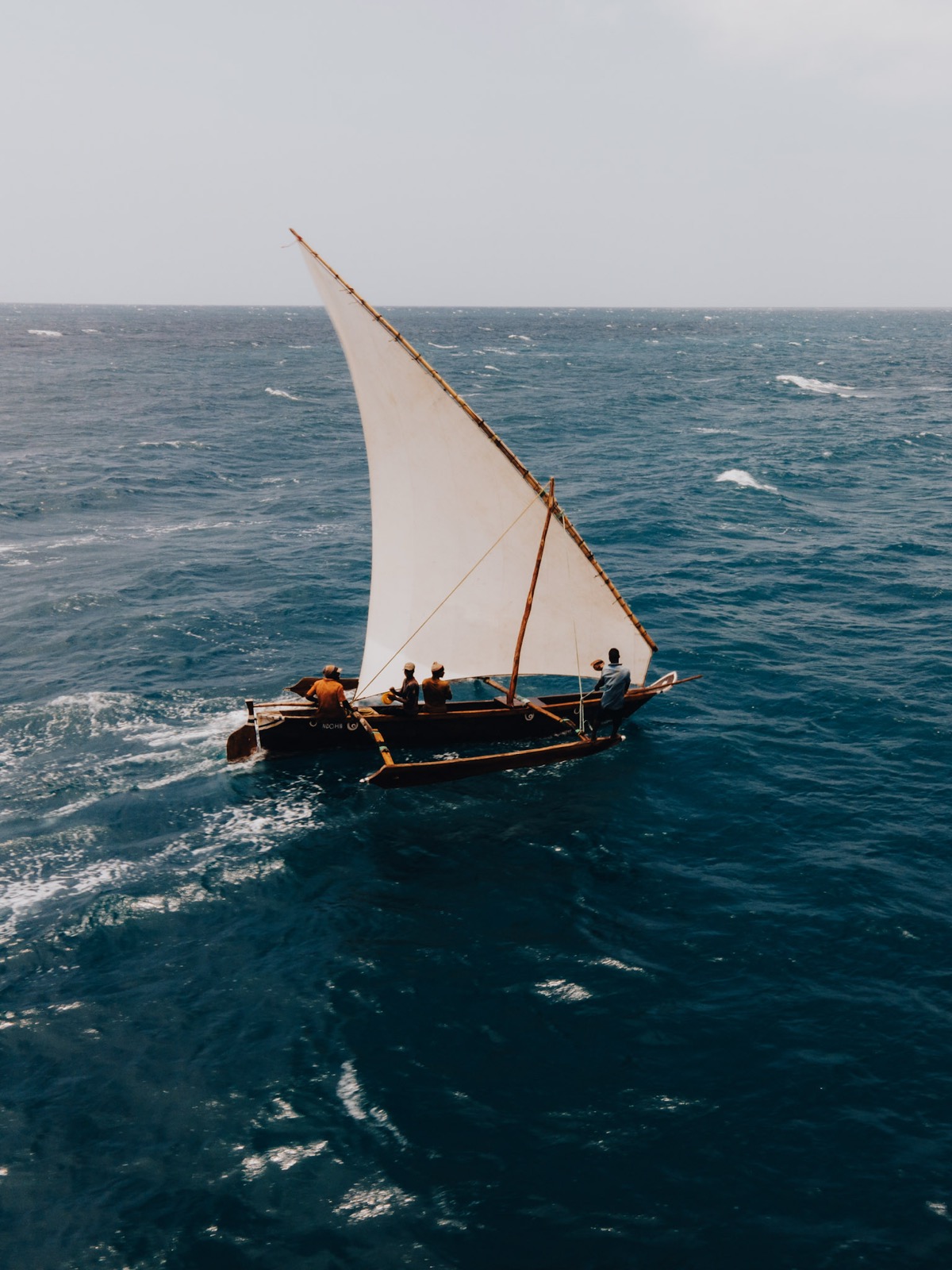
Jahazi — the large ocean-going dhow. Distinctive planked hull, raked prow, and the lateen sail that made it one of the most capable sailing vessels of the pre-industrial era. Jahazi were traditionally used for long-distance trade between the Swahili coast, Oman, and India — routes of several thousand kilometres sailed using nothing but wind and navigation skill. Nungwi is the centre of jahazi building on Zanzibar; the active shipyards at the eastern end of the village still build and repair these vessels by hand, using construction techniques passed across generations of seafaring families and no power tools.
Mashua — a medium-sized fishing and short-distance transport vessel. Similar planked construction to the jahazi but smaller and more manoeuvrable. The mashua is the workday vessel of the north and east coast: fishing grounds 20 kilometres offshore, inter-village transport when the road is slower, cargo runs.
Ngalawa — the double-outrigger canoe used by inshore fishermen. Lighter than either of the above, fast over short distances, and built to be portaged over the reef. Matemwe and Kizimkazi fishermen use ngalawa for their pre-dawn departures — the double outrigger stabilises the craft in the chop of the early morning sea, and the narrow hull slips through the reef passages that a mashua cannot navigate. The ngalawa is powered by oars and a triangular sail with a hinged rudder; the rig is simpler than the jahazi’s lateen but follows the same underlying principle.
The sailing physics — lateen sail and the monsoon circuit
The lateen sail is the technical reason the Indian Ocean trade worked. A square sail can only sail efficiently with the wind behind you — useful for one direction, useless for the return. A lateen sail (triangular, mounted on a long angled yard that can pivot around the mast) can sail across the wind and even somewhat against it. This single advance in sail design made two-way ocean voyaging possible.
The monsoon winds did the rest. The Indian Ocean has two dominant wind seasons. The kaskazi — the northeast monsoon — blows roughly from December to February, pushing dhows south and west toward the East African coast. The kusi — the southeast trade wind — blows from roughly June to October, reversing the flow and pushing vessels north and east toward Arabia and India. Zanzibar’s kitesurfers and sailors both recognise these seasons: kusi peaks in July–August and brings the strongest consistent wind; kaskazi is lighter but reliable.
The entire trade network was organised around this circuit. Merchants from Oman and India would sail to Zanzibar with the kaskazi, trade for several months, and return with the kusi — arriving and departing like clockwork for centuries. No engine required. The captain’s skill was in reading the wind, the current, the colour of the water, and the stars overhead; all of these told him where he was and what the weather was about to do.
This is why a competent dhow captain still knows things that no instrument can fully replace.
Sunset dhow cruises from Stone Town
The most accessible dhow experience on the island. Stone Town’s Forodhani waterfront is lined with dhows at anchor, and a sunset cruise typically runs around 1.5–2 hours, departing in the late afternoon to catch the light on the water at dusk. The Stone Town skyline — the Old Fort facade, the former House of Wonders, the minarets and coral-stone rooflines — reads completely differently from the water than from the alleys inside. The seafront view is what the arriving merchants, the Portuguese, and the Omani sultans all saw first.
Prices for shared sunset cruises start from around USD 35 per person from Nungwi and Kendwa; Stone Town and Expedia-listed products run from about USD 40–44 per adult. The range across Tripadvisor and booking platforms sits roughly USD 35–75 for shared boats; private charters run considerably higher. Budget products cut corners on capacity — a 30-person cruise on a vessel built for 12 is a different experience from a boat with 8–10 guests, drinks included, and a captain who knows the light.
Key questions to ask before booking any sunset cruise: maximum number of guests on board; whether the vessel is motor-assisted or sail-driven; whether the captain actually uses the sail when conditions allow. An honest operator will answer all three without hesitation.
Sandbank day trips and Mnemba Atoll
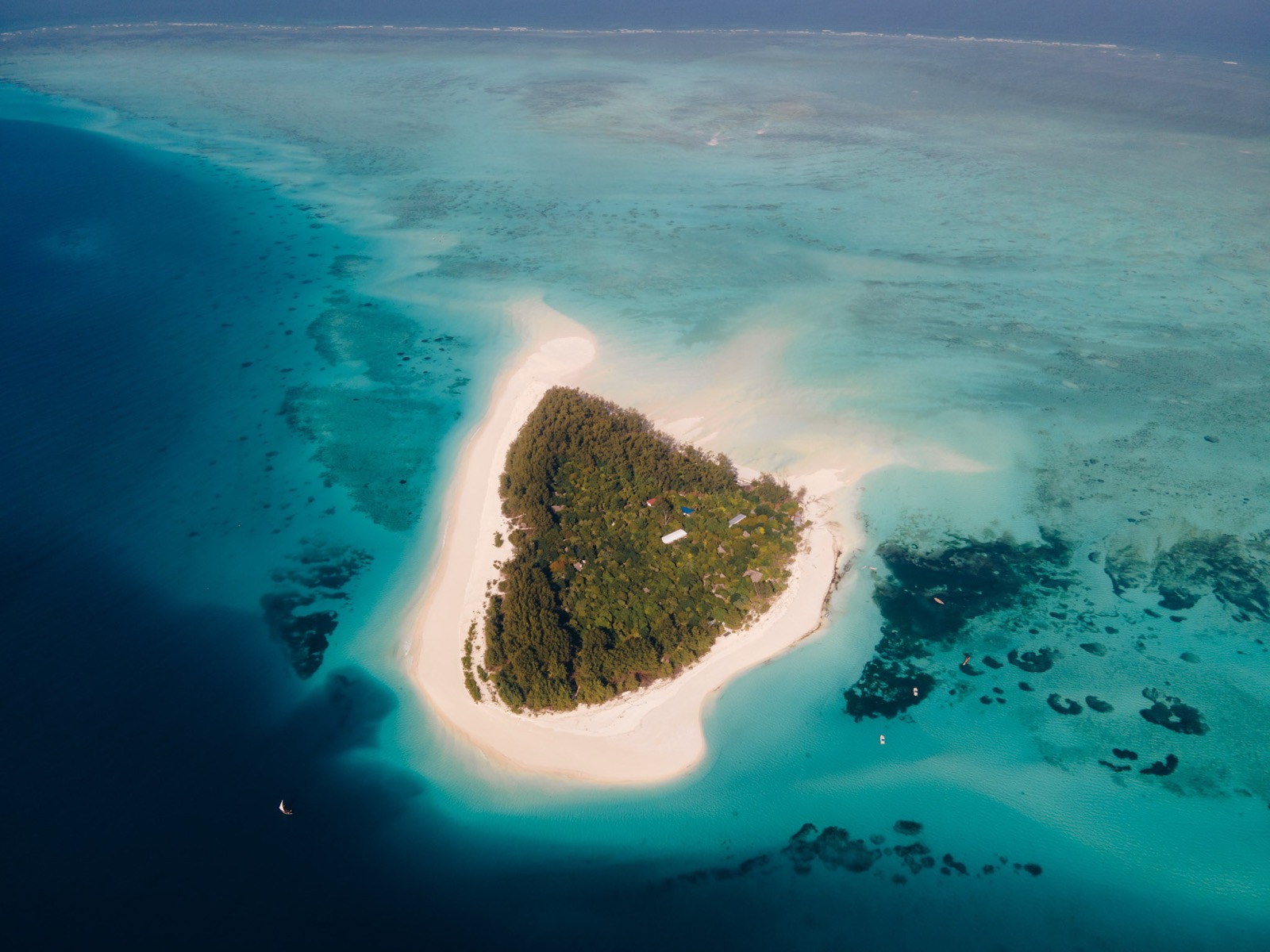
A full-day dhow charter from Nungwi or Matemwe to Mnemba Atoll is a different category of experience from an afternoon cruise. The route goes north or east, depending on the wind; the outer reef at Mnemba sits roughly 3 kilometres offshore from Matemwe. The approach under sail — slower than a speedboat, quieter, the hull pressed low in the water — means you arrive at the reef without the noise and churn that motors bring. The difference in the snorkelling is audible as well as visible.
Sandbank excursions by dhow follow the same pattern from Kendwa and Nungwi: an offshore sandbank emerges at low tide several kilometres out to sea. You anchor, wade ashore, eat a lunch of fresh fish and rice prepared by the crew on a small iron brazier in the bow, and snorkel the adjacent reef before sailing back as the tide returns. The operators who do this well carry the fish with them live — caught that morning — rather than pre-cooked. The meal on the sandbank, with nothing visible between you and the horizon, is a detail that tends to stay with people.
Prices for shared premium dhow day trips with marine park fee, snorkelling gear, lunch, and soft drinks run around USD 80 per person based on traveller reports; the range across platforms is wider depending on the operator and season.
Multi-day dhow camping
The most immersive dhow experience available on Zanzibar is a multi-day passage — typically 2–5 days, sleeping on the dhow at anchor or camping on a deserted beach. Routes vary by season and captain: the north coast and Tumbatu Island channel are accessible year-round from the right bases; passages to Pemba Island take roughly a full day under sail and are best attempted in settled kaskazi conditions when the open channel is predictable. The outer islands offer snorkelling sites that most visitors never reach because speedboats don’t go there.
This is not a luxury product. You are on a working wooden vessel: sleeping on deck or in the hold, waking before sunrise when the captain tacks in a new wind direction, eating what the crew caught that morning. The captains who do this regularly navigate partly by GPS and partly by the older methods — wind direction, star bearing, the colour of the water as the depth changes above a reef or a shoal. The combination gives you a sense of how the Indian Ocean was actually crossed for centuries.
For the right traveller — someone who genuinely wants to experience the Indian Ocean rather than look at it from a resort — this is the definitive Zanzibar experience.
What to expect — quality indicators
Sailing versus motor: Many dhow tours are motor-assisted or motor-only, with the sail raised purely for the photograph. Ask in advance whether the captain actually sails when conditions allow. Wind on any given day may make motor assistance necessary — a kusi-season north coast run against a strong headwind, for instance — but a captain who knows what they are doing will use sail when the wind permits. A captain who raises the sail only when asked has a different relationship with the vessel.
Seaworthiness: Traditional dhows are built from hardwood — the hull planked and pegged, the joinery tested over centuries of ocean sailing. They are extremely seaworthy in the conditions they were designed for: the moderate Indian Ocean swell and the monsoon wind patterns the captains know intimately. In kusi season (June–October), the north coast around Nungwi can develop afternoon chop; experienced operators adjust routes accordingly, favouring the south or east coasts when the north becomes rough. A reputable captain will not sail in genuinely unsafe conditions — and if they suggest a delay or route change, that judgment is exactly what you are paying for.
Safety equipment: Life jackets are not always provided by default on dhow tours. If this matters to you, ask before booking. Quality operators carry them; budget operators sometimes do not.
Seasickness: The motion of a dhow is different from a motorboat — a long, slow roll in the swell rather than the short sharp chop that a small speedboat produces in a beam sea. Most people find the dhow motion easier to manage. If you are susceptible to motion sickness regardless, take medication before departure. The open-air deck, a fixed point on the horizon, and the longer period of the roll all help.
Group size: The difference between 8 guests and 30 guests on the same vessel is not cosmetic. A smaller group means more space, better service, and the ability to actually hear the captain explain what they are doing with the sail and the wind.
My Nungwi-to-Mnemba day sail
My best day on Zanzibar’s water was a full-day dhow sail from Nungwi to Mnemba Atoll. The captain — a third-generation fisherman who had learned navigation from his grandfather — spent the first two hours entirely on sail, beating into the northeast kaskazi breeze in long tacks across the channel. He used the motor only for the final approach into the snorkelling site where other boats were anchored.
We ate on a sandbank that was the only feature visible between the horizon and the reef — a strip of white coral sand perhaps 30 metres wide at low tide. The crew grilled red snapper caught that morning on a small iron brazier kept in the bow. The fish came off the grill with lime and chilli and nothing else needed.
The return trip, wind behind us, was the best sailing I have experienced in this part of the world: the lateen sail angled exactly right, the hull pressed low on the starboard side, Stone Town’s skyline appearing on the western horizon in the late afternoon light. No engine on the return leg — the captain read the wind through the afternoon and never needed one. The ability to do that, after a full day at sea and with a boat full of guests, is a skill that takes years to build and a lifetime’s relationship with the Indian Ocean to refine.
For what Nungwi’s dhow boatyard looks like up close — the half-finished jahazi frames, the adze-shaped ribs, the craftsmen who will let you watch and talk — the in-depth look at Nungwi covers the eastern beach boatyard in full detail. For snorkelling at Mnemba Atoll and the outer reef by boat, the snorkelling write-up covers conditions, visibility, and which sites reward the journey. The piece on Stone Town covers the Forodhani waterfront where sunset dhow cruises depart, and how the seafront fits a half-day or full-day visit to the old town.
Frequently asked questions
What is the best dhow experience in Zanzibar?
For most visitors, a full-day dhow trip from Nungwi or Matemwe to Mnemba Atoll or the northern sandbanks gives the most complete experience — sailing (not just motoring), snorkelling on the outer reef, and a beach lunch with fish caught that morning. Sunset dhow cruises from Nungwi or Kendwa are more accessible and shorter, starting from around USD 35 per person (Stone Town's own sunset cruises run USD 40–44), and suit an arrival or departure day when time is limited. Multi-day dhow camping (2–5 days) is for travellers who genuinely want to live on the water. In any case, ask explicitly whether the captain actually sails — many 'dhow tours' motor throughout and the sail is decorative.
What is the best time of year for dhow sailing in Zanzibar?
The kaskazi (NE monsoon, roughly December to February) gives reliable northeast winds and calm seas — the best conditions for day trips and multi-day passages. The kusi (SE trade wind, June to October) is stronger; the north coast around Nungwi can get afternoon chop, but experienced captains adapt routes and the south and east coasts remain sheltered. The shoulder months around March–April and October–November can be suitable but are less predictable. July and August — peak safari season on the mainland — coincide with full kusi; still sailable from the right bases.
What types of dhow are there in Zanzibar?
Three main types. The jahazi is the large ocean-going dhow, traditionally used for trade between the Swahili coast, Oman, and India, with a distinctive planked hull and lateen sail (triangular, mounted on an angled yard that pivots to face different wind angles). Nungwi has active jahazi-building yards. The mashua is a medium-sized fishing and short-distance transport vessel. The ngalawa is a double-outrigger canoe used by inshore fishermen — lighter, faster, and built to be portaged. Matemwe and Kizimkazi fishermen use ngalawa for dawn departures.
How much does a sunset dhow cruise in Zanzibar cost?
Shared sunset dhow cruises from Nungwi or Kendwa start from around USD 35 per person, with most shared-boat products in the USD 35–75 range. Private charters cost considerably more — one operator (Gypsea Sailing) lists a private charter at around USD 260 per person for 3 hours (check their site for current pricing, since operator rates shift). Stone Town and Expedia-listed products run from about USD 40–44 per adult. Budget tours cut corners on capacity and service; the better operators limit group size to 8–12 guests and include drinks and a snack.
Can you sail from Zanzibar to Pemba Island by dhow?
Yes — this is one of the routes included in multi-day dhow camping adventures. The passage from Stone Town to Pemba by dhow takes roughly a full day under sail depending on wind conditions; the channel between the two islands can be rough during strong kusi winds, so timing and sea state matter. A reputable operator will check conditions and build flexibility to delay. The crossing itself — open Indian Ocean, flying fish breaking the surface, Pemba's forested cliffs appearing on the horizon — is one of the more dramatic passages available in East Africa.
How do I tell a quality dhow tour from a tourist trap?
Five indicators: (1) Does the captain actually sail, or is it motor-only with the sail raised for photos? Ask explicitly before booking. (2) How many guests maximum? Eight to twelve is reasonable; thirty is a crowd. (3) Can you meet the captain or see the vessel before booking? A quality operator will agree to this. (4) Is the crew multi-generational seafarers or opportunistic income? Captains who learned from their fathers and grandfathers read the ocean differently. (5) Does the operator discuss weather and wind conditions, or simply take your money regardless? The willingness to delay or reroute for safety is a positive sign, not a negative one.
Is dhow sailing safe in Zanzibar?
Traditional dhows are seaworthy vessels built from hardwood, designed for the moderate Indian Ocean swell and the monsoon wind patterns they have operated in for centuries. Incidents with reputable operators are very rare. The main risks are weather (the open channel between Zanzibar and Pemba can be rough in strong kusi conditions — a good captain will not sail in unsafe conditions) and operator inexperience. Life jackets are not always provided by default on dhow tours; ask in advance if this matters to you. Choose operators with established track records, check weather forecasts before departure, and accept a captain's advice to delay or reroute.