
Facts & prices checked: 2026-06-25
Zanzibar’s reefs are not a static backdrop. They are an ecosystem with a history — of catastrophic warming events, of slow recovery, of human pressures layered on top of climate stress, and of conservation work that has, in some places, genuinely worked. Understanding what you are looking at when you snorkel or dive here changes the experience completely.
What Zanzibar’s reefs are
Zanzibar sits within the Western Indian Ocean reef province — one of the world’s nine distinct reef bioregions and part of the broader Indo-Pacific biodiversity hotspot, which contains the highest marine biodiversity on earth. Coral reefs cover approximately two-thirds of Tanzania’s continental shelf and support over 500 species in these waters.
The reefs around the Zanzibar Archipelago are primarily fringing reefs: they run parallel to the coastline at relatively shallow depths before dropping into deeper water. The east coast reefs — fronting Paje, Jambiani, Michamvi, and Matemwe — are the most accessible for snorkellers, sitting 100–300 m from shore at the edge of the lagoon. The large tidal range on the east coast means these reefs are only accessible at mid-to-high tide; at low tide the reef flat is exposed and the sea retreats hundreds of metres.
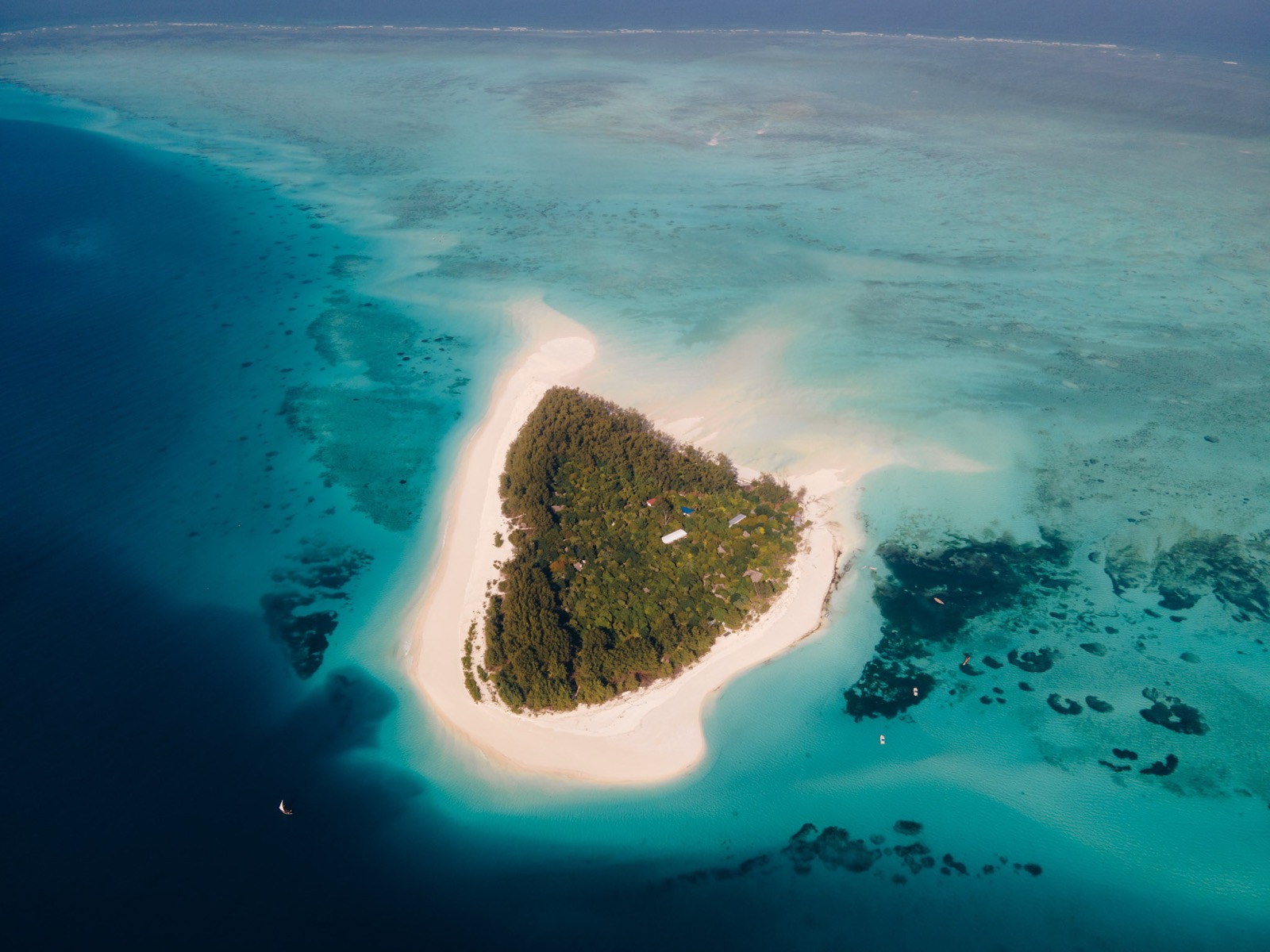
The north coast reefs around Nungwi, Kendwa, and Matemwe tend to be deeper, with better visibility and larger pelagic species. The most intact reef systems in the archipelago are offshore: Mnemba Atoll (roughly 3 km from Matemwe), Chumbe Island (roughly 12 km south of Stone Town), and reefs in the Pemba Channel. Pemba’s western reefs recorded an average hard coral cover of 26% in a 2019 scientific survey — a modest figure that represents the documented baseline for this relatively less-visited area.
Reef ecology — the organisms that build and maintain it
A healthy Zanzibar reef is a layered system of hard and soft corals, invertebrates, and fish, each group playing a functional role in keeping the habitat intact.
The hard corals do most of the structural work. Two broad types define the character of any given reef:
Branching Acropora (staghorn, tabletop, and plate corals) are the fastest-growing hard corals in the Indo-Pacific — they create the complex three-dimensional structure that reef fish shelter, feed, and breed within. They are also the most bleaching-sensitive, typically the first to bleach when water warms and the first to die if warming persists. Because of their relatively fast growth rate, they are also capable of re-colonising reef after bleaching events — but only if conditions allow.
Massive Porites — the brain corals and boulder corals — grow very slowly, typically 1–2 cm per year. Some Porites colonies on undisturbed reefs are hundreds of years old. They are more thermally tolerant than branching corals and survive bleaching events that kill Acropora outright. After the 1998 bleaching event, Porites-dominated reef became more common across Tanzania as Acropora communities failed to fully recover. This shift matters ecologically: Porites reef has lower structural complexity, which means less habitat for the fish communities that depend on branching coral architecture.
Soft corals, sea fans, and whip corals don’t build reef structure but are abundant at certain depths and current-exposed sites. They serve as shelter for specific fish and invertebrate communities — seahorses in sea fans, for example, and small shrimp in leather coral colonies.
Coralline algae — calcified algae that binds reef segments together — is less visible than coral but structurally critical. It fills gaps between coral colonies and provides the substrate on which coral larvae settle. A reef with healthy coralline algae is structurally more cohesive and more resilient to physical damage.
The fish community that lives within this structure is ecologically functional, not just decorative. Parrotfish graze on algae and, in the process, produce reef sand: the white sand beaches of Zanzibar are partly parrotfish waste — calcium carbonate ground from dead coral rock. A reef with abundant parrotfish can stay clear of algae even after bleaching damage. Remove the parrotfish through fishing pressure, and the reef tips toward an algae-dominated state that is very difficult to reverse. Sea urchins serve a similar algae-grazing function. Hawksbill sea turtles eat sponges, which compete with coral for space on the reef structure. Each of these species is doing functional work; the reef ecology of Zanzibar is a system, not a collection of individual animals.
The Chumbe Island reef sanctuary — with more than 200 coral species and 370+ fish species documented — gives a sense of what this ecosystem looks like when the whole system is intact. The comparable no-take zone at Misali Island in the Pemba Channel has 42 genera of hard corals documented, suggesting the biodiversity potential of genuinely protected reef in these waters.
The 1998 bleaching event — the defining catastrophe
The 1998 El Niño event elevated Indian Ocean sea surface temperatures significantly above the long-term average. Coral bleaching is triggered when water temperature stays 1°C or more above the long-term seasonal maximum for four or more weeks: at that threshold, coral polyps expel the symbiotic algae (zooxanthellae) that live within their tissue and provide up to 90% of the coral’s energy through photosynthesis. Without the zooxanthellae, the coral turns white — bleached — and is alive but severely energy-depleted. If temperatures drop within weeks, the coral can re-absorb algae and recover. If they don’t, the coral starves and dies.
In Tanzania, the 1998 event was catastrophic. Hard coral cover declined by approximately 25% — from around 40% before 1998 to 30% after. Algal cover increased roughly 2.5 times, from approximately 15% to 35%. At Tutia Reef, coral mortality ranged from 60% to 90%. The shift from coral-dominated to algae-dominated reef across much of Tanzania’s coast was measurable and lasting.
The bleaching was not uniform. Deeper reefs were less affected than shallow ones — heat stress accumulates disproportionately in the warmer surface water. Reefs in areas with stronger current and upwelling showed more resilience. And Chumbe Island, which had been a no-take zone since 1994, showed better recovery than adjacent unprotected reefs — evidence that protection status directly affects a reef’s capacity to survive and recover from thermal stress. A reef with intact fish populations and reduced human pressure is physically more resilient to bleaching than an overfished, physically disturbed reef under the same thermal conditions.
The two-plus decades since 1998 have produced partial recovery in many areas. But branching Acropora has not returned to pre-1998 levels in most of Tanzania’s waters. The communities that survived and dominate now are disproportionately the slow-growing, thermally tolerant Porites corals — a more monotonous reef ecologically than what existed before 1998.
The 2016 bleaching event and the climate trajectory
Strong El Niño events in 1998, 2007, and 2016 each caused bleaching episodes in Zanzibar’s waters. The 2016 event was associated with one of the strongest El Niño seasons since 1998, and while its impact on Zanzibar’s reefs was less uniformly catastrophic than 1998, it represented a second major stress event before many reefs had completed recovery from the first.
The trajectory is the more significant story. The 2024 bleaching season — confirmed by NOAA and the International Coral Reef Initiative as the world’s fourth global coral bleaching event in recorded history — struck the Western Indian Ocean harder than any previous event. Approximately 80% of monitored reef locations in the Western Indian Ocean bleached, and roughly 40% experienced moderate to extreme coral mortality. Tanzania, Kenya, and the Seychelles recorded the highest counts of bleaching and mortality in the region. The 2024 event accumulated heat stress above 12 Degree Heating Weeks across much of the region, reaching up to 16 DHW in some areas — thresholds associated with near-total coral mortality.
The frequency matters as much as the severity. Coral colonies need years to recover between bleaching events. What was a once-per-generation event in 1998 has now become a recurrent feature of the Indian Ocean’s thermal cycle. Under current emissions trajectories, the gap between bleaching events is projected to narrow further — eventually to the point where recovery between events becomes impossible. The transition from Acropora-dominated reef (structurally complex, high biodiversity) to Porites-dominated and eventually algae-dominated reef is already visible and measurable in Tanzania’s waters.
Marine Protected Areas in Zanzibar
The evidence from Zanzibar is clear: reef inside a well-enforced Marine Protected Area survives thermal stress better and recovers faster than reef under fishing and physical pressure. Three MPAs define the conservation landscape:
Chumbe Island Coral Park (CHICOP) is Zanzibar’s first gazetted marine protected area and is described as the first privately managed MPA in the world. The reef sanctuary covers 33 hectares and has been a no-take zone since 1994 — no fishing, no coral collecting, no anchoring on reef. More than 30 years of protection have produced a reef that is measurably different from anything else in the archipelago: more than 200 coral species and 370+ fish species documented within the sanctuary. Day trips cost USD 90 per person plus a USD 25 marine levy (USD 115 total), with strict capacity limits. The 2024 bleaching event did affect Chumbe at both shallow and deep sites, but the reef’s underlying structural density and fish community integrity mean it remains the strongest snorkelling site on the island for non-divers. The ecolodge’s entire operating budget — including ranger salaries and conservation work — is funded through day visitor fees and the seven eco-bungalows on the island.
Mnemba Atoll Conservation Area is a government-designated MPA centred on Mnemba Atoll, managed in partnership with andBeyond (which operates Mnemba Island Lodge). Fishing is heavily restricted within the atoll’s conservation zone. The reef is considered among the best in Zanzibar for marine biodiversity, and ongoing coral restoration work — running October 2024 through September 2027 across a 4-hectare area with a target of 10% coral cover increase — is being conducted through the CORDAP programme. The atoll is the primary site for larger pelagic encounters: reef sharks on deeper drop-offs, napoleon wrasse, eagle rays, and turtle sightings that are among the most reliable in Zanzibar.
Menai Bay Conservation Area (MBCA) covers a large area in the waters between the main island and the smaller islands of Uzi and Pange in the southwest. It is one of Tanzania’s largest marine protected areas and is managed partly through community involvement, including Zanzibar’s documented octopus management closures — a system in which local fishing communities voluntarily close areas to octopus harvesting for periods to allow population recovery, then reopen for controlled harvest. This community-based model has been cited as an example of locally governed fisheries management directly protecting reef health through reduced fishing pressure.
Other threats: dynamite fishing, anchors, crown-of-thorns, runoff
Climate-driven bleaching is the largest single threat to Zanzibar’s reefs, but it operates against a background of other stressors that compound the damage and slow recovery:
Blast fishing (dynamite fishing) was historically widespread on Zanzibar’s reefs through the 1990s and into the 2000s. The characteristic sound of underwater explosions was reportedly audible near fishing grounds. A combination of enforcement, community fishermen’s associations, and economic alternatives — including paid roles as marine monitors and snorkel guides for former blast fishers — has significantly reduced the practice. It has not been eliminated; incidents still occur. But it is no longer a routine feature of the marine soundscape. The physical legacy persists: reef craters from blast fishing events do not recover easily. The shattered substrate visible on some east-coast reef sections is decades-old damage from single detonation events. Where the reef structure is gone, coral larvae have nothing to settle on.
Anchor damage from boats dropping anchors directly on coral has caused measurable physical destruction at popular dive and snorkel sites. The switch to mooring buoys at Mnemba Atoll and other managed sites has significantly reduced anchor damage at these locations. At unmanaged sites, anchoring directly on reef remains a risk. When choosing a snorkel or dive operator, mooring buoy use is a practical indicator of operator quality.
Crown-of-thorns starfish (Acanthaster planci) periodically undergo population explosions that can strip large areas of living coral. These outbreaks are a natural feature of Indo-Pacific reef ecology — crown-of-thorns are native predators — but their frequency and scale may be increasing due to nutrient pollution from coastal runoff, which supports the algae that crown-of-thorns larvae feed on. The Pemba Channel resilience study identified sites vulnerable to this type of outbreak as part of its reef resilience classification framework.
Sedimentation and nutrient runoff from coastal development and agricultural land increase water turbidity and nutrient loading near reefs. Higher nutrient levels favour algae over coral in the competition for space on the reef structure — one reason reef health in Zanzibar decreases with increasing proximity to Stone Town, where runoff from the urban area is greatest.
What visitors can do
The aggregate effect of visitor behaviour at a reef site is real, particularly at high-traffic locations. These are the actions with documented impact:
Use reef-safe sunscreen. The two main harmful active ingredients are oxybenzone and octinoxate — both chemical UV filters that are toxic to coral at concentrations found near popular reefs. Mineral sunscreens using zinc oxide or titanium dioxide are the effective alternatives. Note that “reef-safe” is not a regulated label — check the ingredient list rather than trusting a marketing claim. Apply before you get on the boat, not on deck where it washes directly into the water.
Never touch coral. Not live coral, not dead coral. Dead coral is substrate for new coral larvae — a single contact that breaks the surface creates an entry point for infection and algae colonisation. Standing on coral, even briefly, kills the polyps beneath your fins. At sites like Mnemba and Chumbe, guides from reputable operators will enforce this.
Choose operators using mooring buoys. Ask before booking any snorkel or dive trip whether the boat anchors on reef or uses mooring buoys. At Mnemba Atoll, the conservation zone requires mooring buoy use at named sites. At unmanaged locations, operator practice varies. This is the most direct action a visitor can take that affects the physical reef structure.
Don’t buy coral or shell jewellery. Live corals and most marine shells are protected under CITES and Tanzanian law. The market for coral and shell items — still sold in some Stone Town souvenir shops — directly incentivises collection from live reef.
Support conservation-funded operators. Chumbe Island Coral Park’s entire operating budget — rangers, habitat monitoring, community education — is funded by visitor fees. AndBeyond at Mnemba directs a portion of lodge revenue to the ongoing CORDAP coral restoration programme. Community-based associations in the Menai Bay Conservation Area are similarly visitor-funded through managed dolphin tours and guided reef excursions. The visitor economy, when directed at these operators, directly funds the conservation work that protects the reef you came to see.
The difference a protected reef makes
I’ve snorkelled Chumbe and various east-coast sites on the same day. The contrast is not subtle.
At Chumbe, the fish are not afraid of you. You swim above a reef community that has not been fished for thirty years, and the fish behave accordingly — they come closer, not further. The parrotfish are large and abundant. The herbivory they provide keeps the algae back. There are sections of brain coral — massive Porites colonies, decades old, some with growth rings you can almost read like tree rings — sitting alongside branching Acropora that has re-established in the sheltered sections. The reef looks like a reef that is winning.
At some east-coast sites where fishing pressure has been higher and protection is absent, the fish maintain a wider clearance distance from divers. The parrotfish are scarcer. The algae coverage on dead coral heads is visibly higher — the green-brown mat that indicates a reef where the herbivores have been reduced enough that the algae is winning the competition for space. The coral structure is present; the ecological processes that maintain it are degraded.
This distinction — coral present vs ecological processes intact — is the most useful frame for understanding Zanzibar’s reef situation. The reef hasn’t disappeared. But in unprotected areas, the system that maintains its health is under pressure in ways that will matter for what the reef looks like in twenty years.
The Marine Protected Areas work. The evidence from Chumbe is thirty years long. What happens outside them depends partly on climate trajectories that no single visitor can alter — and partly on a set of choices that visitors, operators, and fishing communities make every day.
For the dive-site detail — site names, depths, conditions, and operator guidance at Mnemba Atoll — see the Mnemba dive-site page. For snorkelling at Chumbe Island and the east coast reef, including tide timing on the east coast, the Zanzibar snorkelling guide covers the practical questions. For the full picture on responsible travel beyond the reef — dolphin tour ethics, red colobus guidelines, community tourism — see the Zanzibar responsible travel guide. For the Chumbe Island day trip — logistics, booking, and what the full day looks like — the Chumbe Island guide covers capacity, the forest walk, and what the eco-bungalow stay involves.
Frequently asked questions
Are Zanzibar's coral reefs healthy?
Zanzibar's reef health is uneven and depends heavily on location and protection status. The 1998 El Niño bleaching event killed approximately 50% of coral cover across much of the archipelago — the reefs have been recovering since but have not returned to pre-1998 levels in most areas. Tanzania's hard coral cover dropped from around 40% before 1998 to 30% after, a 25% decline, while algal cover increased roughly 2.5 times. The healthiest reefs are at Chumbe Island (a no-take MPA since 1994, with 200+ coral species and 370+ fish species confirmed) and Mnemba Atoll (a protected conservation area). The 2024 bleaching season — confirmed as a global bleaching event by NOAA — was severe, with around 80% of Western Indian Ocean reef sites affected and roughly 40% experiencing moderate to extreme mortality. Tanzania was among the hardest-hit coastlines.
What caused the 1998 coral bleaching in Zanzibar?
The 1998 bleaching was driven by a strong El Niño event that elevated Indian Ocean sea surface temperatures significantly above the long-term average. Coral bleaching occurs when water temperature stays 1°C or more above the seasonal maximum for 4+ weeks — the coral expels its symbiotic algae (zooxanthellae), which provide up to 90% of the coral's energy through photosynthesis. Without the algae, the coral turns white (bleached) and is severely stressed; if temperatures don't drop, the coral dies. The 1998 event was the most severe bleaching event in Indian Ocean history at that point. In Tanzania, hard coral cover dropped from around 40% to 30% nationally, while algal cover increased 2.5 times — from 15% to about 35%.
Which is the best coral reef in Zanzibar?
Chumbe Island Coral Park and Mnemba Atoll are consistently rated as Zanzibar's best reefs. Chumbe has been a strictly enforced no-take zone since 1994 — more than 30 years of protection has allowed fish populations and coral recovery to significantly exceed nearby unprotected reefs. The reef sanctuary covers 33 hectares and contains more than 200 coral species and 370+ fish species. Day trips cost USD 90 per person plus a USD 25 marine levy (USD 115 total), with capacity limited to protect the site. Mnemba Atoll (roughly 3 km offshore from Matemwe) has the best biodiversity for larger pelagic species and reef sharks. Both sites use mooring buoys to prevent anchor damage.
What is reef-safe sunscreen and why does it matter for coral reefs?
Reef-safe sunscreen avoids oxybenzone and octinoxate — chemical UV filters that are toxic to corals at concentrations found near popular reef sites. Physical sunscreens using zinc oxide or titanium dioxide are the reef-safe alternatives. Important caveat: 'reef-safe' labelling is not regulated, so check the ingredient list rather than trusting the label. The practical impact near heavily visited reefs is real: the 2024 bleaching event combined with cumulative chemical stressors near snorkelling hotspots is a documented concern. Apply before the boat, not on deck where it washes directly into the water.
Is dynamite fishing still a problem on Zanzibar reefs?
Dynamite fishing (blast fishing) is significantly reduced from its peak in the 1990s–2000s, when the sound of underwater explosions was reportedly common around Zanzibar. A combination of enforcement, community fishermen's associations, and economic alternatives has reduced blast fishing considerably. It has not been eliminated entirely, but it is no longer a routine feature of the marine soundscape. The legacy damage is visible: reef craters from past blast fishing do not recover easily, and some east-coast areas still show the signature shattered substrate of historical blasts where coral cover remains sparse decades later.
What is the biggest future threat to Zanzibar's coral reefs?
Ocean warming driven by climate change. Bleaching events occur when sea temperature stays 1°C+ above the seasonal maximum for 4+ weeks — what was a once-per-generation event in 1998 is accelerating into a near-regular occurrence. Strong El Niño events in 1998, 2007, 2016, and 2024 each caused major bleaching episodes, and 2024 was confirmed as the world's fourth global coral bleaching event in recorded history. In 2024 the Western Indian Ocean recorded heat-stress accumulation above 12 Degree Heating Weeks, reaching up to 16 DHW in some areas — enough to cause severe and widespread mortality. Marine Protected Areas significantly improve recovery capacity between events, but they cannot buffer against rapidly rising baseline ocean temperatures.