
Facts & prices checked: 2026-06-25
Seven days on Zanzibar is exactly right. It is enough to do everything that matters without the frantic scheduling that ruins a beach holiday, and the structure below has two days of deliberate downtime built in — because the north coast beach in late afternoon, with a cold Kilimanjaro beer and nothing planned, is itself the point.
The itinerary works best from a single north coast base from Day 2 onwards. Stone Town is the right place for the first night (the airport is 15–20 minutes away, the medina at dusk is the best introduction Zanzibar offers), but the north coast carries the rest of the week: swimmable beach at every tide, Mnemba Atoll within reach by boat, and day-trip distance to the spice farms and Jozani.
Day 1–2: Stone Town
Day 1 afternoon: Arrival and the medina at dusk
Zanzibar International Airport sits 15–20 minutes south of Stone Town by road — one of the more forgiving airport transfers in East Africa. Most drivers meet you at arrivals; if not, taxis are waiting and the standard fare to Stone Town is around 35,000 TZS (roughly USD 13–15).
Check in to a Stone Town guesthouse or boutique hotel, drop your bags, and head straight into the medina. This is exactly the right timing: the midday heat is gone, the light is in the alleys at a useful angle, and you have three hours before Forodhani Gardens opens.
Walk without a map for the first hour. The UNESCO core is 1 km² — you cannot get seriously lost, and the seafront is always a reliable anchor. What you will find by disorientation: carved doors whose brass stud patterns and lotus-blossom panels tell you whether an Omani, Indian, or Swahili merchant built the house behind them; tailors working in deep-set shops with no room for a second person; the smell of cloves and cardamom drifting from a spice stall.
At 18:00, go to Forodhani Gardens on the seafront. The stalls serve Urojo (Zanzibar mix soup, a tamarind-coconut broth with potato, cassava, egg, and mshikaki skewers), Zanzibar pizza (a thin fried dough envelope with egg, meat, and vegetables), sugar cane juice, and samosa. Bring Tanzanian shillings — cards are not accepted. Eat early: by 19:00 it is packed and the best stalls have queues.
Day 2: Stone Town full day
Morning: The former slave market site — now the Anglican cathedral and underground memorial — is the most important stop in Stone Town. Admission is around USD 10. The exhibition handles a difficult history without sentimentality: Zanzibar was East Africa’s largest slave-trading port, and an estimated 50,000 enslaved people passed through this market annually before abolition in 1873. The memorial chambers are small and affecting. Allow an hour.
After the cathedral, take the short walk to the seafront and book your Prison Island boat from Stone Town harbour. The crossing is 20–30 minutes to an island 5.6 km northwest of town; entry costs USD 4 per person. Prison Island (Changuu) was built as a slave-holding facility around 1860, repurposed as a British quarantine station in 1893, and nicknamed for a prison that was planned but never actually built. The main draw today is the Aldabra giant tortoises — some over 100 years old — relocated here from the Seychelles in the 19th century. Note: as of November 2024, touching or feeding the tortoises is no longer allowed. The island also has a small reef for snorkelling around the boat on the return.
Afternoon: A few hours back in the medina — the Old Fort (Ngome Kongwe, built 1698–1701 by Omani Arabs on the site of a Portuguese chapel) has free entry and houses small craft shops and a traditional textile workshop. Darajani Market, 10 minutes east of the tourist circuit, is where Stone Town residents actually buy spices: cloves, cinnamon, vanilla, cardamom, and attars — concentrated perfume oils. The quality is better here and the prices are lower than at the spice stalls near the cathedral.
Evening: Freddie Mercury was born here — Farrokh Bulsara, 5 September 1946, in this town. His birth house is on Kenyatta Road. The small plaque is easy to miss but worth finding. Dinner at a waterfront restaurant before an early night: you are moving to the north coast tomorrow morning.
Day 3: Move to the North Coast (Nungwi or Kendwa)
The drive from Stone Town to Nungwi is 57 km — about 1 hour 15 minutes on a good day, occasionally 1.5 hours depending on road conditions through Mkokotoni. A private taxi costs USD 30–50 depending on the driver and how hard you negotiate. The dala-dala minibus runs for around 2,000–2,500 TZS per person but takes 2–3 hours including changes in Mkokotoni — not worth it with luggage.
Check in to your north coast hotel, drop your bags, and walk to the beach. The critical difference between Nungwi and every other beach on Zanzibar: the reef sits further offshore, so the beach stays swimmable at any state of the tide. No tide chart required. No reef walk required. Just water at whatever hour you choose to go in.
Afternoon: Nungwi’s natural aquarium on the eastern shore — the Baraka Marine Turtle Conservation Pond — holds rescued green sea turtles (Endangered) and hawksbill turtles (Critically Endangered) in a tidal lagoon. Entry is free; donations go to the conservation programme. Spend the afternoon at the beach. Do not schedule anything else. This is deliberate.
Evening: Nungwi’s main beach faces west. Sunset drops directly into the Indian Ocean — a genuine rarity on Zanzibar, where the east coast faces east and Stone Town’s waterfront has no sand. Position yourself on the open beach by 18:00. It is as good as it looks in photographs.
Kendwa vs Nungwi: If you prefer quiet, Kendwa is 3 km south of Nungwi — reachable by tuk-tuk in 10 minutes or on foot in 40. Slightly wider beach, fewer people, the same tidal advantage. Kendwa Rocks hosts a monthly full-moon party. Both work identically as bases for the days that follow.
Day 4: Rest Day on the North Coast
No schedule today. This is one of the two built-in recovery days.
I made the mistake on my first extended Zanzibar trip of filling every day — Mnemba one morning, Jozani the next, east coast the day after. By day five I was exhausted in the place I’d come to recover. The north coast beach in the late morning with nothing planned, a paperback, and lunch at a beach shack at noon is itself the experience. Resist the urge to plan it away.
If you want to move: kayaking from Nungwi Beach is beginner-friendly and gives a close view of the active dhow boatyard on the eastern shore — traditional jahazi and mashua dhows built by hand using techniques passed down through generations. Or rent a bicycle and ride the 3 km to Kendwa. Or book the late-afternoon dhow sunset cruise: a traditional wooden dhow, 2 hours offshore, snacks and Kilimanjaro, sunset over open Indian Ocean. Runs about USD 30–50 per person; departs around 16:00.
Day 5: Mnemba Atoll Snorkelling
This is the best snorkelling day in any Zanzibar itinerary. Book it in advance — shared boats fill up fast in high season (July–August).
Logistics: Boats depart Nungwi from around 08:30 — the meeting point for most operators is behind The Z Hotel at the Zanzibar Horse Club on Nungwi Beach. The crossing from Nungwi takes about 1 hour to the atoll (boats depart from Muyuni pier on the northeast coast take 20 minutes, but accessing Muyuni adds 45 minutes of road). A shared half-day trip runs USD 40 per person and includes snorkel gear, water, and fruit — bring your own lunch or eat on return. The full excursion takes 4–6 hours.
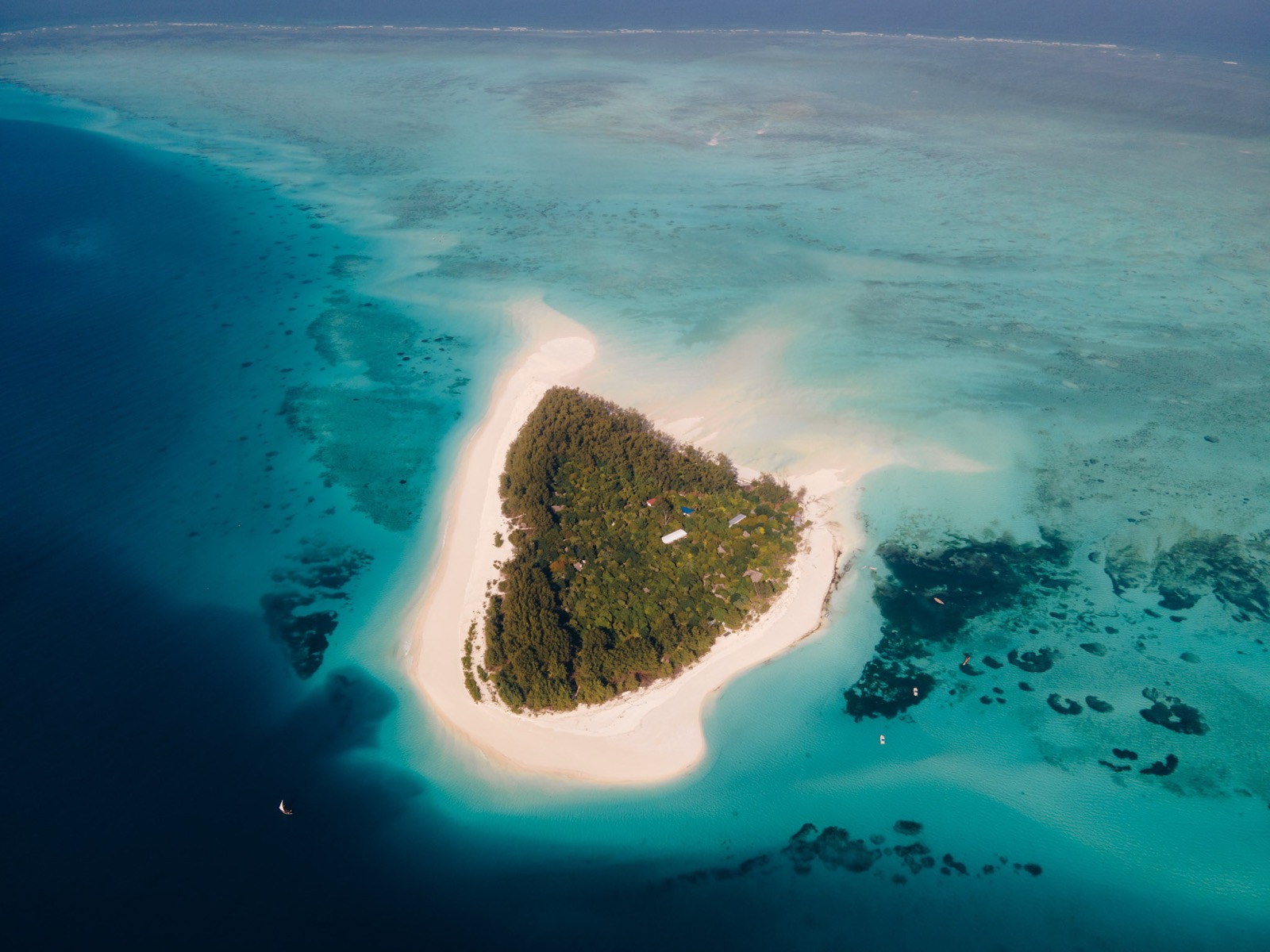
On the water: The atoll is a circular reef around a private island owned by &Beyond; day visitors snorkel the exterior reef only. What you will realistically see: green and hawksbill turtles (resident population, usually surface within 20–30 minutes), dense reef fish populations including angelfish, groupers, blue-spotted rays, and red-tooth triggerfish, and frequent spinner dolphin sightings on transit. Marine biologists from CORDAP are running an active coral restoration project here (October 2024–September 2027) targeting a 10% recovery increase across 4 hectares of bleached reef — ask your guide what the current restoration status is.
Honest note on Mnemba: The reef has suffered bleaching and anchor damage, and active restoration is underway. Multiple boats visit simultaneously in peak season. Go early (the 08:30 departure) for the best conditions and fewest boats. Reef visibility peaks June–October in the Kusi season, reaching 20–30 metres. November, after light rains, can drop to 10–12 metres.
Return to Nungwi by early afternoon. Beach in the afternoon. That is the day.
Day 6: Spice Tour and Jozani Forest (Long Day)
This is the busiest day of the week. Leave Nungwi by 08:00 to make it work without feeling rushed.
Morning — Spice Farm: Drive south from Nungwi toward Stone Town (about 1 hour 15 minutes). The spice farms sit in the Kizimbani area, roughly 10–15 km northeast of Stone Town. A guided spice farm walk takes 2–3 hours: you handle fresh clove buds, vanilla pods, cardamom, cinnamon sticks still on the branch, and nutmeg with its scarlet mace still intact. Group tours run USD 15–30 per person; solo tours from USD 30. Many include lunch.
One honest caveat: the working spice industry on Unguja (the main Zanzibar island) is small — most commercial Zanzibar cloves actually come from Pemba Island to the north. The farm tours are tourist-focused, not production facilities. They are still genuinely educational and enjoyable, but set expectations accordingly. If you only want to buy spices, go to Darajani Market in Stone Town instead — better quality, less performance.
Afternoon — Jozani Forest: Jozani Chwaka Bay National Park is 35–38 km southeast of Stone Town — about 40–45 minutes by road, or 1.5 hours from the spice farms via Stone Town. Entry costs USD 10–15 per person; a park ranger guide is mandatory and included in the fee.
Jozani is the only national park on Unguja and holds the island’s main population of Zanzibar red colobus monkeys — approximately 3,000 animals, about half the total island population. The troop that lives near the forest entrance is habituated to visitors: expect them within 15–30 minutes of entering. They are medium-sized, rust-red with a white belly, and impressively unconcerned by tourists at close range. The park also has groundwater forest, mangrove boardwalks, coral rag scrubland, and — if you’re lucky — a sighting of the Zanzibar servaline genet (first camera-trap video confirmed in 2017; very rarely seen).
Opening hours: officially 08:00–16:00 (some sources say 07:30–17:00). Budget 2 hours inside.
Return: Drive back to Nungwi — about 1.5 hours. You will arrive tired. That is fine.
Day 7: East Coast Day Visit (Paje or Jambiani)
The east coast is different enough from the north coast to justify a full day, but the tidal limitation means a day trip is often better than an overnight stay for people who have their north coast base set up.
Drive from Nungwi to Paje: about 90 minutes by road (Nungwi → Stone Town → south coast road). The road is good. A private transfer runs USD 50–70 for the round trip if you book through your hotel, or negotiate directly with a driver the night before.
What the east coast is: A long, flat, tidal lagoon. At high tide, the water is chest-deep and swimmable. At low tide, the sea retreats hundreds of metres to the reef and you can walk the exposed sand flat. Both states are worth experiencing — it is a different kind of beauty from the north coast, not a lesser one. Bring water shoes (non-negotiable on the reef flat).
Paje is Zanzibar’s kitesurfing hub — the Kusi wind from June to October makes the southeast coast among the best kite conditions in East Africa. Even without a kite, the sight of 20 kites in the air over a flat lagoon at 09:00 is impressive. Multiple IKO-certified kite schools operate from the same stretch of beach.
Jambiani, 8 km south of Paje, is quieter and more intimate — a genuine fishing village with boutique hotels tucked between local houses. The Mwani Mamas are a women’s seaweed farming group based here; their farms are visible at low tide when the lagoon empties. Visiting at low tide is the only way to see the farm rows laid out across the sand — ask at your hotel if any tours are running.
Return to Nungwi by early evening for a final night on the north coast, or continue south to the airport if your flight departs early the next day (Stone Town is 1h15m from Nungwi; the airport is 15–20 minutes south of Stone Town).
Day 8: Departure Day
If your flight is afternoon or evening: one more morning on the north coast beach. Go in the water before 09:00 when it is still cool. Pack. Transfer to the airport via Stone Town if time allows — or direct if it doesn’t. The airport road is fast.
If your flight is morning: leave Nungwi by 06:00 for a safe connection. The 57-km drive to the airport takes 1h15 on a clear road.
Zanzibar 7 Days with a Safari Add-On
Most visitors to Zanzibar are arriving after 7–14 days on mainland Tanzania. If you have already done Serengeti, Ngorongoro, and Tarangire, the above itinerary works with two modifications:
Stone Town gets 1 day only, not 1.5. The slave market and the medina are must-sees regardless of safari background; the spice orientation (if you visited spice farms near Arusha or Marangu) becomes optional. Keep Prison Island.
The spice tour can be shortened or swapped. If you have had the bush-camp experience on mainland Tanzania, Jozani Forest is the priority from Day 6 — the red colobus is specific to Zanzibar and not a mainland experience. The spice farm is contextually richer if you haven’t already handled East African spice agriculture.
The Mnemba Atoll snorkel, the east coast tidal visit, and the north coast beach days all remain non-negotiable regardless of safari background — they are Zanzibar-specific experiences with no mainland equivalent.
What 7 Days Costs in Zanzibar
Numbers from the research database, verified at time of writing:
Accommodation (per person sharing):
- Stone Town guesthouse / boutique hotel (1–2 nights): USD 28–100/night
- North coast mid-range (Nungwi/Kendwa, 4 nights): USD 80–250/night
- Budget guesthouses exist from USD 20/night; north coast luxury runs USD 400–800/night
Activities (per person):
- Prison Island boat + entry: USD 30–40 (boat) + USD 4 (entry)
- Anglican cathedral/slave market: USD 10
- Mnemba Atoll snorkel (shared): USD 40–45
- Spice tour (group): USD 15–30
- Jozani Forest entry: USD 10–15
- Dhow sunset cruise (Nungwi): USD 30–50
Transport:
- Airport to Stone Town: ~USD 13–15 (taxi)
- Stone Town to Nungwi (private taxi): USD 30–50
- Nungwi to Paje (round trip, private driver): USD 50–70
- Day trip driver for Spice + Jozani loop: USD 80–100
Food:
- Forodhani Night Market (dinner): USD 5–10 per person
- North coast beach restaurant (lunch or dinner): USD 15–30 per person
- Paje/Jambiani food courts and local restaurants: USD 4–8 per plate
Total estimate for 7 days (per person, mid-range): USD 1,200–2,500 all-in. Budget travellers sharing a room and eating local can do it for USD 700–900. Luxury resorts and private tours push the ceiling to USD 5,000+.
Tim’s note on timing
I have been on Zanzibar in every month of the year across different stays, and the gap between July and November is larger than any itinerary guide makes it look. In July at Mnemba — peak Kusi season — the water was 25 metres of visibility, reef fish so dense you could barely see the coral, and a resident hawksbill within 3 minutes of entering the water. In November, after a brief early rains, the same atoll was 12 metres visibility, cloudier water, and no turtle until we actively swam to find one. Both were good. But they were not the same.
If you have calendar flexibility and the itinerary above is the plan: June–October is when Zanzibar performs at its best.
One other thing I tell everyone who arrives from a safari: spend the first night in Stone Town, not on the beach. I know the instinct is to get to the water immediately — you have been in a bush camp for two weeks and you want to be horizontal on a sun lounger by sunset. But the medina at dusk on your first evening, with the call to prayer coming from three directions and Forodhani setting up around you, resets the register from safari-pace to island-pace in a way that a beach transfer from the airport does not. The beach will be there tomorrow morning. Stone Town at dusk happens once.
Related Guides
- Zanzibar Stone Town guide — full practical guide to the medina, market timing, and what to see in a half day vs a full day
- Nungwi guide — tide-free beach, sunset, accommodation at every price point
- Mnemba Atoll snorkelling — full site guide with visibility data, marine life checklist, and operator comparison
- Jozani Forest guide — colobus walk logistics, forest ecology, and honest time estimate
- Paje and east coast — tidal lagoon explained, kitesurfing schools, seaweed farms
- Best time to visit Zanzibar — month-by-month weather, diving seasons, and crowd patterns
Frequently asked questions
Is 7 days enough for Zanzibar?
Yes — 7 days covers all the main Zanzibar experiences with two genuine rest days built in. You have enough time for Stone Town's UNESCO medina and Forodhani night market, a full Mnemba Atoll snorkel (USD 40/person from Nungwi), Jozani Forest and its red colobus monkey troop (USD 10 entry), the east coast lagoon at Paje, and still have beach recovery time. Anything less than 5 nights means cutting major activities; more than 10 nights starts to feel slow unless you're doing a diving course.
How many days should I spend in Stone Town?
One and a half to two days is the honest range for most visitors. A focused 1.5 days covers the UNESCO alleys, the old slave market and Anglican cathedral (USD 10 entry), Prison Island by boat (20–30 minutes from Stone Town harbour, USD 4 entry), and Forodhani Gardens Night Market from about 18:00. Two full days suits slow travellers and people who want to browse the bazaars and take the Stone Town walking tour. More than 2 days and you're repeating yourself.
Is it better to stay in Stone Town or Nungwi?
Both — in that order. Stone Town is the right first night: the airport is only 15–20 minutes away, and the medina in the first evening light is the best introduction Zanzibar offers. Then move to the north coast for the beach. Nungwi is swimmable at any tide (unlike the east coast), faces west for a proper sunset, and gives easy access to Mnemba Atoll. Staying at Nungwi for 3 nights means you can have a pure beach day, a Mnemba snorkel day, and a spice-plus-Jozani day without rushing.
How long does the Mnemba Atoll snorkel take?
The full excursion runs about 4–6 hours. Boats depart Nungwi around 08:30 and the crossing takes about 1 hour from Nungwi (versus 20 minutes from Muyuni pier on the northeast coast). Time on the atoll is typically 2–3 hours snorkelling, then return. A shared half-day boat from Nungwi runs USD 40 per person and includes snorkel gear, water, and fruit. No lunch is included on most shared trips. Go early June–October when visibility reaches 20–30 metres.
Can I visit Jozani Forest from Nungwi in one day?
Yes, but it's a long day and requires an early start. Jozani is 35–38 km southeast of Stone Town, roughly 1.5 hours from Nungwi by road. The easiest structure: drive south from Nungwi past Stone Town, stop at a spice farm in the Kizimbani area (half-day, USD 15–30/person including lunch), then continue 40–45 minutes to Jozani (opens 08:00–16:00, entry USD 10–15). Return to Nungwi by late afternoon. Book a private driver for around USD 80–100 for the full loop — dala-dala connections exist but the schedule makes the double stop nearly impossible.
What is the best base for a 7-day Zanzibar itinerary?
One night Stone Town on arrival, then north coast (Nungwi or Kendwa) as your 3-night base for days 2–4, then return to Stone Town or head directly to Paje on the east coast for a day visit before departure. Nungwi gives you the tide-free beach and direct Mnemba Atoll access; Kendwa is quieter and slightly calmer. The east coast (Paje, Jambiani) is best as a day trip or a 1-night add-on at the end, not as your main base — the tidal lagoon empties at low tide and limits swimming windows.