Facts & prices checked: 2026-06-25
Zanzibar’s evening rhythm runs on a simple geographic rule: if you’re facing west, you get the sunset. If you’re facing east, you get the sunrise. That single fact shapes every beach bar decision on the island.
The west-facing coastline — Stone Town’s seafront, Nungwi village, Kendwa beach — catches the Indian Ocean sunset directly. The east coast (Paje, Jambiani, Michamvi) does not. Both have their own evening culture, but they’re different experiences. A traveller choosing a base for sunsets and beach bar evenings needs to be on the right coast first.
The geography of Zanzibar sunsets
Zanzibar sits just south of the equator, which means sunset is consistent year-round: around 18:00–18:30. There is no long summer evening here. Sunset happens, and then it is dark quickly. The practical consequence: if you want to be at a beach bar for the sunset, you need to be in position by 17:30 at the latest.
The west-facing coastline runs from Stone Town northward through Nungwi and around to Kendwa. The Indian Ocean to the west catches the light, and in the dry season months (June–October and December–February) — when the sky is clear — the sunsets here are among the most vivid in East Africa. Dhow silhouettes on the horizon, amber light on the water, the scale of the Indian Ocean ahead.
The east coast doesn’t get this. It has its own rewards — extraordinary low-water lagoons, stargazing, the red light of dawn over the water — but the west coast sunset is something you can only access from the west side of the island.
Stone Town evenings: culture and cocktails
Stone Town offers a different version of the evening — not a beach bar strip, but a sequence of experiences that work together.
Africa House Hotel sundowner bar
The most reliable drinks spot in Stone Town for an Indian Ocean sunset. Africa House’s terrace faces west over the water and fills from around 17:00 onward as the sun drops. It draws a mix of hotel guests and outside visitors — walk in, order a drink, claim a terrace position. It is the only spot in Stone Town where you can watch the sun go down with a proper drink in hand. Arrive by 17:30 to guarantee a good view; the terrace is not large.
Emerson Spice rooftop
The rooftop Tea House at Emerson Spice (4044 Tharia Street, in Stone Town) is the most atmospheric dinner venue on the island. A single dinner sitting runs from 18:00 — cocktails on arrival, tasting menu dinner at 19:00, across rooftops with views over the harbour minarets and the town below. The menu runs eight courses of Swahili-influenced dishes. Price: USD 55 per person, excluding drinks. Advance reservation is mandatory; it sells out regularly in high season. Closed on Thursdays (check current schedule before booking).
I’ve sat on that rooftop on a clear evening in October and watched the sky go from amber to deep blue over the Old Fort tower with a spiced cocktail in hand. It is genuinely one of those dinners you remember. Book it.
Forodhani Gardens night market
Forodhani is not a bar — it doesn’t serve alcohol — but it is the defining evening experience of Stone Town and should anchor any itinerary. The market sets up daily from around 18:00 on the waterfront outside the Old Fort, runs until approximately 21:00, and offers the best cheap meal on Zanzibar.
What you’ll find: Zanzibar pizza (a street food made to order, stuffed with minced beef, vegetables, egg, and cream cheese — USD 2–3), grilled octopus skewers (USD 4–6), urojo soup (Tsh 2,000), mshikaki meat skewers, samosas, and sugarcane juice. Budget Tsh 10,000–20,000 (approximately USD 4–8) for a full meal with a sweet at the end.
A few practical notes: bring Tanzanian shillings, not dollars (cash only, no cards). Follow the queues — the popular stalls are popular for a reason. Arrive between 18:30 and 19:30 for the best atmosphere, before some stalls begin to wind down. Some reviewers warn about pricing tactics at a few stalls, particularly for unpriced seafood — ask the price before you nod. The Zanzibar pizza stalls and sugarcane juice are the most consistently reliable.
I have eaten at Forodhani many times. My approach: walk the full length of the market first, pick one vendor for the main course (usually the urojo or the grilled fish), and a different one for the chapati and sweet at the end. Eat standing at the sea wall, looking out at the water. Total cost: USD 5–8. It is the best cheap evening on Zanzibar and one of the best anywhere I’ve been in East Africa.
Nungwi: the north coast bar scene
Nungwi is the liveliest everyday beach bar scene on Zanzibar. The beach road running north from the main village has a range of venues — beach bars with sun loungers and cocktails from the afternoon, restaurants with evening menus, and some live music on weekends. It doesn’t have the cultural depth of Stone Town, but it has the most consistent daily choice of anywhere on the island.
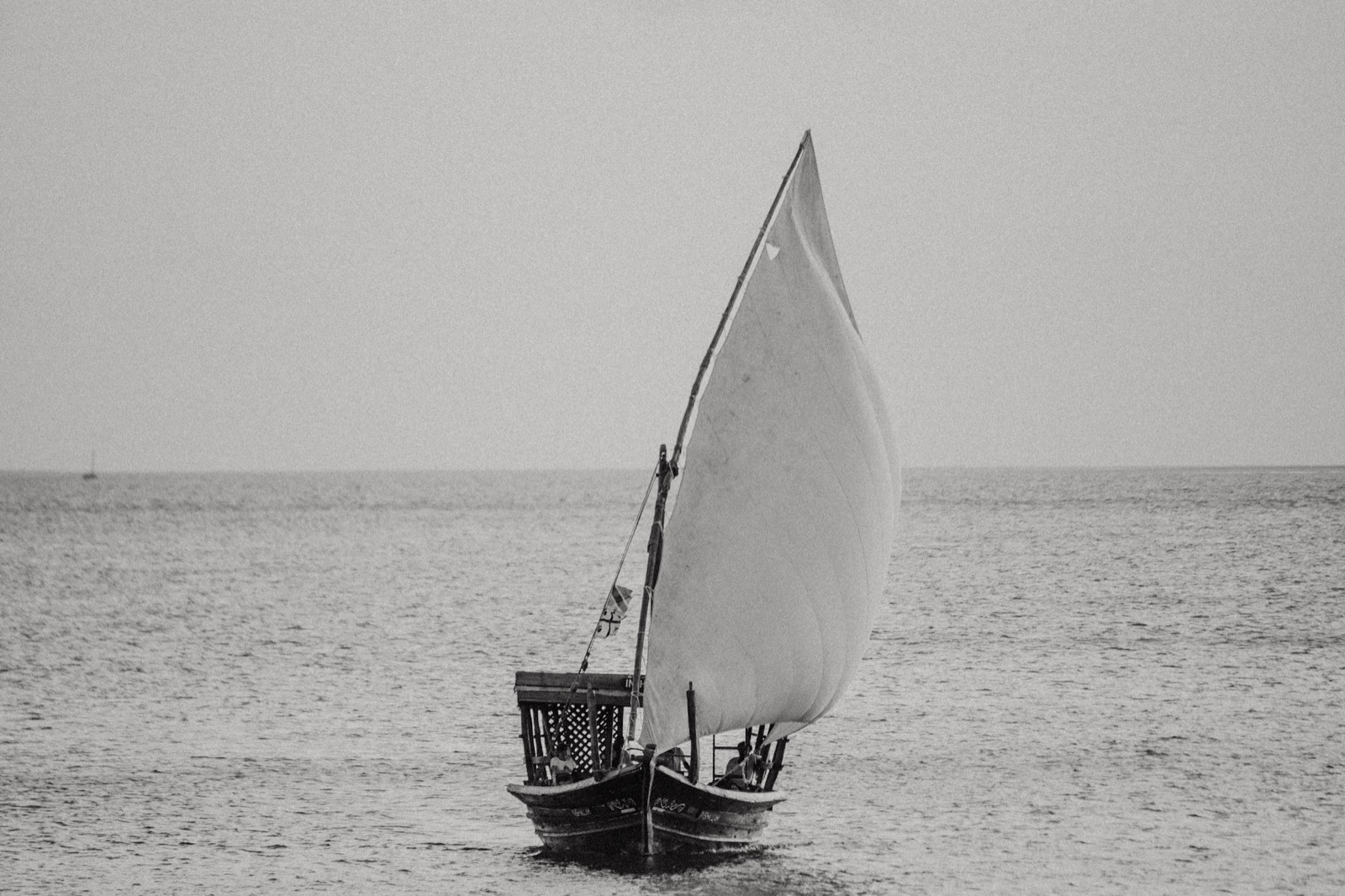
The classic Nungwi evening starts with a sunset dhow cruise: a traditional wooden dhow sailing along the west-facing coast as the sun drops. These run from approximately USD 35–55 per person from Nungwi (dhow-plus-drink options, typically 1.5–2 hours) up to full dinner cruises at USD 100–110 per adult (typically 3–4 hours). The light in the final 30 minutes before sunset — on the water, offshore, with the coastline behind you — is worth doing at least once.
After the dhow, the beach bars along the Nungwi waterfront. Some have live music on weekends. The range runs from simple plastic-chair beach bars serving cold Kilimanjaro lager to proper cocktail bars with cushioned terrace seating. You can spend Tsh 3,000 on a beer or USD 8 on a coconut rum cocktail at the same stretch of beach. Nungwi has both.
Nungwi is also a working fishing village — the dhow yards at the northern end have a very different character from the resort end. The contrast between the two, within walking distance of each other, is one of the things that makes Nungwi more interesting than a standard beach resort.
Kendwa: the sunset beach bar and the full moon
Kendwa’s daily beach bar scene is low-key compared to Nungwi — fewer venues, a more resort-focused atmosphere, and a clientele that skews toward couples and honeymooners more than backpackers. What it has that Nungwi doesn’t is position: the beach at Kendwa is wide, white, and faces west without obstruction. The sunset here, with dhow silhouettes on the horizon, is the best version of a Zanzibar sunset I’ve found.
Kendwa Rocks Hotel beach bar is the centre of Kendwa’s evening life. Arrive by 17:30 to get a good spot for the sunset. Drinks from the early afternoon; beach barbecue in the evenings. The atmosphere on regular evenings is quiet — sunloungers, drinks, horizon watching. This is the right choice if you want the sunset without the busier Nungwi crowd around it.
Once a month, Kendwa transforms. The Full Moon Beach Party at Kendwa Rocks is one of East Africa’s most well-known beach events — DJ music, fire shows, an open beach, bar service through the night. Entry is typically USD 12–15 (with 20% discount for advance online booking). The crowd mixes backpackers, kite surfers from Paje, honeymooners, and travellers who’ve specifically planned around the full moon date. For the complete guide — 2026 dates, travel from Stone Town and the east coast, accommodation advice — see the Kendwa Rocks Full Moon Party guide.
Paje and the east coast: a different kind of evening
The east coast doesn’t get the Indian Ocean sunset — but Paje has developed a distinct evening culture that reflects its kite-surfing crowd.
Paje runs a beachfront night market on Fridays and Saturdays from 18:30: live music, grilled fish and tropical drinks, beach stalls, and the social energy of a kite school crowd winding down from the day. This is the liveliest east coast evening option on the island. Outside of Friday and Saturday, Paje has a handful of beach bars and outdoor restaurants that stay open late — later than any other east coast village. Jambiani and Michamvi, further south, are genuinely quiet after 21:00.
The honest picture: if you’re based on the east coast and want a full sunset beach bar evening, you need to factor in travel. Stone Town is 1 hour by dalla-dalla; Nungwi by taxi is about 1.5 hours from Paje. The full moon party draws east coast visitors who make that trip specifically — but doing it regularly is a half-day commitment.
For a broader perspective on how Paje’s evening bar scene fits into the east coast’s overall personality, the full Paje write-up covers the full picture — kitesurfing, accommodation, and how to read the east coast pace.
What to drink: the Zanzibar menu
Local beers: Kilimanjaro Premium Lager and Safari Lager are Tanzania Breweries’ two main brands and are available across the island. Price: approximately Tsh 2,500 at a supermarket, Tsh 3,000 at a typical beach bar, Tsh 6,000 at upscale hotel venues.
Cocktails: The coconut rum cocktail in various forms (Zanzibar sling, dawa variations, spiced rum with fresh coconut) is the island’s signature beach bar drink. Most beach bars charge USD 5–8. Stone Town hotel bars offer spice-infused cocktail versions with cloves, cardamom, and cinnamon.
Wine: Available at mid-to-upscale venues. Typically imported South African wine. Priced at a significant premium by local standards — expect USD 8–15 per glass at resort hotel bars. Not the island’s strength; stick to beer or cocktails unless wine is essential.
Non-alcoholic: Zanzibar’s sugarcane juice (available at Forodhani and most beach markets — Tsh 1,000–2,000 per glass) is the best non-alcoholic drink on the island. Fresh lime soda at beach bars; cold bottled water everywhere.
The Freddie Mercury connection
Freddie Mercury — born Farrokh Bulsara in Stone Town on 5 September 1946 — grew up in the old town before leaving at age 8 for boarding school in India, then returning to live with his family in Zanzibar until the January 1964 revolution forced them to flee together to England. The Freddie Mercury Museum at 57 Kenyatta Road in Stone Town is open daily 10:00–18:00 and covers his early life and the connection to the island. It’s compact — early-life photos and exhibits — but the detail of a rock legend’s childhood in these UNESCO World Heritage alleys is a genuine Stone Town story. If you’re doing a Stone Town evening (Africa House at sunset, Forodhani at 18:30), the museum fits naturally into the afternoon before the evening begins.
Mercury’s Restaurant in Stone Town, named in his honour and with a waterfront location, is another evening option in the Stone Town circuit.
Practical: alcohol culture and dress code
Zanzibar is a predominantly Muslim island. Alcohol is served freely at tourist hotels, beach bars, and tourist-facing restaurants across all zones (Nungwi, Kendwa, Paje, Stone Town tourist strip). It is not available in local shops, local restaurants, or street settings outside the resort corridor.
In Stone Town’s alleys at night: Drink at tables inside venues, not while walking. The visible consumption of alcohol in front of local residents in the medina alleys is a cultural imposition that many visitors underestimate. Sit, consume, move on. The same standard applies in any local neighbourhood.
Dress code for Stone Town evenings: Cover shoulders and knees when walking through the alleys — this applies to all genders and at all hours. Beach cover-ups are appropriate on the beach but not in town. It’s a consistent cultural obligation here, not a tourist-guide suggestion.
Safety at Forodhani: Generally very safe. The main nuisance is touts near the market entrance — a polite refusal works. A few stalls have been noted for floating prices on unpriced seafood; ask the price before committing. Arrive with small Tanzanian shillings rather than expecting change from large notes.
The complete picture of Zanzibar’s evening options — taarab music, the local Jaws Corner tea scene, and the alcohol-free late Stone Town walk — is covered in the Zanzibar nightlife guide. For where to eat before or after Forodhani, the Stone Town restaurants guide covers the full range. For the beach and accommodation context that determines if you’re staying on the sunset coast or the sunrise coast, the best beaches guide and the north coast overview lay it out.
→ Related guides: Zanzibar nightlife · Stone Town · Kendwa beach · Nungwi · Paje · Dhow sailing and cruises
Frequently asked questions
Which beach has the best sunset bars in Zanzibar?
The west-facing coastline — Nungwi and Kendwa on the north coast — gives you an unobstructed Indian Ocean sunset with beach bars directly on the sand. Kendwa Rocks Hotel beach bar is frequently cited as one of the best sunset viewpoints on the island; arrive by 17:30 to get a good position. Nungwi has more choice along the beach road and a more active evening scene with multiple bars and restaurants. Stone Town's Africa House Hotel terrace is the only comparable sunset spot in town, facing west over the water.
What is the Forodhani Gardens night market?
Forodhani Gardens is Zanzibar's most famous evening food market, set on the Stone Town waterfront outside the Old Fort. It runs daily from approximately 18:00 to 21:00. Vendors cook in front of you: Zanzibar pizza (USD 2–3 per piece), grilled octopus skewers (USD 4–6), urojo soup (Tsh 2,000, about USD 0.80), mshikaki meat skewers, and sugarcane juice. A full meal costs USD 4–8. Cash only — bring Tanzanian shillings. The setting, with the Old Fort lit behind you and the sea ahead, is one of the most atmospheric places to eat in East Africa.
Is there nightlife in Stone Town?
Stone Town's evening scene is cultural and food-focused rather than bar-based. Forodhani Gardens night market (18:00–21:00) is the centrepiece. Africa House Hotel has a proper sundowner bar with western-facing Indian Ocean views — the best drinks spot in town. Emerson Spice rooftop runs a formal tasting menu dinner from 18:00 (USD 55 per person, reserve ahead). Weekly (the exact night varies — confirm locally), taarab music performs at the Old Customs House — Zanzibar's indigenous musical tradition, dating to the 1880s. After 21:00 Stone Town becomes genuinely quiet.
What is the Kendwa Rocks Full Moon Beach Party?
A monthly beach party at Kendwa Rocks Hotel on Zanzibar's northwest coast, timed to the full moon — one of the most well-known beach events in East Africa. Entry is typically USD 12–15, with a 20% discount for advance online tickets. DJ music, fire shows, bar service through the night. If you're coming from the east coast, budget 1–1.5 hours by taxi each way and book accommodation in Kendwa in advance.
What do beach bars in Zanzibar serve?
Beach bars across the island serve Kilimanjaro and Safari Lager (Tanzania's two main beers — around Tsh 3,000 at a tourist beach bar, Tsh 6,000 at upscale venues), coconut rum cocktails and variations (USD 5–8 typically), and soft drinks. Wine is available at mid-to-upscale establishments, usually imported South African wine and priced accordingly. Forodhani Gardens does not serve alcohol but has the island's best evening street food.
Does the east coast have beach bars?
Paje is the only east coast village with a genuine evening scene — a beachfront night market runs on Fridays and Saturdays from 18:30, with live music, grilled fish, and tropical drinks. Jambiani and Michamvi are quiet after 21:00. The key constraint is geography: the east coast faces east, not west, so you get sunrise not sunset. If watching the sun drop into the Indian Ocean is your priority, you need to be on the west-facing north coast or the Stone Town waterfront.